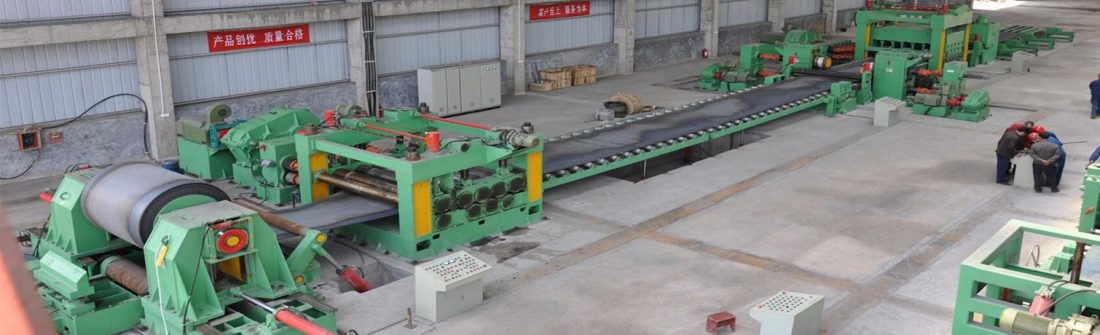
boy kesme hattı

Cut to Length Line: What It Does and Who Needs One

Kısa cevap: A cut to length line uncoils steel strip, levels it flat, feeds an exact length and shears it into stacked sheets. Our lines cover 0.3 to 20 mm thickness, 300 to 2,600 mm width and up to 60 m/min, with length held to plus or minus 0.5 mm on light gauge.

If your material arrives on a coil and your customer wants sheets, this cut to length line is the machine in between. It is the second half of most coil processing floors, and it sits beside the dilme hattı. Slitting cuts along the strip and rewinds. Cut to length cuts across the strip and stacks.

Three decisions decide what you actually get from a cut to length line: the gauge class, the shear type, and the leveller. Price follows those three. So does whether the sheets leave the line flat or go back to the press brake with a bow in them.

Heavy Gauge Cut To Length Line (2)

Three Gauge Classes Cover 0.3 to 20 mm

We build our cut to length line family in three classes. The class is set by the coil, not by the budget. Thin, wide, surface sensitive material wants a long leveller train and gentle handling. Thick plate wants short, stiff roll centres and a shear that can push through 20 mm.

SınıfKalınlıkMax strip widthKesim boyuHat hızıUzunluk toleransı
İnce kalınlık0,3 ila 4,0 mm2,000 mm500 to 4,000 mm0 to 60 m/minartı eksi 0.5 mm
Orta kalınlık2.0 to 12 mm2,200 mm500 to 8,000 mm0 to 40 m/minplus or minus 0.75 mm per 2 m
Ağır kalınlık6.0 to 20 mm2,600 mm500 to 12,000 mm0 to 26 m/minplus or minus 1.0 mm per 2 m

Light gauge is the volume machine. Cold rolled, galvanised and stainless coil from 0.3 to 4 mm run at 40 to 60 m/min on coils up to 25 t, and a 2,000 mm sheet comes off at 15 pieces per minute. Read the full build on the ince telli, boyuna kesilmiş hat page, where the parameter table lists a 0.8 to 3 mm standard build at 1,600 mm width.

A heavy gauge cut to length line is the opposite trade. Speed drops to 20 m/min and the line earns its money on flatness and square cuts in 10 to 15 mm plate. The heavy gauge CTL line page carries the full station list, including the hydraulic conical uncoiler and the 25 to 35 t coil car.

Medium gauge sits between the two and covers most general fabrication work. The stations are the same. What changes is roll diameter, motor size and shear tonnage. Coil processors buy most of this tonnage through steel service centres, which is why gauge class matters more than brand when you compare offers. Our cut to length line component guide walks through each station if you are comparing suppliers line by line.

Station by Station on a Cut to Length Line

Every cut to length line runs in the same order. The station count changes with the class. The order does not.

  • Coil saddle and coil car. The saddle holds the coil clear of the floor so the car can pick it up. The car lifts, travels and centres the coil on the mandrel, which removes the crane and the pry bar from the changeover.
  • Rulo açıcı. A single expanding mandrel for coil up to 3 mm, a double cone or double mandrel above that. Double mandrel pays for itself on heavy gauge, where a 25 t coil at 1,500 mm by 10 mm only holds about 210 m of strip.
  • Peeler, pinch roll and pre-leveler. The peeler lifts the coil head, the pinch roll drives it forward, and the pre-leveler takes the worst of the coil set out before the strip reaches the main leveller.
  • Precision leveller. 17, 19 or 21 rolls depending on thickness, with backup rolls behind the work rolls and hydraulic gap control per side. This is the station that decides flatness.
  • Loop pit. The strip drops into a free loop so the leveller can run continuously while the feed and shear work in steps. Without the loop, every cut would stop the whole line.
  • Servo feed and measuring roll. The feed pushes the strip forward by an exact pitch; the encoder confirms the length before the shear fires.
  • Shear. Hydraulic stop and cut for heavier gauge and longer sheets, flying shear for thin material and short sheets.
  • Conveyor and stacker. Belt conveyor to a pneumatic or magnetic stacker that squares the pile, drops it onto a pallet and signals for the forklift.
Medium Gauge Cut To Length Line

Shear: Stop and Cut, or Flying

On a cut to length line the shear is the second price driver after the leveller, and the choice is a straight throughput question. A stop and cut shear stops the strip, cuts, then starts again. A flying shear travels with the strip and cuts on the move, so the line never stops.

PointStop and cut shearuçan makas
Strip during the cutStoppedMoving, shear tracks the speed
Typical cut rate12 to 25 cuts per minute30 to 60 cuts per minute
Best sheet length2,000 mm and above500 to 2,000 mm
Uzunluk toleransıartı eksi 0.5 mmplus or minus 0.5 to 1.0 mm
Cut edgeClean, blade square to a still stripClean, needs servo tracking to stay square
Price against a stop shearTemel15 to 25 percent higher
SuitsPlate, long sheets, low volume, heavy gaugeThin sheet, short blanks, high volume

The decision rule is simple. Count the stops. At 3,000 mm sheets and 30 m/min, a stop shear loses around two seconds per cut, which is 10 cuts a minute and little to recover. At 600 mm blanks the same line makes 50 cuts a minute, the stopping time dominates, and the flying shear pays back inside a year.

Flatness Is What You Are Really Buying

On any cut to length line, hitting the length is easy. Delivering flat sheet is where the engineering lives. Strip off a coil carries three defects, and each one needs a different answer.

  • Coil set. Lengthwise curvature left by winding. A straightener removes it, and most single defect coils are fixed here.
  • Crossbow. Transverse bow across the width. Needs roll gap control split left and right, or a leveller with independent side adjustment.
  • Edge wave. The edges are longer than the centre, a defect inherited from rolling. Only a cassette leveller that adjusts pressure zone by zone will stretch the centre to match.

Ask for flatness as a number, not as a word. “Flat” means nothing at quotation stage and becomes a dispute at commissioning. We quote flatness in millimetres per metre, typically 0.5 to 1.0 mm per m for general sheet and 0.3 mm per m for laser or press brake work. Buyers who work to I-units can convert at roughly 1 I-unit to 0.01 mm per m of deviation.

Roll count matters less than roll support. A 21 roll leveller with no backup rolls will deflect under 8 mm plate and give worse sheet than a 17 roll unit with a solid backup cassette. Check the roll diameter against the thickness you intend to run, then check the backup. Stainless and aluminium add a second requirement, because the rolls must not mark the surface; the stainless flat product guidance from the industry association is a useful cross check on finish and tolerance.

Length Accuracy: Encoder Wheel or Servo Feed

On a cut to length line, length comes from the feed, and there are two ways to measure it. An encoder wheel rides on the strip and counts distance. It is simple and cheap, and it slips on oiled or galvanised surfaces. A servo feed pushes the strip in measured steps and holds repeatability without contact with the strip surface.

On 1,000 mm sheets, a servo feed holds plus or minus 0.5 mm shift after shift. The encoder wheel drifts when the strip gets slippery, which is exactly when you are running pre-painted or oiled coil. Above 1,500 mm sheet length the difference is small. Below it, the servo is the reason the tolerance holds.

Diagonal tolerance is the second half of the same promise. A sheet that is the right length but out of square will not sit flat in a welded frame. We hold diagonal to plus or minus 0.5 mm on light gauge and 1.5 mm per 2 m on heavy gauge, measured on the finished stack, not on the first sheet off a new blade.

Output Math Before You Compare Prices

Two cut to length lines with the same price can differ by a factor of two in output. Run the numbers on your own sheet mix before you read a quotation.

Sheet lengthCuts per minute at 30 m/minSheets per hourSheets per 8 h shift at 75 percent
500 mm603,60021,600
1,000 mm301,80010,800
2,000 mm159005,400
3,000 mm106003,600
6,000 mm53001,800

The second limit is the coil change, and it is the one buyers forget. A 25 t coil at 1,250 mm by 1.0 mm holds about 2,540 m of strip, which is 85 minutes at 30 m/min. The same 25 t at 1,500 mm by 10 mm holds about 210 m, which is 10 minutes at 20 m/min. On a heavy gauge cut to length line you change coils six times an hour, so a single mandrel with a slow car will cost you more production than any difference in motor size.

That is the case for a double mandrel, a powered coil car and a fast threading sequence. It is also the reason we ask for coil weight and coil outer diameter before we quote a cut to length line, not after.

boy kesme hattı

Fiyatı değiştiren seçenekler

The base cut to length line uncoils, levels, cuts and stacks. Everything below is a configuration choice, and each one changes the price and the lead time.

  • Edge trimming shear. Trims both edges to an exact width after levelling, with a scrap chopper. Common on service centre lines selling to a width tolerance.
  • Foil laminating device. Applies protective film to stainless, aluminium or pre-painted sheet before stacking.
  • Oiler or dry film unit. Keeps the sheet surface protected in storage, and speeds up downstream pressing.
  • Double mandrel or double cone uncoiler. Cuts coil change time roughly in half on heavy gauge.
  • Magnetic or vacuum stacker. Protects the surface of stainless and pre-painted sheet that a pneumatic drop stacker would mark.
  • Cassette leveller and quick roll change. Swaps the leveller cartridge for a different thickness range in under an hour instead of a full day.
  • Packing line. Paper interleaving, strapping and pallet wrapping behind the stacker, so sheets leave the cut to length line ready for export.

Floor Space, Pit and Services

A light gauge cut to length line needs about 20 m by 8 m by 3 m and around 80 kW. A heavy gauge cut to length line needs 30 to 45 m of length, a loop pit, and a foundation that can take the shear shock. Plan the coil storage and the forklift route at the same time as the line footprint, because a line that ends where the forklift needs to turn loses more hours than a slow shear.

Boy kesme hattının iş akışı

Every cut to length line project starts with a general arrangement drawing like the one above. You get the layout, the pit detail and the utility schedule before manufacture, so the civil work can start in parallel with the build.

Eight Questions Before You Request a Price

Send these eight answers and any supplier can quote a cut to length line that fits. Skip them and you will compare three machines built to three different guesses.

  1. Material grade and yield strength, in MPa, for the heaviest sheet you will run
  2. Thickness range, minimum and maximum, and the range you run 80 percent of the time
  3. Strip width range, and the coil inner and outer diameter
  4. Maximum coil weight, and how often you expect to change coils
  5. Sheet length range, and the tolerance your customer actually inspects
  6. Flatness requirement, stated in mm per m, and what the sheet feeds next
  7. Target output, in tonnes per shift rather than metres per minute
  8. Available floor length, pit permission and power supply

Yield strength drives the leveller and the shear, and the grade tables in most steel grade references çelik sertifikası MPa değerini vermiyorsa bu rakamı size söyler. Believe Industry, 2005'ten beri özel coil işleme ve roll forming ekipmanı üretiyor: 80'den fazla mühendis ve teknisyen ve 50'ten fazla ülkede 500'den fazla makine, ISO 9001 ve CE altında. Çerçeveyi, rolleri ve makası coil verilerinize göre boyutlandırıyoruz — uyguladığımız disiplin: özel profil mühendisliği and to hat hızı optimizasyonunun.

Send the coil data and the sheet drawing to enquiry@believeindustry.com, or use the teklif isteği form. You get a layout drawing, the leveller and shear sizing, and a firm price on your cut to length line within two working days.

Sıkça sorulan sorular

Q: What is the difference between a cut to length line and a slitting line?

A: Direction of the cut. A cut to length line cuts across the strip and delivers flat sheets. A slitting line cuts along the strip and rewinds narrow coils. Most coil processors run both, and the coil handling equipment can be shared.

Q: What thickness can a cut to length line handle?

A: 0.3 to 20 mm across the three classes. One cut to length line rarely covers the whole range well, because the leveller rolls and shear tonnage needed for 15 mm plate are wrong for 0.5 mm sheet. If your range spans more than 6 mm, consider a cassette leveller or two lines.

Q: How accurate is the cut length?

A: plus or minus 0.5 mm on light gauge with a servo feed, and plus or minus 1.0 mm per 2 m on heavy gauge. The limit is usually the feed and the strip surface, not the shear.

Q: Do I need a flying shear?

A: Only if you cut short sheets at volume. Below 2,000 mm sheet length and above 20 cuts per minute, the stopping time of a stop and cut shear becomes the bottleneck. Above 3,000 mm sheets, a flying shear adds cost without adding output.

Q: How many leveller rolls do I need?

A: 17 rolls covers most 1 to 6 mm work. Go to 19 or 21 rolls for thin, wide, high strength strip, or where flatness is inspected at 0.3 mm per m. Roll support matters as much as roll count.

Q: Can the line run stainless, aluminium and galvanised coil?

A: Yes, with the right surface protection. Stainless and aluminium need urethane or chrome plated rolls, a film or paper interleaf, and a magnetic or vacuum stacker. Tell us the material mix at enquiry stage, because it changes the roll finish and the stacker type.

S: Kurulum ne kadar sürer?

A: 45 to 60 days for manufacture after drawing approval, then 10 to 15 days on site for a light gauge cut to length line and 20 to 25 days for heavy gauge, including commissioning and operator training. The pit and foundation work should finish before the machines arrive.

Q: What is the smallest cut to length line you build?

A: A 0.3 to 2 mm cut to length line at 1,000 mm width with a 5 t coil capacity, for workshops moving from sheet purchase to coil. It uses the same stations as the larger builds, with a shorter leveller and a single mandrel uncoiler.

Son güncelleme: 2026-11-05

Makale Değişiklik Günlüğü
2026-11-05: Full rewrite of page 407. Replaced the 2018 four paragraph shell with a class comparison table, station list, shear comparison, flatness and length accuracy sections, output math, options, layout guidance and eight FAQs. Corrected the heavy gauge width and thickness figures so they match the child pages, removed a duplicate H1, and set the page up as the hub for the light and heavy gauge pages.

Sonraki İnceleme Tetikleyicileri
Light or heavy gauge child page parameters change
Line speed or tolerance claims change after a new build is commissioned
Coil price or freight moves enough to shift the payback case for in house cutting

Hızlı Sorgu

Gereksinimlerinizi bize iletin — 24 saat içinde yanıt veriyoruz.

Dosyaları buraya tıklayın veya sürükleyin.
PDF, DWG, DXF, STEP, PNG, JPG — En fazla 20MB

Talebiniz başarıyla gönderildi!

Believe Industry'ye ilginiz için teşekkür ederiz. Mühendislik ekibimiz 24 saat içinde size dönecektir.

Acil yanıt mı gerekiyor? E-posta gönderin. enquiry@believeindustry.com

İçindekiler

Believe Industry Son Gönderileri

Satın Alma Kılavuzu, Makine Teknolojisi ve Bakım İpuçları