Cable Tray Roll Forming Machine: Complete 4-Tray Comparison 2026

Adakah anda memerlukan mesin pembentuk profil untuk projek anda?
Dapatkan sebut harga percuma daripada Believe Industry — lebih 15 tahun dalam pembuatan mesin pembentuk profil tersuai.
permintaan sebut harga Muat turun katalog

Cable Tray Roll Forming Machine: Ladder vs Perforated Tray Lines

A cable tray roll forming machine is not one product. Buyers use the phrase for four different production lines, and the tooling for one will not run the others. This guide compares ladder, perforated, solid bottom and channel trays at the machine level, so you can name the profile before you sign a cable tray roll forming machine order.

Jawapan ringkas: Perforated and solid bottom trays share one roll forming line. You swap the punch die. Ladder tray needs side rail rolls and a rung station, so it is a different machine. Channel tray is a narrower version of the same U-forming idea. A cable tray roll forming machine with 50 to 600 mm adjustable width covers most job-shop orders.

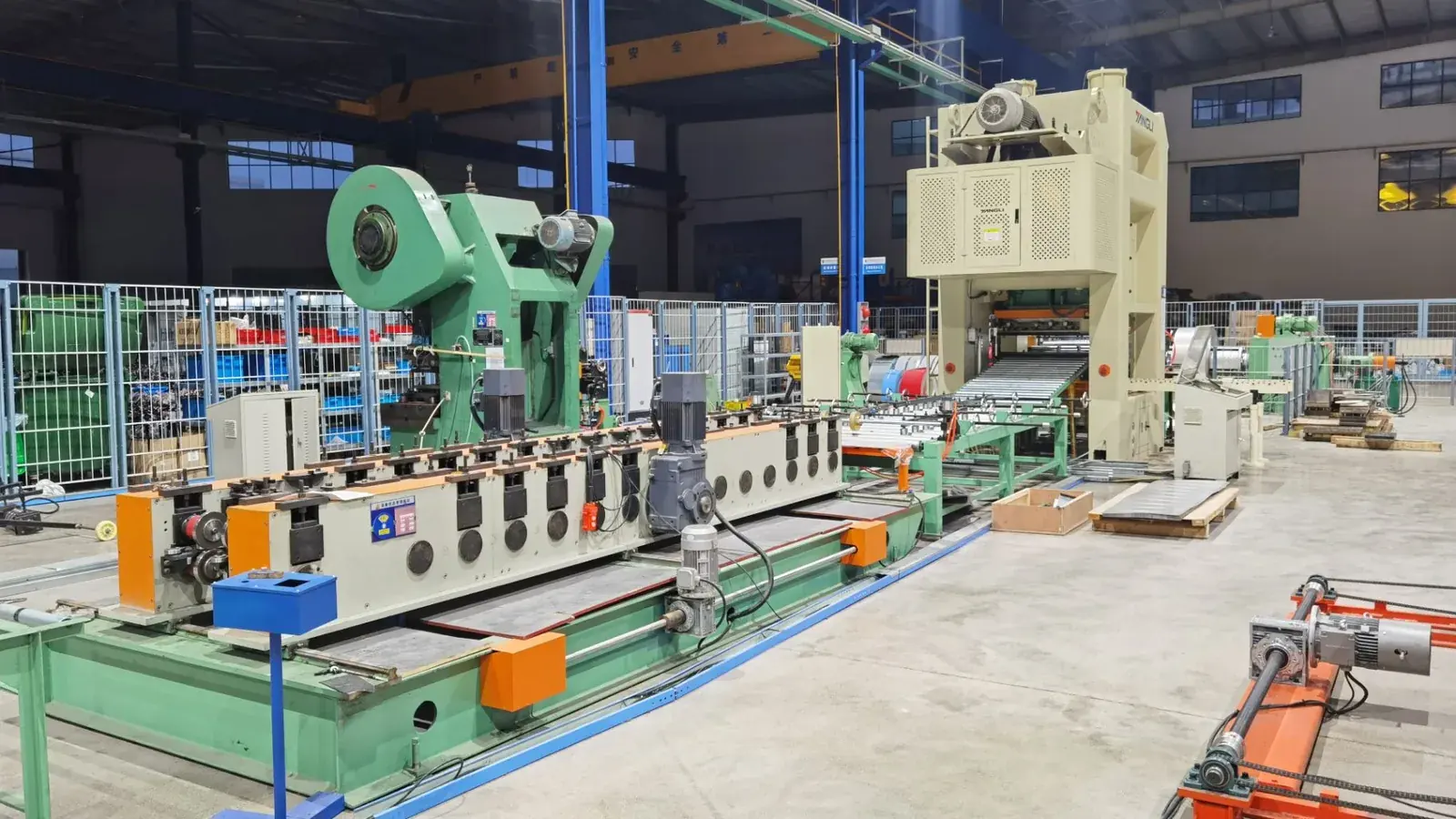
cable tray production line hero

Four tray types, four different machines

The phrase “cable tray machine” is a search term, not a part number. We have seen quotes go wrong because the buyer asked for one line and the seller priced another. Name the tray first, then the machine.

NEMA VE 1 defines six tray types. Four of them dominate roll formed steel: ladder (1A), ventilated trough (1B), solid bottom (1C) and channel (1D). Wire mesh (1E) and single rail (1F) usually come from wire equipment or a press brake, not a roll forming mill. Our what is a cable tray guide lists all six types and explains load classes.

Tray typeHow the section is madePunching neededWhat it means for the line
Ladder, NEMA 1ATwo roll formed side rails joined by rungsRung holes or weld pointsSide rail rolls plus a rung station
Perforated, 1BOne strip, holes punched before formingDense ventilation hole fieldServo press and a die set per pattern
Solid bottom, 1COne strip, no perforationsFixing slots onlySimplest mill, heaviest handling
Channel, 1DOne narrow U stripOccasional slotsNarrow width range, fewer stands

A perforated tray and a solid bottom tray can share the same cable tray roll forming machine. The punch die changes. Ladder tray cannot share that mill, because a trough flower does not produce two separate rails. That one distinction decides most of the quoted price.

dulang kabel tangga

What changes when you switch profiles

Punching sets the pace of a cable tray roll forming machine. A solid bottom tray runs near the mill’s forming speed. A perforated tray slows down each time the press indexes for a hole row. Hole count per metre matters more than tray width.

Halaman Middle East buyer guide documents three punching options on these lines. Rotary punching adds a fourth for high volume work. These are typical values. Long parts and dense hole patterns move every number down.

Kaedah tebukanKelajuan baris biasaPaling sesuai
Penembusan hidraulik servo2 to 3 m/minStainless trays, low volume, tight hole tolerance
Mesin tebuk hidraulik servo4 hingga 6 m/minMixed perforated orders
High speed mechanical press12 hingga 15 m/minOne profile, long runs
Rotary punchingabove 30 m/minSimple hole pattern, full servo line

Die change is the other half of the decision. A perforated die punches ventilation holes. A solid die is a blank pass through. Swapping them takes 5 to 10 minutes on our lines. Punch die installation and alignment shows the checks that keep the hole pattern square after a swap.

Cutoff matters too. A gunting terbang cuts on the move, so the line never stops. Stop-and-cut presses are cheaper but cap output. If the hole pattern must stay square to the cut, ask for servo feeding with the flying shear.

Dulang Kabel Berlubang

Width, thickness and speed you can quote

A cable tray roll forming machine is specified by four numbers: strip thickness, formed width, forming speed and station count. Get these on the quotation sheet before comparing prices.

PerkaraTypical configuration
Ketebalan pembentukan1.0 to 2.5 mm galvanised steel
Formed width50 to 600 mm, expandable to 1000 mm
Kelajuan pembentukan10 hingga 15 m/min
Stesen pembentuk22 stesen
Bahan penggelekGCr15 bearing steel, quenched
PemotongHydraulic, Cr12 blade
KawalanPLC with batch, length and quantity

Those figures describe an adjustable line, not every machine we build. A dedicated single-width mill will have fewer stands and a shorter frame. The full specification sheet sits on our mesin pembentukan profil untuk dulang kabel halaman.

Width adjustment is where cable tray roll forming machine owners lose the most hours. Manual shim changes take 30 to 60 minutes per size. An automatic size change line sets width and height from the touch screen in seconds. If you quote five widths a day, that option pays for itself in labour alone.

NEMA VE 1 and IEC 61537 are not the same question

Standards describe the tray, not the cable tray roll forming machine. A cable tray roll forming machine shapes the section; certification applies to the finished tray sold in your market. Confusing the two leads to buyers asking suppliers for a certificate the machine cannot carry.

NEMA VE 1 (current edition VE 1-2017, harmonised with CSA C22.2 No. 126.1) rates trays by load and span class, not sheet thickness. Class 20C means 100 lb per linear foot at a 20 ft support span, with a 1.5 safety factor. Ladder tray wins on long spans. Solid bottom tray protects cables from debris but traps heat, so fill rules are tighter.

IEC 61537 takes a performance based approach and is common on Gulf, European and Asian projects. American engineers often cite NEC Article 392 alongside VE 1. Ask which standard the project names before you fix flange height or load class. Two makers can reach 20C with different sections.

Our machines carry CE documentation and are built under ISO 9001. For the trays themselves, we supply dimensional inspection reports and load test data so your local certification body can work from real numbers.

Which line fits your order mix

Buy for the mix you actually run, not the widest catalogue. A cable tray roll forming machine configured for every profile costs more and changes over more often than a focused line.

Your order mixLine to buyReason
80 percent perforated, one widthDedicated perforated lineOne die set, fastest payback
Perforated and solid bottom mixedAdjustable line with die swapOne mill, two products
Mainly ladder traySide rail line plus rung stationA trough mill cannot make rails
Many widths, small batchesAutomatic width changeNo shim sets, no long stops

Halaman cost guide breaks down what each option adds to the price. The electrical industry overview places cable tray alongside busway and other profiles if your factory plans to expand.

Installing a cable tray roll forming machine usually takes 5 to 7 working days with our engineer on site. Training runs at the same time. Believe Industry has built roll forming lines since 2005, with 80+ engineers and machines delivered to 50+ countries. Spare rolls, shear blades and punch dies ship with every line.

Send us your tray drawings, the widths you quote most often, and your monthly metres. We will return a line layout and a fixed price for the cable tray roll forming machine that matches that mix.

Frequently Asked Questions of cable tray roll forming machine

Q: Can one cable tray roll forming machine make both ladder and perforated trays?

A: No. Ladder tray needs side rails plus a rung station. Perforated tray is one punched strip formed through a trough mill. They are different lines. A single machine can make perforated and solid bottom trays by swapping the punch die.

Q: Is ladder or perforated tray cheaper to produce?

A: Perforated tray is cheaper to tool. It uses one strip and one set of forming rolls. Ladder tray adds side rail rolls and rung assembly, which raises both machine price and floor space. Solid bottom tray is the simplest to form but costs more to handle.

Q: What thickness can a cable tray roll forming machine run?

A: Our adjustable lines run 1.0 to 2.5 mm galvanised steel. Stainless steel usually runs 0.8 to 1.5 mm. Thicker strip needs larger motors, a stronger frame and harder rolls, so buy to the range you quote, not the maximum.

Q: How fast does a cable tray roll forming machine run?

A: Forming speed is typically 10 to 15 m/min. Punching decides the real output. Servo hydraulic punching drops the line to 2 to 3 m/min, while a high speed mechanical press reaches 12 to 15 m/min. Rotary punching can pass 30 m/min on simple patterns.

Q: How long does a perforated to solid bottom changeover take?

A: 5 to 10 minutes. You swap the punch die set. The perforated die cuts ventilation holes; the solid die is a blank pass through. Forming rolls and cutoff settings stay where they are.

Q: Do I need NEMA VE 1 certification for the machine itself?

A: No. NEMA VE 1 applies to the finished tray as a product. The machine should carry CE marking for electrical safety. We supply CE documentation, dimensional inspection reports and load test data for the trays you produce.

Q: What is a 20C cable tray rating?

A: 20C means the tray carries 100 lb per linear foot at a 20 ft support span. The number is the span in feet, the letter is the working load class. NEMA VE 1 requires a 1.5 safety factor on top of that figure.

Q: Can one line produce several tray widths?

A: Yes. An adjustable cable tray roll forming machine covers 50 to 600 mm, expandable to 1000 mm. Automatic width change sets the size from the touch screen. Manual shim adjustment takes 30 to 60 minutes per width.

Q: Which cable tray roll forming machine suits a new factory?

A: Start with a 50 to 600 mm adjustable line, servo hydraulic punch press and a die set for perforated trays. It covers most electrical contractor orders. Add inner bend, outer bend and cover tooling once you have steady volume.
Last updated: 2026-11-10

Log Perubahan Artikel

2026-11-10: First published. Four-profile machine comparison, punching speed table, adjustable line specification, NEMA VE 1 selection rules and 9 buyer FAQs.

Pencetus Semakan Seterusnya

NEMA VE 1 or IEC 61537 revision, a new ladder rung punching option, a change to the 50 to 600 mm width range, or a 2027 update to punching speed figures.

Isi kandungan

Kemas Kini Baharu

Heavy gauge strip punching station with servo feeder on a step beam line

Roll Forming Papan Tanda: 7 Profil Billboard dan Tiang Kukuh

Billboard & Signage Roll Forming: Advertising Structure Profiles Short answer:...

Baca lagi
