


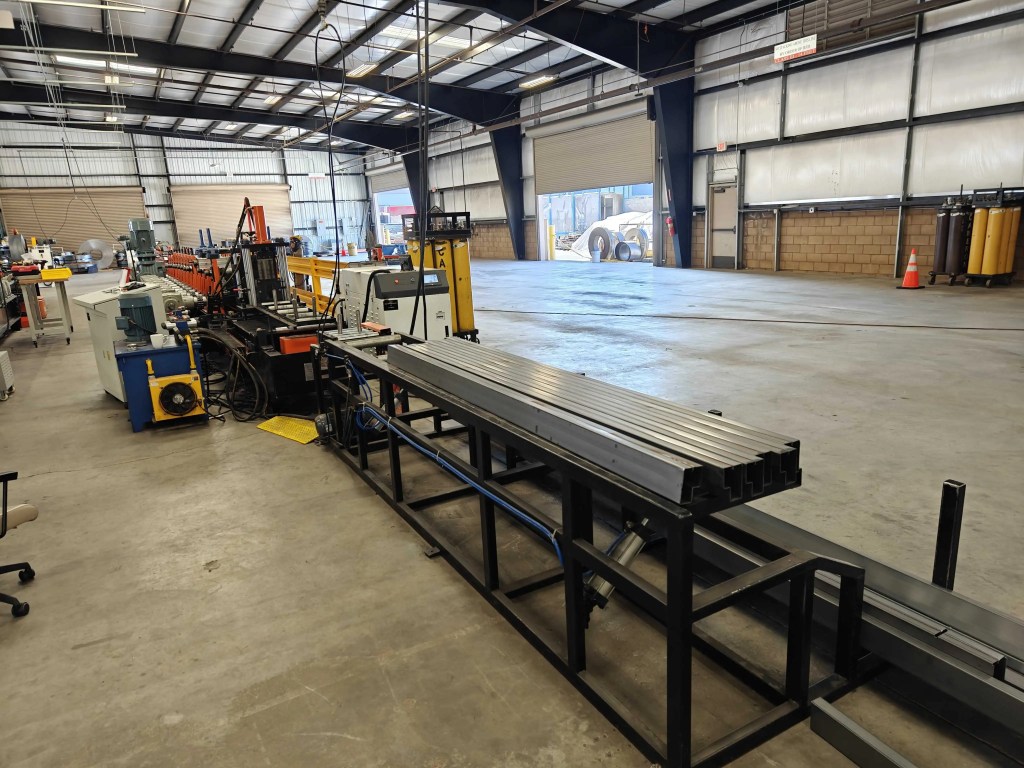
A step beam machine is an advanced industrial roll forming line designed specifically to manufacture high-strength, load-bearing horizontal beams used in heavy-duty pallet racking systems. By systematically converting flat steel coil through sequential roller dies, a modern step beam machine can achieve traditional sheet forming speeds of 10 to 15 m/min. Achieving top yield requires optimized flower pattern design to prevent edge stresses, robust servo-driven punching to maintain precision, and precision calibration to mitigate roll stand deflection and material springback.
7 Powerful Strategies for Top Yield
At Believe Industry Company, our legacy of manufacturing excellence spans over 15+ years. Operating out of Wuxi, China, as a premier global exporter, our dedicated team of 80+ engineers custom-builds robust industrial equipment tailored for the warehouse storage sector. In the fast-paced world of global logistics and material handling, the efficiency of your step beam machine acts as the direct bottleneck—or the ultimate catalyst—for your operational profitability.
In 2026, keeping up with warehouse logistics demands means optimizing every square inch of your production floor. If you want to dominate the heavy-duty racking market, you must understand the mechanics, the physics, and the engineering strategies that guarantee peak throughput. Whether you are upgrading an old manufacturing line or investing in a state-of-the-art step beam roll forming machine, implementing the right operational strategies is paramount. Here are seven powerful strategies to maximize the yield of your step beam machine.
1. Optimize Your Flower Pattern Design
The foundation of any successful continuous bending operation lies in the “flower pattern”—the sequential cross-sectional profiles the sheet metal takes as it passes through each roll stand. According to technical documentation on profile engineering, utilizing advanced CAD systems like Ubeco PROFIL is critical for accurate simulation. This software simulates the bending steps, determines the neutral line, and calculates the optimal number of passes needed to form the profile without exceeding structural strain limits. Proper flower pattern design completely prevents damaging edge stresses and longitudinal strain, ensuring the final product rolled by your step beam machine maintains flawless structural integrity without material thinning.
2. Master Deflection and Springback Control
During high-speed operations, continuous forming forces can cause significant deflection in the roll stands. If unaccounted for, this increase in the roll gap directly leads to higher springback angles, severe part distortions, and accelerated tool wear. Top-tier manufacturers must integrate rigid, heavy-duty cast-iron stands to counteract these immense forming forces. A rigorous approach to a comprehensive analysis of roll forming machine architecture will always prioritize minimizing machine deflection. By keeping the roll gap perfectly stable, your step beam machine will drastically reduce downtime, material waste, and rejected batches.
3. Synchronize Servo-Driven Punching
Most modern step beams require interlocking tabs, safety pin holes, or highly specific connection points. Relying on outdated pneumatic stop-and-punch systems will severely bottleneck the entire production line. By upgrading to closed-loop servo-driven flying punching systems, your step beam machine can punch precise holes without ever stopping the continuous roll forming process. This allows you to vastly increase your overall pallet rack production speed while maintaining incredibly tight hole tolerances across thousands of linear meters of steel.
4. Implement High-Speed Automation Protocols
A standard manually operated line will inevitably face human-induced delays and safety pauses. To achieve true top yield, the line must be fully automated from the double-mandrel uncoiler to the automated stacking system. Automation limits manual intervention, mitigates the risk of workplace injuries, and keeps the step beam machine running at its maximum calculated speed. For insights into standardizing your equipment safety and automation protocols globally, consulting guidelines published by authorities like ASM International provides an excellent benchmark for metallurgical safety and forming standards.
5. Standardize Your Tooling Setup and Changeovers
In a dynamic factory environment where you may need to frequently switch between different beam sizes and flange heights, machine downtime is your biggest enemy. Utilizing rafted cassette tooling or auto-width adjustment systems on your step beam machine allows your operators to change profile dimensions in a matter of minutes rather than hours. Discovering exactly how to set up a roll forming machine with quick-change parameters is a highly sought-after capability for modern warehouse manufacturers, drastically improving Overall Equipment Effectiveness (OEE).
6. Complement with Upright and Box Beam Integration
A step beam does not function in isolation; it is a critical component of a holistic, load-bearing storage system. Ensuring that your step beam machine works in perfect tandem with your other facility equipment, such as a box beam roll forming machine, guarantees that the interlocking tab tolerances are perfectly matched across the board. System-wide synergy ensures that when your beams arrive at the installation site, they lock flawlessly into the upright columns, eliminating costly and time-consuming field rework.
7. Enforce Predictive Maintenance and Quality Control
Yield isn’t just about how fast you can push raw steel coil through the rollers; it is about how many sellable, zero-defect step beams you produce per shift. Incorporating inline laser measuring systems and predictive maintenance vibration sensors on your step beam machine allows you to catch waviness, bow, or twist issues before they ruin an entire expensive coil. If you want to dive deeper into broader custom auxiliary solutions for your facility, our strategic partners at Beli Rollforming offer excellent coil processing technologies to feed your line with perfectly slit material.
Yield Optimization Comparison Table
| Feature / Variable | Standard Roll Forming | Optimized Step Beam Machine | Yield Impact |
| Operating Speed | 10 – 15 m/min | Up to 150 m/min | + 300% Output Volume |
| Punching Mechanism | Stop-and-Punch | Flying Servo-Punch | Zero Stopping Delay |
| Profile Changeover | 4 to 8 Hours | < 20 Minutes (Auto-adjust) | Maximized Daily Uptime |
| Deflection Control | Mild Steel Stands | Cast-Iron / Engineered Rigid | Eliminates Springback |
Step Beam Production & ROI Estimator
To help you calculate the potential daily yield of your production line, we have developed this interactive calculator. Input your metrics below to project your floor’s output. When you calculate your results, you’ll also see exactly how to reach our engineering team to make these numbers a reality.
Step Beam Yield Estimator
Your Estimated Production:
Total Linear Meters: 0 m/day
Total Beams Produced: 0 pieces/day
Ready to achieve these numbers? Contact Believe Industry Company:
📞 Phone & WhatsApp: +86 186 1692 7760
✉️ Email: enquiry@belirollforming.com
Conclusion
Achieving superior manufacturing output in the highly competitive warehouse racking sector requires precisely engineered equipment and a zero-tolerance approach to mechanical defects. By utilizing a high-performance step beam machine, optimizing your flower patterns to eliminate edge stress, and rigidly controlling stand deflection to prevent material springback, your facility can safely run at extreme speeds while consistently producing perfect interlocking beams. Investing in robust, fully automated systems from an experienced manufacturer is the definitive strategy for securing top yield and long-term profitability in a global logistics market.
Ready to upgrade your production floor and maximize your daily output? Contact Believe Industry Company’s elite engineering team today for a custom, no-obligation quote. Let us build the exact system you need to dominate the racking market. Reach out to us immediately via Phone & WhatsApp at +8618616927760 or email us at enquiry@belirollforming.com to get started!
Frequently Asked Questions
A step beam machine is an automated industrial roll forming line used to gradually shape flat metal coils into strong, rigid horizontal “step” profiles. These finished beams are the primary load-bearing components in industrial pallet racking structures, designed to hold heavy pallets securely.
Bending high-strength steel generates massive forces that can cause the machine’s roll stands to flex outward. If a machine lacks rigid, heavy-duty cast-iron stands, this deflection alters the intended bending gap, resulting in material springback, distorted profile dimensions, and beams that ultimately fail to lock properly into the upright racks.
Servo-driven flying punches allow the step beam machine to punch connection holes into the metal strip while it is moving continuously. This nonstop operation drastically increases output speed compared to older stop-and-punch pneumatic methods, which force the entire line to halt for every single hole punched.
Yes. Advanced machines are equipped with automated width-adjustment systems or rafted cassette tooling. This allows operators to seamlessly adjust the machine’s width and roller settings to produce various beam sizes with minimal downtime.
The flower pattern is a cross-sectional engineering diagram that shows the sequential bending stages of the flat metal strip as it passes through each set of rollers. Optimizing this pattern with software like Ubeco PROFIL ensures the metal is formed without excessive longitudinal strain or edge stress.
To guarantee a perfect fit, the tooling on your step beam machine must be engineered to match the precise locking tab dimensions of your upright columns. Believe Industry Company can custom-engineer your roll dies based on your specific 3D drawings or physical racking samples to ensure 100% compatibility.


