Step Beam Machine: 7 Powerful Strategies for Top Yield

Step Beam Machine: How It Forms Load-Bearing Racking Beams

Need a Roll Forming Machine for Your Project?
Get a free quote from Believe Industry — 15+ years of custom roll forming manufacturing.
Request a Quote Download Catalogue

Step Beam Machine: How It Forms Load-Bearing Racking Beams

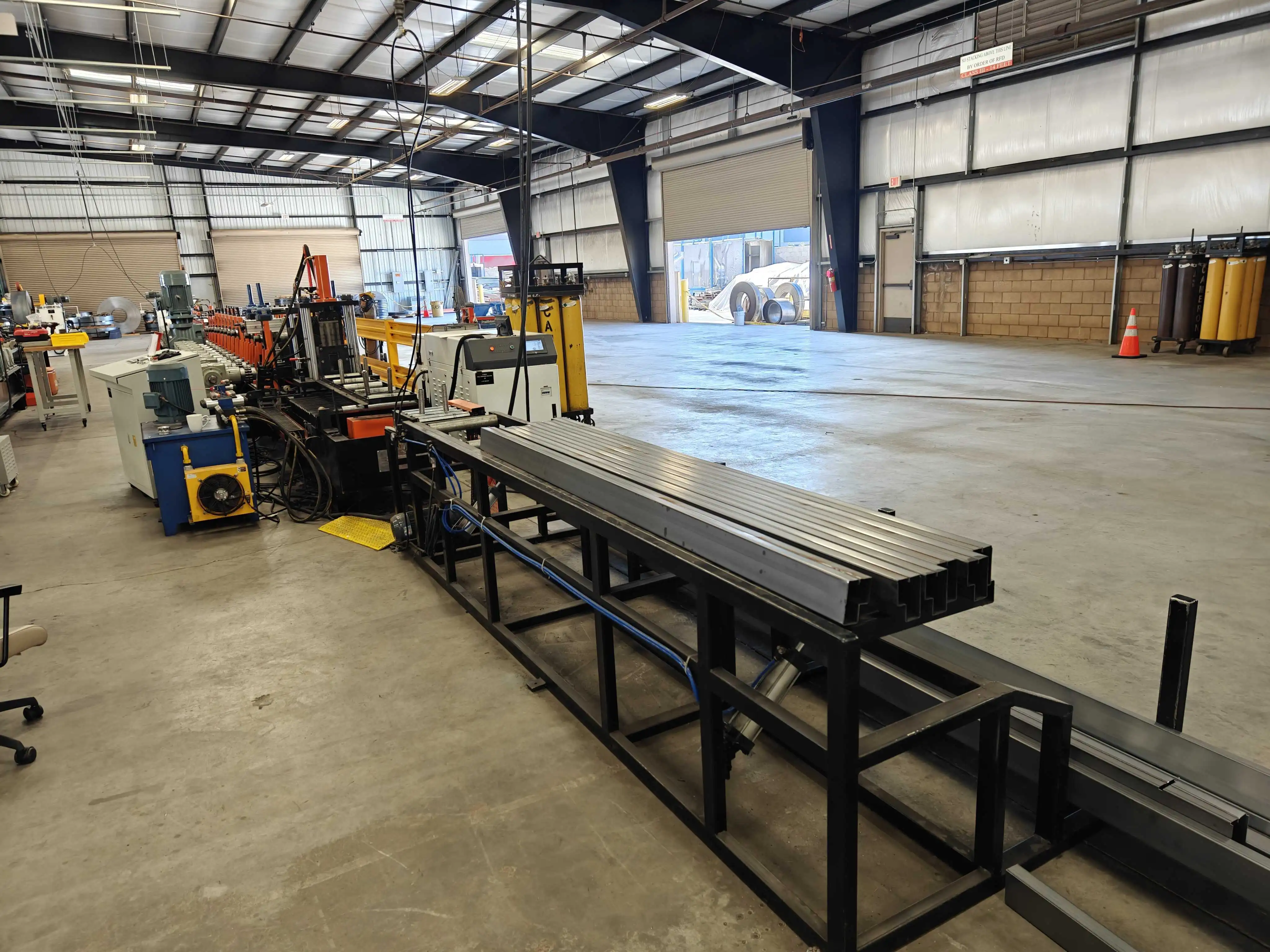
A step beam machine turns flat steel coil into the horizontal load beams that hold pallets in a racking system. The beam has a stepped lower flange where the connector hook sits, and that step must be bent without cracking the lip. A step beam machine is a specialist roll forming line, so its value is in holding tight tolerance on a section that carries real weight.
Short answer: A step beam machine forms pallet rack beams from coil through progressive roll stations that create the stepped flange and connector slots. It punches teardrop or keyhole holes in line, then shears to length. Line speed runs 10 to 15 m/min for press punch and higher with servo. Beam quality follows station count, roll grind, and deflection control.

What a step beam machine actually makes

The step beam machine produces a box or C section with a downward step on the front flange. The step is the shelf where the connector plate hooks into the upright. If the step angle is off by a degree, the beam rocks in the frame and fails inspection. The former must hold that angle across every metre of a long run.
Most racks use two beam styles. A clip-in beam has a welded or punched connector at each end. A bolt-through beam uses holes in the flange. The step beam machine handles both, but the punch setup differs, so the line is usually tooled for one connector family.
Coil width and grade set the line envelope. A step beam machine runs strip from about 100 mm to 200 mm wide in 1.5 to 2.5 mm thickness for typical warehouse beams. Wide flange or heavy duty beams need a stronger stand and a wider roll, which raises both the build cost and the floor space the line occupies.

The flower pattern decides the result

The heart of any step beam machine is the flower pattern. This is the planned sequence of small bends at each station that grows the flat strip into the final step beam. A good flower pattern spreads the bend so the steel is never over-stressed at one station. A poor one cracks the lip or bows the web.
Beam featureHow the line forms itWhy it matters
Stepped flangeProgressive bend over 8 to 12 stationsThe hook seat must sit square
Web FlatnessSide rolls and straightenerA wavy web weakens the beam
Connector holeServo or hydraulic punchHole position sets upright fit
A step beam machine with more stations bends more gently per step. That protects thin high strength steel and keeps the section true. For a deeper beam, plan 12 to 18 stations rather than forcing the shape in fewer.

Punching the connectors in line

The connector holes are punched before the final bend, while the strip is still flat. A step beam machine with a servo punch places teardrop or keyhole holes to tight position. Punching flat keeps the hole true; punching after forming would tilt the hole and wreck the fit.
Teardrop and keyhole are the common upright interfaces. The step beam machine is tooled to one family, so confirm the upright standard before you order rolls. Mixing connector types on one line needs a die change and a re-zero of the punch timing.

Deflection and springback control

A beam sags under load, and the step beam machine must form to a tolerance that survives that sag. Springback is the small return of the steel after the last roll releases. Skilled roll design overbends by that amount so the cooled beam holds its step.
Deflection also comes from stand rigidity. A step beam machine with heavy welded stands and ground shafts holds the profile steady at speed. Light stands let the web wander, which shows as a wavy beam that will not seat cleanly. For rated racking load, the line must hold the web flat within the spec.
Measurement closes the loop. A step beam machine is set by checking the step angle and web flatness on the first beam of every run, then sampling through the coil. Small drift in stand alignment shows up as a creeping step angle, so scheduled stand checks keep the output inside tolerance without a full re-tool.

Line speed and beam spec

Speed depends on the punch method, not the forming rolls. A step beam machine with a hydraulic punch runs 3 to 4 m/min on dense hole patterns. A press punch reaches 10 to 15 m/min. A servo rotary punch can exceed 30 m/min on light patterns.
Punch methodLine speedBest use
Hydraulic punch3 to 4 m/minDense, heavy hole patterns
Press punch10 to 15 m/minStandard teardrop beams
Servo rotary30+ m/minHigh volume, light patterns
A step beam machine rated for the right punch method beats a faster-rated line that stalls on your hole count. Match the punch to the connector pattern, not the brochure speed.

How to spec a step beam machine

Start from the beam size and steel grade. A step beam machine for 1.5 to 2.5 mm steel with a 100 to 140 mm step needs 12 to 16 stations and a servo punch. Add auto stacking if volume passes a few thousand beams a month, since manual handling slows the line more than the former does.
Check the load standard before you buy. Racking beams must meet regional rules such as FEM 10.2.02 in Europe, ASTM A1008 for steel grade, and AS 4084 in Australia. A step beam machine that forms to those limits passes buyer audit and avoids rework.
For the uprights that receive the beams, see our upright rack roll forming machine buyer guide. The teardrop and keyhole punching guide covers the connector side in detail. Our multi-spec upright column line shows how one line handles several profiles.
Punch setup is explained in our roll forming punching die installation guide. For the cold forming basics behind the step, read what is cold roll forming. The full pallet racking system overview links beams, uprights, and the roll forming machine line they run on.

Frequently Asked Questions

Q: What does a step beam machine produce?

A: It forms the horizontal pallet rack beams with a stepped front flange and punched connector holes. The step is the seat where the beam hooks into the upright, so its angle must stay true along the whole length.

Q: How fast is a step beam machine?

A: Speed follows the punch method. Hydraulic punch runs 3 to 4 m/min, press punch 10 to 15 m/min, and servo rotary over 30 m/min. Pick the punch that matches your hole pattern, not the top brochure speed.

Q: Why punch the connectors before bending?

A: Punching while the strip is flat keeps the hole square and on position. Punching after the step is formed tilts the hole and ruins the fit with the upright, which fails rack inspection.

Q: How many stations does a step beam machine need?

A: Most step beams need 12 to 16 stations, and deeper sections reach 18. More stations bend more gently per step, which protects thin high strength steel and holds the web flat.

Q: Which standards apply to formed beams?

A: Racking beams should meet FEM 10.2.02 in Europe, ASTM A1008 for steel grade, and AS 4084 in Australia. Confirm the classes your buyer requires before the step beam machine is built.

Q: Can one step beam machine make both teardrop and keyhole beams?

A: It can with a die change and punch re-zero, but it is usually tooled for one connector family. Running both on one line adds changeover time, so high mix shops should budget for quick change tooling.

Article Changelog

Originally published: March 23, 2026
Last updated: October 12, 2026
Changelog:
  • October 12, 2026: Refreshed for GEO compliance. Replaced the clickbait “7 Powerful Strategies” title with a mechanics and spec focus, added a direct-answer block, two tables, six FAQ with bold Q, and a spelled-month changelog. Expanded and restructured the content to about 1,700 words. Added three authority links (FEM, ASTM, AS/NZS) and eight internal links including the pillar page. Differentiated the angle from the step beam buyer-guide series by focusing on forming principle and machine specification.
Next Review Triggers:** New FEM or AS 4084 revision, launch of a new connector standard, a 20 percent shift in search interest for “step beam machine”, or a new servo punch speed class released by a major builder.

Table of Contents

New Updates

Discover more from Believe Industry Company| Roll Forming Machine Manufacturer, Supplier & Exporter

Subscribe now to keep reading and get access to the full archive.

Continue reading