Address
No 1, Yd Road, Huishan District, Wuxi City, Jiangsu. 214183
Work Hours
Monday to Friday: 9AM - 5PM
Saturday: 9AM - 4PM
Address
No 1, Yd Road, Huishan District, Wuxi City, Jiangsu. 214183
Work Hours
Monday to Friday: 9AM - 5PM
Saturday: 9AM - 4PM
Purlins, roof and wall sheets, metal tiles, floor deck and light steel framing — 25 roll forming lines built to your profile drawing, your steel grade and your target output per shift, then run on test coil before shipment.
B Deck Roll Forming Machine( also named as B deck roll former) is for producing B Deck. Which is the most common structural metal decking in the industry in US market. What’s B Deck? B Deck is an.
View machine specsKlip-Lok Roof Sheet Roll Forming Machine also named Clip Lock Roof Sheet Roll Forming Machine, which is for producing klip-lok 700 or klip-lok 406 roof sheets as desired length. Klip-Lok Roof Sheet.
View machine specsMultibeam Purlin Roll Forming Machine is for producing Omega Purlin with web size from 100-450 mm, flange from 60-100 mm. And with simple adjustment, the machine.
View machine specsAn AG Panel Roll Forming Machine is an industrial machine that continuously shapes flat metal coils (typically steel or aluminum) into the finished, ribbed profile known as the AG (Agricultural).
View machine specsMultibeam Roll Forming Machine is for producing series sizes of multi beams as per requirements. Multibeam Roll Forming Machine What’s Multibeam? Multibeam is a range of purlin and cladding rail.
View machine specsBelieve Industry Company’s Ceiling Chanel Roll Forming Machine can manufacturing C Channel, Wall Angle, POP Channel, False Ceiling, Furring Channel as per requirements.
View machine specsInterchangeable c/z purlin roll forming machine produce cee and zed purlins with various sizes. And the size adjustment is whole automatic A traditional c or z purlin roll forming machine only can.
View machine specsGlazed Tile Roll Forming Machine is for produce metal glazed tiles as desired drawings. Believe Industry Company new design tile machine speed can be up to 6m per minute. Glazed Tile Roll Forming.
View machine specsWhat Is a Stud and Track Roll Forming Machine? A stud and track roll forming machine is a cold roll forming system that manufactures steel studs and U-shaped tracks for light steel frame (LSF).
View machine specsSteel Tile Profile Roll Forming Machine is for producing steel tile profiles as desired design. The latest design depth is up to 30mm.
View machine specsBox Profile Roofing Sheets Roll Forming Machine is for producing Box Profile Roofing Sheets which are widely used in GBR. Believe Industry have a full range of roll forming machines for Box profiles.
View machine specsBelieve Industry have different design of Monterey V1100 Tile Roll Forming Machine for sale and all the machines are fully customized.
View machine specsA Widespan Roof Sheeting Roll Forming Machine is an industrial manufacturing system built to continuously shape flat metal coils into durable roofing sheets. Furthermore, this heavy-duty equipment.
View machine specsA Standing Seam Roll Forming Machine is an automated production line that shapes metal coils (aluminum, steel, or copper) into roofing panels with vertical ribs and concealed fasteners. By utilizing.
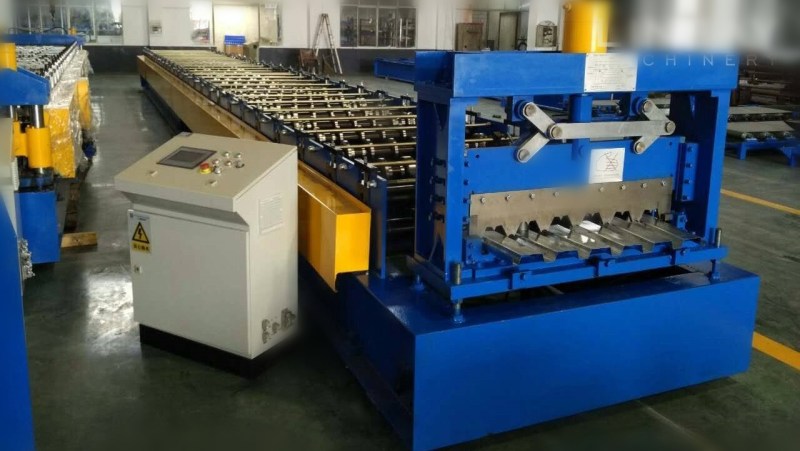
View machine specsSteel Floor Deck Roll Forming Machine is for producing Metal Floor Decks with the thickness up to 2.0mm, yield strength 550 MPA.
View machine specsA Bemo sheet roll forming machine is a large, powerful system that bends flat metal coils into special Bemo roof panels. This fast machine stops the need for slow hand-bending. It uses hard steel.
View machine specsThe Ridge Cap Roll Forming Machine is an essential piece of equipment for producing high-quality roof ridge caps used in modern steel building systems. At Beli RollForming, we specialize in.
View machine specsZ Purlin Roll Forming Machine is used to produce Z Purlins, which webs width is 80-350mm, flange width is 35-80mm, thickness is 1.5-5mm.
View machine specsC Purlin Roll Forming Machine is the primary solution for manufacturing high-quality structural steel profiles used in modern industrial buildings. At Beli RollForming, we take pride in being a.
View machine specsMetal Roof Tile Roll Forming Machine is for producing the metal tiles which is similar to traditional tiles. While the quality and life is better.
View machine specsA Double Layer Roll Forming Machine is an advanced industrial manufacturing system designed to produce two distinct metal profiles on a single machine base. Consequently, this innovative equipment.
View machine specsCorrugated Sheet Roll Forming Machine is a special which can produce various width of sheets without any mould change, only adjusting the feeding guiding. What’s Corrugated Sheet? Corrugated sheet is.
View machine specsC Z Purlin Roll Forming Machine is for producing C and Z Purlins with less change over time. BELI® new technology design, exchange time is only 2 minutes. Our latest design c and z purlin machine.
View machine specsIBR Sheet Roll Forming Machine is for producing IBR sheets for South African Market. IBR Sheet Roll Forming Machine What’s IBR Sheets? Since it was first introduced to South Africa in 1958, IBR has.
View machine specsRoofing Sheet Roll Forming Machine is designed to produce various kinds of roofing sheets, wall cladding as per design drawing with desired length. The thickness is normal from 0.2 to 0.8mm and the.
View machine specsEvery machine on this page does the same three things: uncoil flat steel, bend it through a sequence of roll stands, and cut it to length. What changes is the profile — and the profile changes the machine. A purlin line running 5 mm coil carries several times the shaft load of a roof sheet line running 0.4 mm, so stand count, shaft diameter, drive power and cut-off design all move with the material.
Beli RollForming has built cold roll forming equipment since 2005. This catalogue covers 25 machine types for construction and steel structure work, grouped below by what they produce rather than by model number.
Purlins are the horizontal members that carry roof and wall loads between frames. They are the highest-volume profile in most steel building plants, and usually the first line a new factory orders.
C purlins are rolled from 1.5 to 5.0 mm coil. Z purlins use the same thickness window with a web of 80 to 350 mm and a flange of 35 to 80 mm. The lapped connection between Z sections is what lets a roof span further without a deeper section, which is why Z outsells C at long spans and why both profiles stay in every catalogue.
If you sell both, an interchangeable C/Z machine removes the second line. On the current BELI design the change from C to Z takes about two minutes and is made through the control, not by swapping roll sets by hand.
Multibeam (omega) lines run a wider window again: web 100 to 450 mm and flange 60 to 100 mm, adjustable without new rolls across the standard sizes. They are bought by plants serving cladding, mezzanine and secondary framing work rather than pure structural purlins.
Sheet profiles are regional products. A line built for one market rarely sells its output in another, so this is the part of the catalogue where the destination decides the specification.
Most sheet lines run 0.2 to 0.8 mm coil and are limited by cut-off and stacking rather than by the forming stands. If you are planning output per shift, price the run-out table and the stacker together with the mill.
Metal tiles copy the look of clay and concrete while weighing a fraction of them. Glazed tile lines on the current design reach up to 6 m/min, steel tile profiles reach a depth of 30 mm, and the Monterey V1100 is the profile most often specified for residential roofs in North and South America. All of them are built to the buyer's drawing, because tile profiles are effectively brand products: a millimetre of rib height is a different product on the roof.
Three smaller families complete the range. Deck lines produce B deck for the US structural market and composite floor deck from coil up to 2.0 mm with yield strength up to 550 MPa. Light steel framing lines produce studs and tracks for LSF construction, and one machine can cover ceiling channels, wall angles, POP and furring channels by changing the roll set. Trim lines cover ridge caps and edge details — small parts, but the first thing a building owner sees on the roof.
| Profile family | Material thickness | Line speed | Notable |
|---|---|---|---|
| C purlin | 1.5 - 5.0 mm | model dependent | Structural member for roof and wall framing |
| Z purlin | 1.5 - 5.0 mm | model dependent | Web 80 - 350 mm, flange 35 - 80 mm |
| C/Z interchangeable | 1.5 - 5.0 mm | model dependent | About 2 minutes to change from C to Z |
| Multibeam / omega | per drawing | model dependent | Web 100 - 450 mm, flange 60 - 100 mm |
| Roof and wall sheet | 0.2 - 0.8 mm | model dependent | Klip-Lok, IBR, box profile, corrugated |
| Glazed tile | per drawing | up to 6 m/min | Steel tile profile depth up to 30 mm |
| Floor deck | up to 2.0 mm | model dependent | Yield strength up to 550 MPa |
Four answers decide most of the quotation, and giving them up front saves a round of revisions. First, the profile drawing: dimensions, rib geometry and hole positions. Second, the steel you will actually buy, not the grade you would like to buy — a 550 MPa coil on a mill specified for mild steel will distort the section and wear the rolls early. Third, target output per shift, which decides whether you need automatic stacking or a manual run-out table. Fourth, the coil size and weight your crane or forklift can handle, because a 10 t uncoiler is useless if nothing on site can lift the coil onto it.
If you are still comparing line architectures, our guide to choosing, operating and maintaining a roll forming machine covers the same decisions from a wider angle. For coil purchasing and yield planning, the metal coil calculator works out how many metres a coil will yield before you commit to a tonnage.
 English English
 Español
 Português
 Русский
 العربية
 Bahasa Melayu
 Türkçe
 ไทย
 Bahasa Indonesia