Address
No 1, Yd Road, Huishan District, Wuxi City, Jiangsu. 214183
Work Hours
Monday to Friday: 9AM - 5PM
Saturday: 9AM - 4PM
Address
No 1, Yd Road, Huishan District, Wuxi City, Jiangsu. 214183
Work Hours
Monday to Friday: 9AM - 5PM
Saturday: 9AM - 4PM
Short answer: A Z purlin roll forming machine forms galvanized coil into point-symmetric Z sections that overlap at the supports. Most lines run 1.5 to 3.5 mm strip, 80 to 350 mm web heights, and 16 to 22 forming stands at 12 to 18 m/min. The overlap is the reason the Z section exists, and it sets almost every tolerance on the line.
Two Z purlins nest because one flange points up and the other points down. Bolted together over a rafter, they act as a semi-continuous beam. That saves steel on long bays, but only if the flanges stay parallel and the web holes land where the drawing says. A mill that makes a good single span can still make a lap that will not assemble.
We have built roll forming lines since 2005 and shipped them to 50+ countries. This page stays with the Z-only mill: one profile family, one roll set, and size changes made on that set. If a plant needs C and Z sections from the same frame, the C Z purlin roll forming machine is the page to read instead.
The section has a flat web, two flanges bent in opposite directions, and a short return lip on each flange. It is point symmetric, not mirror symmetric. The lip stiffens the free edge. The opposing flanges let one piece sit inside the next.
A Z purlin roll forming machine takes coil in at one end and delivers cut-to-length sections at the other. It does not make the cleats, sag rods, bolts or roof cladding. Those come from separate suppliers, and their hole grids have to match the holes this line punches.
Most Z purlins go into pre-engineered metal buildings as roof purlins on 6 to 12 m bays. Wall girts use the same section at lighter gauges. The purlin roll forming machine range covers the other profile families in that system.
At an intermediate support, the end of one purlin slides into the end of the next for roughly 10 to 15 percent of the span. Two bolts through the overlapping webs carry moment across the joint. A lapped run carries 30 to 50 percent more load than a simple span at the same steel weight, using the section tables in our C Z purlin guide.
A C purlin roll forming machine makes a symmetric channel. Two C sections butt together rather than nest, so C runs are normally detailed as single spans. That is the practical split between the two profiles.
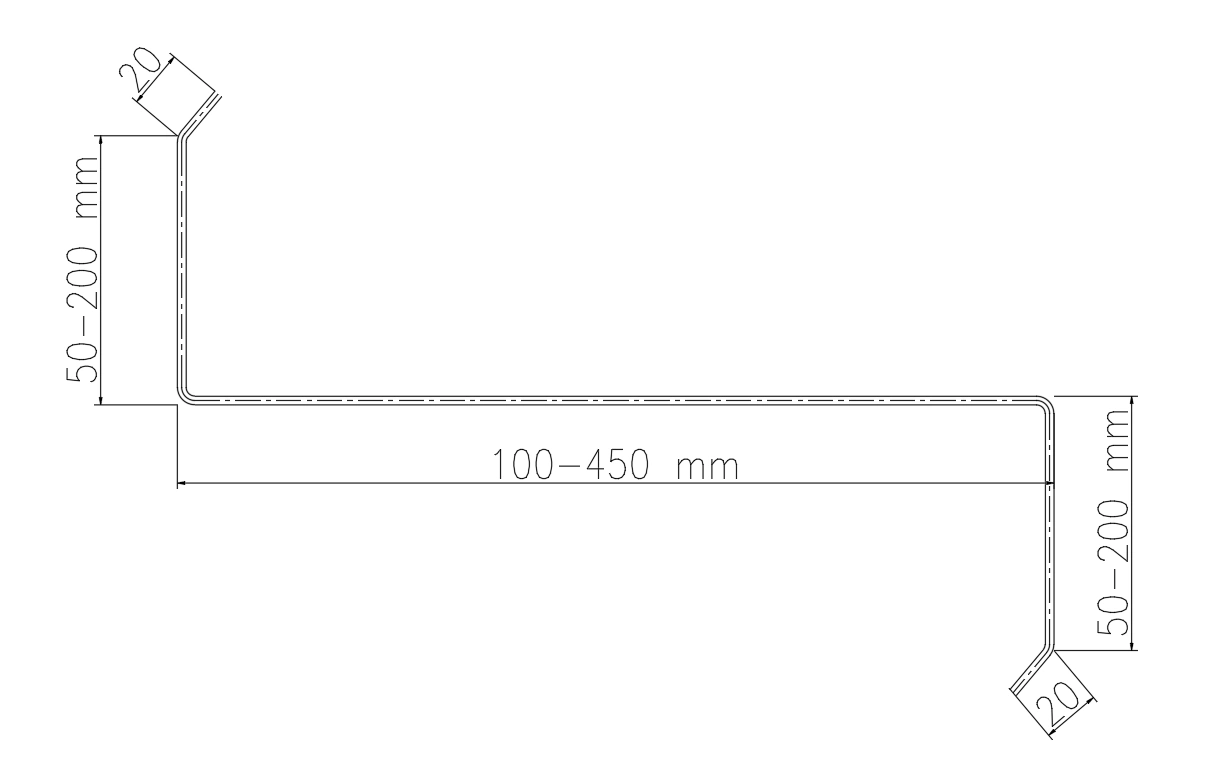
Three things on a Z purlin roll forming machine decide whether a lap assembles on site. The flanges must stay parallel within about 1 mm over the lap length. The web holes must hold their pitch from the first hole to the cut. The cut face must be square, because a burred or flared end will not slide into the next piece.

This is why a Z purlin roll forming machine is judged on assembly, not on output speed alone. A fast line that produces twisted ends costs more in site labour than it saves in the factory.
A standard Z purlin roll forming machine covers the range below. Anything outside it needs a roll set drawn for that size.
| Item | Standard range | Effect on the line |
|---|---|---|
| Web height | 80 to 350 mm | Spacer or servo stand position |
| Flange width | 40 to 80 mm | Roll gap and lip tooling |
| Lip height | 10 to 25 mm | Extra pass above 20 mm |
| Thickness | 1.5 to 3.5 mm | 16 to 22 stands, motor size |
| Heavy option | 4.0 to 5.0 mm | New roll set, more power |
| Strip width | 180 to 600 mm | Decoiler and leveller size |
Coil is usually hot-dip galvanized S350GD or S550GD at Z275 to Z450, or Q235 and Q345 where the local code allows it. Australian jobs often call for G550 to AS/NZS 4600, which is thin and high strength. Grade and coating weight change the forming force and the roll finish, so they belong on the enquiry. The American Galvanizers Association publishes useful coating guidance, and our coil selection guide covers the trade-offs.
North American projects are designed to AISI S100 and the Metal Building Manufacturers Association manuals. European work falls under EN 1993-1-3, published through the Eurocodes portal. Gulf and Saudi buyers usually ask for a heavier zinc coating on coastal sites. Ask which code the purlins will be checked against before the Z purlin roll forming machine is built, because lap length and bolt spacing come out of that calculation.
Strip enters a Z purlin roll forming machine from a 3 to 5 t decoiler and leaves as a punched, cut-to-length section. Every station between those two points has to stay in register.
| Station | Job | Standard | Why it matters |
|---|---|---|---|
| Decoiler, 3 to 5 t | Holds coil, back tension | Yes | Sets run length |
| Leveller, 7 or 9 rolls | Removes coil set | Yes | Coil set twists a Z |
| Servo feeder | Indexes hole pitch | Yes | Holes track cut length |
| Hydraulic punch | Web and flange holes | Optional | Lap bolts land here |
| Forming mill | 16 to 22 stands | Yes | Builds web, flanges, lips |
| Straightening head | Removes bow and twist | Yes | Keeps flanges parallel |
| Cut-off | Hydraulic or flying shear | Yes | Sets end condition |
| Run-out table | Collects finished pieces | Optional | 6 to 12 m lengths |

A Z purlin roll forming machine running 12 to 18 m/min makes roughly 4 to 6 pieces a minute at a 3 m cut length, before coil changes. A flying shear keeps the strip moving and takes the same mill to 20 to 30 m/min. A stop-and-cut hydraulic press drops the effective rate to 8 to 12 m/min.
On a Z purlin roll forming machine with pre-punching, the holes go in before the strip reaches the first forming stand, while it is still flat. A hydraulic press with interchangeable dies puts round holes, slots or oblong holes in the web, and smaller holes in the flanges for cleats and sag rods. On a lapped system the web holes are not decoration. They are the bolt positions that hold two sections together over the rafter.
The servo feeder counts strip length from the first hole, not from the coil end. An encoder at the mill closes the loop, so a 0.5 mm slip per feed does not become a 10 mm error by the sixth hole. Die changes are the slowest part of a size switch on most lines. Our punch die alignment notes explain why a die that is 1 mm off centre shows up as a lap that will not bolt up.

If the project uses a nested lap with staggered bolts, send the hole drawing with the section drawing. Retrofitting a second die station after the mill is built means stripping the feeder and reworking the guarding.
Z sections are ordered in batches of mixed web heights. How the Z purlin roll forming machine moves from one height to the next is usually the biggest decision after the size range itself. Three designs are in common use.
| Design | Size change | End condition | Best for |
|---|---|---|---|
| Manual spacers | About 3 h | Clean | Few sizes, low volume |
| Pre-cut layout | About 2.5 h | Slight end flare | Medium batches |
| Servo automatic | About 2 min | Clean | Daily size changes |
On the manual design the operator moves spacers between the roll stands to set the web width and swaps the cut-off blade to match the new section. It takes about 3 hours and needs a blade rack, but the cut end stays square. The pre-cut layout cuts the strip before forming, so one universal blade covers every size. Changeover drops to about 2.5 hours, at the cost of a slightly flared end that has to be checked before lapping.
The automatic design moves the stands on servo axes from a size typed into the touch screen. A multi-function cut-off handles every profile, so no blade change is needed. Changeover is about 2 minutes. That is the version to buy when a plant ships several sizes a day. The interchangeable C Z purlin machine and our changeover time guide go deeper on the same mechanism.
A hydraulic stop-and-cut is the cheapest option. The strip stops, the die closes, and the line starts again. It is accurate on length but slow, and the blade has to match the section. Pre-cut forming removes the blade problem but leaves a soft edge. A servo tracking flying shear follows the moving strip and cuts without stopping, which is the only option if a Z purlin roll forming machine has to hold 25 m/min with punched holes in register.

Ask for a sample cut end from the actual blade, not from a catalogue. A 1 mm flare at the lip is enough to stop a lap, and the crew on site usually fixes it with a grinder. That is rework the drawing never allowed for.
| Item | Typical value | Acceptance check |
|---|---|---|
| Forming stands | 16 to 22 | Station list signed off |
| Roll material | GCr15, hard chrome | Hardness certificate |
| Main motor | 22 kW | Runs at rated load |
| Hydraulic station | 11 to 15 kW | Punch and cut cycles |
| Cut length | plus or minus 1 mm | 30 pieces measured |
| Hole pitch | plus or minus 1 mm | First and last hole |
| Flange parallel | within 1 mm | Over the lap length |
| Control | PLC, HMI, encoder | Size change demonstration |
Acceptance for a Z purlin roll forming machine should be a run, not a brochure. We run 30 pieces from the buyer’s own coil, then measure the web, flange, lip, cut length, hole pitch and straightness. We also nest two pieces by hand. That last test catches more problems than any of the numbers, because it uses the same motion the erection crew will use. The calibration guide lists the measurements in order.
Buy the Z purlin roll forming machine when the plant makes Z sections in volume and changes size more often than it changes profile family. A dedicated mill has fewer axes, a simpler cut-off, a shorter commissioning time and a lower price for the same gauge range. It also holds flange parallelism more easily, because the roll set is built around one geometry.
Buy a C Z purlin roll forming machine when one project needs both C and Z sections, or when the order book changes profile family every week. The C purlin machine is the third option for plants that only ever run single-span work.
Send the section drawing with the lap detail, the coil grade and coating, the hole pattern, the annual volume and the design code. With those five items we can fix the stand count, punch tonnage, cut-off type and motor sizes for a Z purlin roll forming machine instead of quoting from a catalogue. Send the drawing to our engineering team and we will return a layout and a coil-to-stack cycle time.
Q: What does a Z purlin roll forming machine actually make?
A: It makes point-symmetric Z sections from galvanized coil, with a web, two flanges bent in opposite directions and a lip on each flange. Cleats, bolts, sag rods and roof cladding come from other suppliers. The line punches, forms, straightens and cuts the purlins to length.
Q: Why can Z purlins be lapped but C purlins cannot?
A: The Z flanges point in opposite directions, so the end of one section slides inside the end of the next. Bolts through the overlapping webs transfer moment over the support. A C section is symmetric and butts against its neighbour, so C runs are normally single span.
Q: What size range can one Z purlin roll forming machine run?
A: A standard line covers 80 to 350 mm webs, 40 to 80 mm flanges, 10 to 25 mm lips and 1.5 to 3.5 mm strip. Webs up to 450 mm and 5.0 mm coil are possible with a different roll set, more stands and a larger motor.
Q: How long does a size changeover take?
A: About 3 hours on a manual spacer line with a blade swap, about 2.5 hours on a pre-cut layout, and about 2 minutes on a servo automatic line where the stands move from a size entered on the screen. The right choice depends on how many sizes ship each day.
Q: Which cut-off type should I choose?
A: On a Z purlin roll forming machine, hydraulic stop-and-cut is cheapest but limits the line to 8 to 12 m/min and needs a blade per section. Pre-cut avoids blade changes but can flare the end. A servo tracking flying shear keeps the strip moving at 20 to 30 m/min and gives the cleanest end for lapping.
Q: Can the machine punch flange holes as well as web holes?
A: Yes. A hydraulic pre-punch station with interchangeable dies puts web holes for the lap bolts and smaller flange holes for cleats and sag rods. It sits before the first forming stand, so the hole pitch is indexed while the strip is still flat.
Q: What coil grades and coatings does a Z purlin roll forming machine handle?
A: Hot-dip galvanized S350GD and S550GD at Z275 to Z450 are the usual choice, with Q235 and Q345 where the local code permits. Australian work often uses G550 to AS/NZS 4600. Higher strength grades need more forming force and a harder roll finish.
Q: How do I test the line before it ships?
A: Before a Z purlin roll forming machine leaves the shop, run 30 pieces from your own coil and measure web, flange, lip, cut length, hole pitch and straightness. Then nest two pieces by hand to prove the lap assembles. Check cut length and hole pitch to plus or minus 1 mm, and flange parallelism within 1 mm over the lap length.
Last updated: 2026-11-08
Article Changelog
2026-11-08: Rebuilt the page from 390 words, added the size, line layout, changeover and specification tables, eight FAQs, Rank Math metadata, ten internal links and four factory photos.
Next Review Triggers
AISI S100, EN 1993-1-3 or AS/NZS 4600 revisions change lapped purlin design rules
A 450 mm web or 5.0 mm heavy gauge option enters the standard Z-only range
Servo changeover or flying cut-off becomes standard on the Z-only line

Cable Tray Roll Forming Machine: Ladder vs Perforated Tray Lines...
Read More
Billboard & Signage Roll Forming: Advertising Structure Profiles Short answer:...
Read More
Heavy Duty Step Beam Roll Forming: Thick Coil and High-Strength...
Read More
Rolling Shutter Roll Forming: Shopfront to Warehouse Applications Short answer:...
Read More English English
 Español
 Português
 Русский
 العربية
 Bahasa Melayu
 Türkçe
 ไทย
 Bahasa Indonesia



