Address
No 1, Yd Road, Huishan District, Wuxi City, Jiangsu. 214183
Work Hours
Monday to Friday: 9AM - 5PM
Saturday: 9AM - 4PM
Address
No 1, Yd Road, Huishan District, Wuxi City, Jiangsu. 214183
Work Hours
Monday to Friday: 9AM - 5PM
Saturday: 9AM - 4PM
Short answer: A multibeam roll forming machine makes the sigma purlins and cladding rails used on long span metal roofs, and it forms C, U and Z sections on the same mill. The line levels galvanised coil, punches the fixing holes, forms the section through about 28 stands and cuts each piece to length. One line covers web depths from 100 to 450 mm and coil from 1.5 to 3.2 mm.
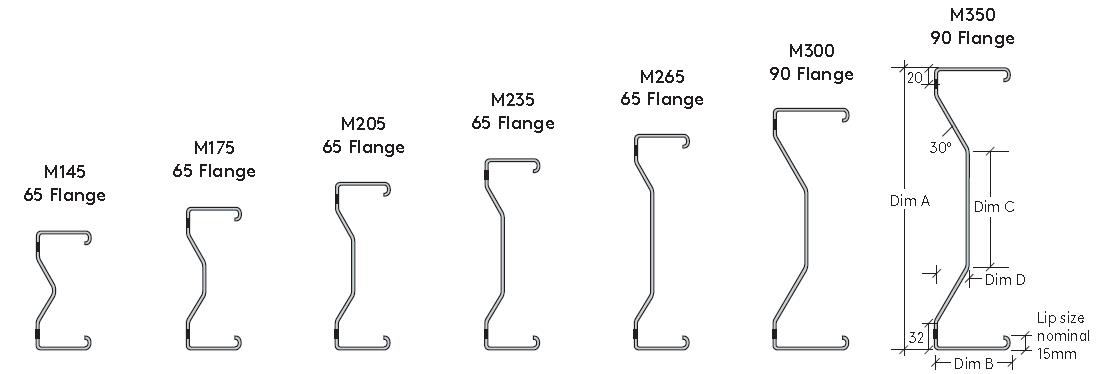
Multibeam is a purlin system name before it is a machine name. The sigma section is point symmetric, so a roof does not need left handed and right handed pieces. Bays up to 15 m are common. Eaves beams and Multichannel sections complete the frame around the roof and wall cladding.
We have built roll forming lines since 2005 and shipped them to 50+ countries. The questions that come back on a multibeam roll forming machine are always the same: which sections one mill can really run, how long a size change takes, and how the holes stay aligned after forming. The numbers below are the ones we quote against.
A multibeam roll forming machine takes flat galvanised strip and returns a cold formed purlin ready for bolted assembly. It does not make the roof sheet, the cleats, the bolts or the sag rods. Those arrive from other suppliers. What a multibeam roll forming machine controls is the section geometry, the fixing hole grid and the cut length, because those three decide whether the roof frame goes together without a hammer.
The sigma profile is the reason the system exists. Its folded web adds stiffness, so the section spans further at the same steel weight. The shape is non handed, which means one stocked profile works on both sides of a pitched roof. System handbooks also use fewer components than a plain C and Z arrangement, so site assembly is quicker. Cold formed purlin design sits under EN 1993-1-3 on the Eurocodes portal.
Two related pages cover narrower ground. Our Z purlin roll forming machine page deals with lapped Z sections only, while the multibeam purlin machine page lists the Omega and C variant in short form. This page stays with the whole multibeam roll forming machine: the section family, the coil, the changeover and the acceptance run. The purlin roll forming machine hub holds the full range.
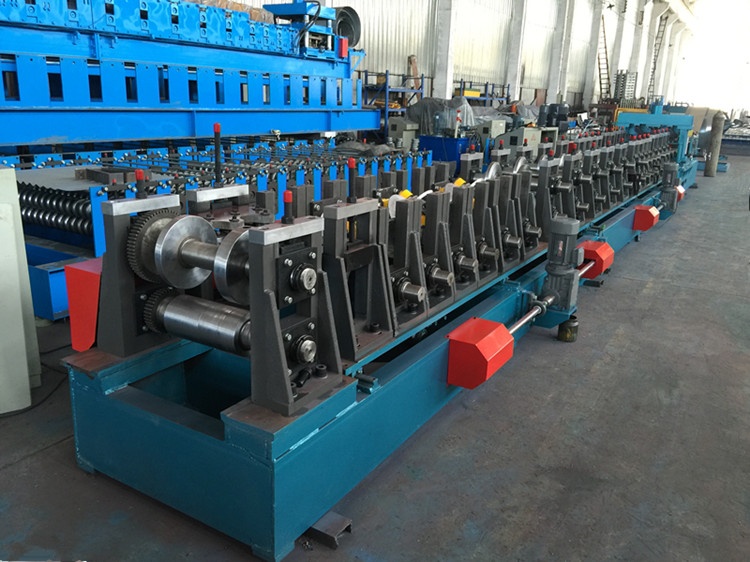
A multibeam roll forming machine earns its name by covering more than one section family. Web depth changes by moving the roller plates along linear guides. Section family changes by rotating a module or swapping a cassette. Neither operation should need a new mill.
| Section family | Web depth | Flange | Lip |
|---|---|---|---|
| C purlin | 100 to 450 mm | 60 to 100 mm | 15 to 25 mm |
| U channel | 100 to 450 mm | 60 to 100 mm | Plain edge |
| Z purlin | 100 to 450 mm | 60 to 100 mm | 15 to 25 mm |
| Sigma purlin | 140 to 450 mm | 60 to 100 mm | 15 to 20 mm |
The sigma section adds a folded web bead about 20 mm deep. That bead needs its own forming passes, usually six out of a 28 stand mill. Coil width up to 750 mm covers the largest section: a 450 mm web, two 100 mm flanges and two lips still leave room for edge trim. Our C purlin roll forming machine page explains the plain C geometry in more detail.
Multibeam systems are normally made from hot dip galvanised S450GD steel to BS EN 10346 and BS EN 10143. Yield strength is 450 MPa. A Z275 coating is 275 g per square metre on both faces, which works out near 20 microns per side. Z600 and zinc aluminium coatings such as Magnelis are options for aggressive sites. The MetPurl technical manual gives the same material and fixing hole basis.
The older version of this page quoted 1.5 to 3.2 mm in one place and 4.5 mm in another. Here is the corrected rule. The standard multibeam roll forming machine runs 1.5 to 3.2 mm. Reaching 4.5 mm means a re gauged mill with larger shafts, a wider roll gap, a stronger punch frame and bigger motors. It is a separate build, not a setting on the same machine.
Roll finish is the part of a multibeam roll forming machine that buyers rarely ask about, and it is the first thing to show on an exposed eaves beam. Polished Cr12MoV rolls at HRC 58 to 62, with a controlled gap, keep the strip from picking up zinc on the roll face. A rough roll leaves drag marks that show through on an exposed eaves beam. The American Galvanizers Association design notes cover how the coating behaves in fabrication. A cut to length line handles the same coil class, but it delivers flat sheet rather than a formed section.
Strip enters a multibeam roll forming machine from a 10 tonne hydraulic decoiler and leaves as a stacked purlin. Hole position is counted from the first punch stroke, so the feeder, the encoder and the cut-off have to stay in step for the whole run.
| Station | Function | Typical size | Why it matters |
|---|---|---|---|
| Hydraulic decoiler | Holds coil, sets back tension | 10 t | Sets run length |
| Leveller | Removes coil set | 7 rolls | Bowed strip twists the web |
| Servo feeder and punch | Fixing and service holes | 18 mm dies | Pitch tracks cut length |
| Entry guide | Centres the strip | Adjustable | Keeps flanges equal |
| Forming mill | Forms web, flanges, lips, bead | 28 stands | Makes the section |
| Cut-off | Cuts to ordered length | Hydraulic or flying | Sets the shift rate |
| Run-out and stacker | Collects finished lengths | 6 to 12 m | Protects the coating |
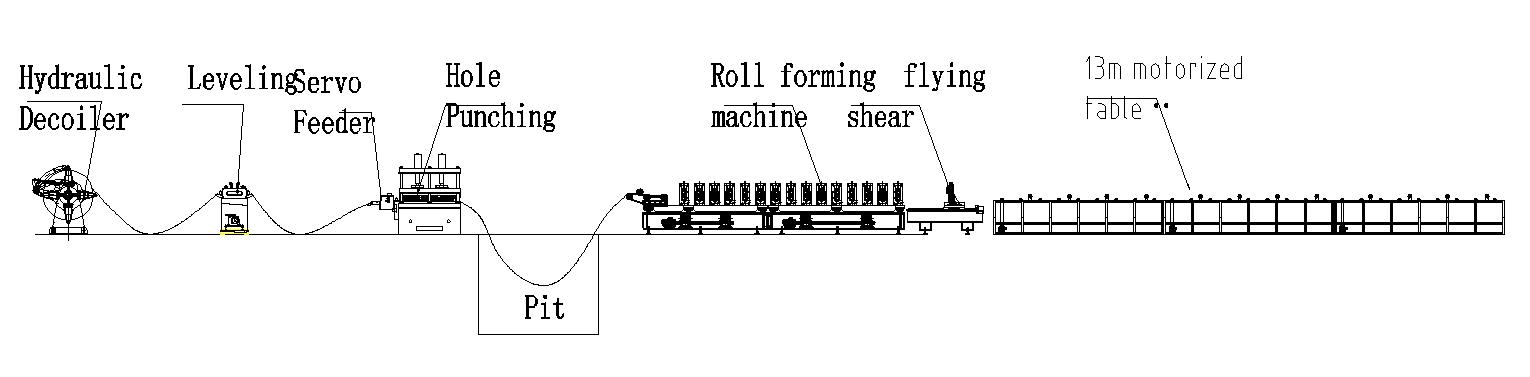
Long purlins need support all the way out of the mill. An automatic stacker keeps 12 m pieces straight and stops the zinc faces rubbing during handling. The purlin machine videos show the strip passing through each station.
Buyers often ask for a two minute changeover on a multibeam roll forming machine. That figure belongs to one level only. There are three different jobs, and they take very different time.
| Change | What moves | Typical time | Best for |
|---|---|---|---|
| Web depth, same family | Roller plates on linear guides | 2 to 5 min | Daily size lists |
| C to Z section | Rotating module or spacers | 20 to 45 min | Mixed roof frames |
| Sigma to C, U or Z | Full cassette with six bead passes | 2 to 3 h | Planned campaign runs |
The first level is a recipe on the HMI. Servo screws move both roller plates together and the operator checks one sample piece. The second level changes which side of the strip is bent. The third level replaces the roll sets that form the 20 mm web bead, so the cassette has to come out. Times above are typical for our builds and depend on the tooling set.
Our C Z purlin roll forming machine page covers fast C to Z machines. The adjustment methods for C purlin machines page compares manual, motorised and servo width setting. If the order book is mostly one section family, a dedicated mill beats a multibeam roll forming machine on output and price.
On a multibeam roll forming machine, punching happens on flat strip ahead of the mill. A sigma system usually uses 18 mm holes for M16 grade 8.8 bolts. Other systems use M12. Service holes, anchor holes, lap holes and dual purlin holes sit on different pitches, and each one has a die set or a movable punch head.
The encoder counts strip from the first punch stroke. The cut-off reads the same count, so the hole grid stays registered to the cut end. On a multibeam roll forming machine we hold hole pitch to plus or minus 0.5 mm and cumulative pitch to plus or minus 1.0 mm over 6 m. Beyond that, the cleats at a lapped support will not line up. Deburring dies matter too, because a burr lifts the zinc at the bolt seat.

A flying punch keeps the strip moving and suits long runs. A stop and punch press is cheaper and suits short batches with many different grids. Either way, ask the supplier to show the hole map as a drawing, not as a list in a brochure. A multibeam roll forming machine that punches well but drifts on length will still hold up the erection crew.
The cut-off is the hardest tool on a multibeam roll forming machine when sigma sections are in the mix. A profile blade follows the folded web and both flanges. A flat blade crushes the 20 mm bead and leaves a burr that stops the next piece sliding into a sleeve.
A multibeam roll forming machine is limited by its cut-off. A hydraulic stop and cut drops the effective rate to 8 to 12 m/min because the strip stops for every length. A flying shear keeps the strip moving at 20 to 30 m/min. Pre cut lines, where the blank is cut before the mill, can go above 30 m/min. At 20 m/min, an eight hour shift at 80 percent utilisation produces about 7,680 m, which is roughly 1,280 pieces at 6 m each. Halve the speed and the shift output halves with it.

Real output also depends on coil changes and size changes. Two coil changes and one web depth change cost less than an hour on a well set multibeam roll forming machine. A cassette swap costs most of a morning, so it belongs in the production plan rather than inside a single shift.
These are the ranges we build a multibeam roll forming machine to. A multibeam roll forming machine is quoted against a section drawing, so the table is a starting point rather than a model number.
| Specification | Standard build | Optional build |
|---|---|---|
| Coil width | Up to 750 mm | Wider on request |
| Coil thickness | 1.5 to 3.2 mm | Up to 4.5 mm, re gauged |
| Cut length | 1.8 to 12 m | Longer run-out |
| Forming stands | 28 | 24 to 30 |
| Main motor | 37 kW | 45 kW |
| Hydraulic station | 22 kW | 30 kW |
| Decoiler | 10 t | 15 t |
| Control | PLC and HMI recipes | NC file import |
The older page listed product length as unlimited. No cut-off works that way. Length is set by the run-out table, the stacker and transport, which is why 12 m is the normal ceiling even though the mill itself has no fixed end point.
Acceptance of a multibeam roll forming machine should be a run, not a brochure. We run 30 pieces from the buyer coil, then measure the section and the holes. A multibeam roll forming machine is accepted on these eight readings.
Web depth within plus or minus 0.5 mm. Flange width within plus or minus 0.5 mm. Lip angle within one degree. Hole pitch within plus or minus 0.5 mm. Cut length within plus or minus 1 mm over 6 m. Twist below 1 mm per metre. Bow below 1 mm per metre. Zinc coating intact, with no peeling at the cut edge or the punch burr. Two sigma pieces also have to slide together over a sleeve without being driven in.
We also time one web depth change, one C to Z change and one coil change during the same run. Those three numbers tell the buyer what the shift plan will look like in month six. If the order calls for 4.5 mm coil, the acceptance run uses that coil, not the standard 2.5 mm sample.
Send six things with the enquiry: the section drawings with the sigma bead and lap detail, the hole map with bolt sizes, the coil grade and coating weight, the annual volume and shift pattern, the cut length range, and the standard the finished frame must meet. With those we can fix the stand count, the punch tonnage, the cut-off type and the motor sizes instead of guessing from a catalogue.
Tell us the section mix as well. A plant making 90 percent sigma purlins needs a different tool package from a plant that changes section family twice a day. The roll forming machine range shows where the dedicated mills sit. Send your drawing to our engineering team and we will return a line layout, a station list and a coil to purlin cycle time for your multibeam roll forming machine.
Q: What does a multibeam roll forming machine actually make?
A: It makes sigma purlins, cladding rails and the C, U and Z sections used in the same roof frame. The line punches the fixing holes, forms the section and cuts it to length. Roof sheets, cleats, bolts and sag rods come from other suppliers.
Q: Can one line really make C, Z and sigma sections?
A: Yes, but at three levels of effort. Width changes within one family take 2 to 5 minutes from the HMI. C to Z changes take 20 to 45 minutes. A sigma section needs its own cassette with six bead passes, so that change takes 2 to 3 hours.
Q: What coil grade does the system need?
A: Hot dip galvanised S450GD to BS EN 10346, usually with a Z275 coating at 275 g per square metre. That gives about 20 microns per side. Z600 and zinc aluminium coatings are options for coastal or industrial sites.
Q: Can the same machine run 4.5 mm coil?
A: Not in the standard build. The standard mill runs 1.5 to 3.2 mm. A 4.5 mm version needs larger shafts, a wider roll gap, a stronger punch frame and bigger motors, so it is quoted as a separate machine.
Q: Are the holes punched before or after forming?
A: Before forming, on flat strip. A servo feeder indexes the coil and the press cuts service, anchor and lap holes. The encoder that counts those holes also triggers the cut-off, so the grid stays registered to the cut end.
Q: How fast does the line run?
A: 8 to 12 m/min with a hydraulic stop and cut, 20 to 30 m/min with a flying shear, and above 30 m/min on a pre cut layout. At 20 m/min and 80 percent utilisation, one eight hour shift yields about 7,680 m.
Q: Why is the sigma section non handed?
A: The folded web makes the profile point symmetric. One stocked section fits both sides of a pitched roof, so there are no left and right pieces to sort on site. The same bead adds stiffness for longer bays at equal steel weight.
Q: What should a factory acceptance test include?
A: Run 30 pieces from the buyer coil and record web depth, flange width, lip angle, hole pitch, cut length, twist, bow and coating condition. Add a lap fit check on two sigma pieces, then time one width change, one section change and one coil change.
Last updated: 2026-11-09
Article Changelog
2026-11-09: Rebuilt the page from 439 words, corrected the conflicting 3.2 mm and 4.5 mm thickness claims and the unlimited length claim, added four tables, eight FAQs and eleven internal links.
Next Review Triggers
EN 10346 or EN 1993-1-3 revisions change the material or design basis
A new sigma depth or a coil class above 4.5 mm enters the range
Servo cassette systems bring a full sigma changeover under two hours

Cable Tray Roll Forming Machine: Ladder vs Perforated Tray Lines...
Read More
Billboard & Signage Roll Forming: Advertising Structure Profiles Short answer:...
Read More
Heavy Duty Step Beam Roll Forming: Thick Coil and High-Strength...
Read More
Rolling Shutter Roll Forming: Shopfront to Warehouse Applications Short answer:...
Read More English English
 Español
 Português
 Русский
 العربية
 Bahasa Melayu
 Türkçe
 ไทย
 Bahasa Indonesia



