


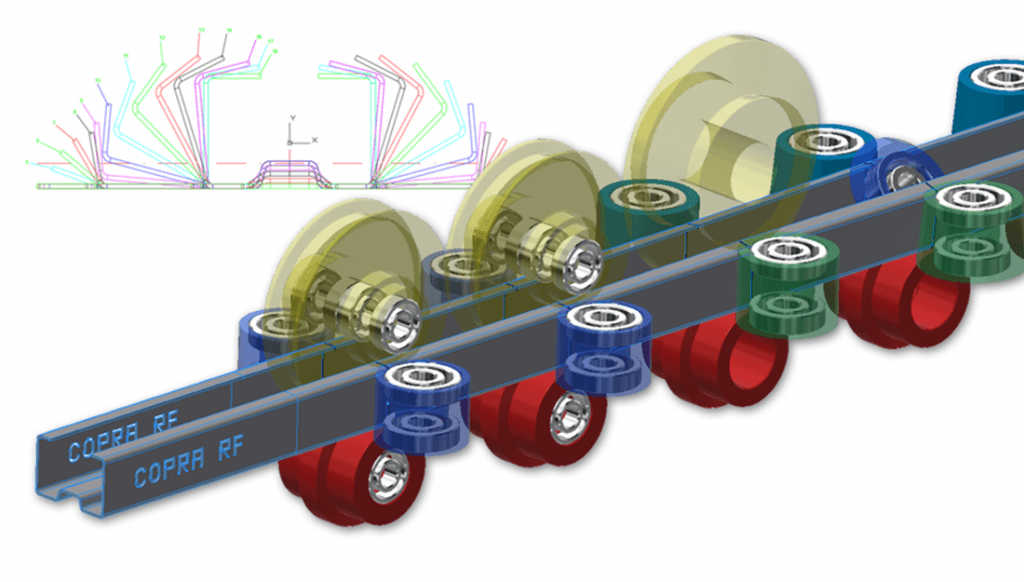
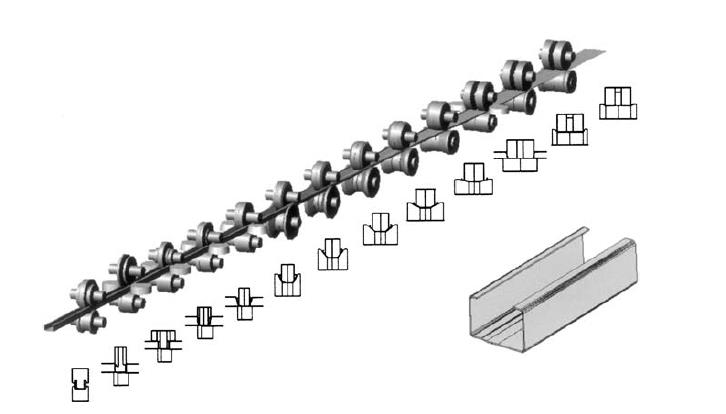
🎯 Roll forming machine design is the plan for bending a flat metal strip into a finished shape. The metal passes through groups of rollers. A good plan uses the fewest rollers possible to make perfect parts every time.
If the metal moves “too fast” through sharp bends, the part will warp. If it moves “too slow” through too many rollers, the machine costs too much to run.
To see how this machine fits in your factory, read our comprehensive analysis of roll forming machine setups.

5 Simple Rules for Perfect Parts
1. How the Part's Shape Changes the Design
🎯 The shape of your final product is the biggest factor in roll forming machine design. A deep shape, wide flat areas, or sharp bends mean you need more rollers to do the job right.
A complex drawing will need 3 to 4 more forming steps than a simple drawing. Here is exactly how shape changes the design:
| Shape Feature | How It Changes The Machine Design |
| 📏 Part Depth | A 70mm deep part needs 2 to 3 more stands than a 60mm part. A standard 50-80mm “top hat” needs 14 stands. |
| ⬛ Wide Flat Areas | Wide, flat metal can get wavy during rolling. |
| 〰️ Grooves | Adding bottom grooves stops waviness and adds strength, but requires 4 extra stands and a bigger motor. |
| 🔄 Bending Radius | Designers must ensure the metal can actually bend to the requested curve without breaking. |
| 📐 Tolerances | Tighter product rules (tolerances) increase tooling costs and the number of passes. |
Read Roll Forming Advancement: 5 Incredible Secrets 2026 to see new design tools.
2. How the Metal Changes the Machine
The metal you choose heavily affects the roll forming machine design. Designers must check the metal’s yield strength, tensile strength, and how much it stretches.
-
🧲 Springback: After bending, metal tries to bounce back flat. Stronger metals bounce back more.
-
🎺 Flare: The ends of deep or very strong parts often bend outward (flare).
-
📏 Thickness Rules: The gap between rollers equals the thickest possible metal size + extra tolerance.
-
↔️ Width Rules: Extra metal width usually adds to the size of the outside lip on the final part.
-
📉 Flat Metal: Designers assume the starting metal is perfectly flat (no cable, bow, or twist).
(💡 Pro Tip: If your parts do twist, read How to Fix Bow and Twist: 5 Amazing Secrets).
3. Choosing the Base for Roll Forming Machine Design
The rollers must fit perfectly on the machine base. Designers need all the exact sizes.
🏭 Common Types of Machines:
-
Cantilever Mill: Great for small, light parts.
-
Duplex Mill: Great for parts with changing widths.
-
Side By Side Mill: Runs two different profiles on one machine.
-
Standard Mill: The heavy-duty double-high standard.
-
Rafted Mill: Built for quick roller swaps using removable cassettes.
⚙️ Important Machine Measurements:
| Measurement | What It Means |
| Shaft Size | The bar that holds the rollers. Thickness depends on metal strength. |
| Side-to-Side Distance | The space from the center of one shaft to the next. |
| Up-and-Down Distance | Space between top and bottom shafts (adjustable by hand/motor). |
| Bottom Shaft to Floor | Limits how big the bottom roller can be. |
-
Top vs. Bottom Drive: A bottom shaft drive is normal. A top shaft drive costs extra, but it grabs the metal better to push and pull it. A bigger motor speeds up the machine.
4. Designing the Rollers
-
🔄 Swapping Rollers: If you change rollers every 2 to 6 months, the machine must be built for easy swaps.
-
🪚 Splitting Rollers: Rollers are often cut into smaller pieces. This makes them lighter, easier to install, and easier to reuse.
-
⏸️ Side Rollers: These stand up straight instead of lying flat. They are great for metal tubes.
-
⭕ Roller Sizes: The designer plans the exact middle (pitch), smallest, and largest sizes.
-
🔩 Spacers and Shims: These metal rings slide onto the shaft. The rollers, spacers, and shims combined must exactly fill the empty space.
5. What Decides the Number of Rollers in Roll Forming Machine Design?
People always ask how many roller stands they need. The answer depends on:
-
✅ The metal type and thickness.
-
✅ If the metal strip is one long unbroken piece.
-
✅ If the metal has pre-punched holes or cutouts.
Today, designers save time by using computer software like Copra. Find the best machine builders in our Top 10 Roll Forming Machine Manufacturers 2026 Leaders list.
Roll Forming Station Calculator
To calculate the number of stations required for a specific profile, engineers generally use the Flower Pattern method, which accounts for the material’s yield strength, thickness, and the complexity of the bends.
Machine Engineering Configurator
Frequently Asked Questions
The shape of the final product is the most important part. Deeper shapes and wider parts need more rollers.
A 70mm deep part stretches the metal more than a 60mm part. Because of this extra stretching, the 70mm part needs 2 or 3 more roller stands.
Grooves are small lines pressed into wide, flat parts. They make the metal stronger and stop it from looking wavy. Making them requires a bigger motor and 4 extra stands.
The gap between the top and bottom rollers must perfectly fit the metal. Designers set the gap to the maximum thickness of the metal strip plus tolerances.
Bottom drives are standard. Top drives cost more, but they grab the metal tightly. This helps push and pull heavy coils through the machine.
Solid rollers are very heavy. Cutting them into smaller pieces makes them easier to lift, easier to put on the machine, and easier to reuse.
Yes. Today, engineers use special 3D computer software to simulate the metal bending. This helps them find mistakes before they cut any real steel for the rollers.
Conclusion: Elevate Your Manufacturing in 2026
Mastering roll forming machine design is no longer just about bending metal; it is about engineering precision, minimizing waste, and maximizing operational efficiency. By understanding how cross-sectional complexity, material yield strength, and specific mill configurations interact, manufacturers can eliminate costly defects—like bow, twist, and flare—before the first piece of steel is ever cut for tooling.
As industrial demands grow stricter in 2026, relying on scientifically backed design principles and advanced software simulation is the only way to ensure flawless, high-speed production.
Are you ready to optimize your production line or engineer a custom roll forming solution from scratch? Don’t leave your manufacturing success to chance. Partner with the industry experts who understand the deep engineering behind every single roller. Visit Beli Rollforming today to consult with our world-class engineering team, upgrade your tooling, and invest in cutting-edge roll forming machinery tailored to your exact specifications.


