Dirección
No 1, Yd Road, Distrito de Huishan, Ciudad de Wuxi, Jiangsu. 214183
Horario de trabajo
Lunes a viernes: 9AM - 5PM
Sábado: 9AM - 4PM
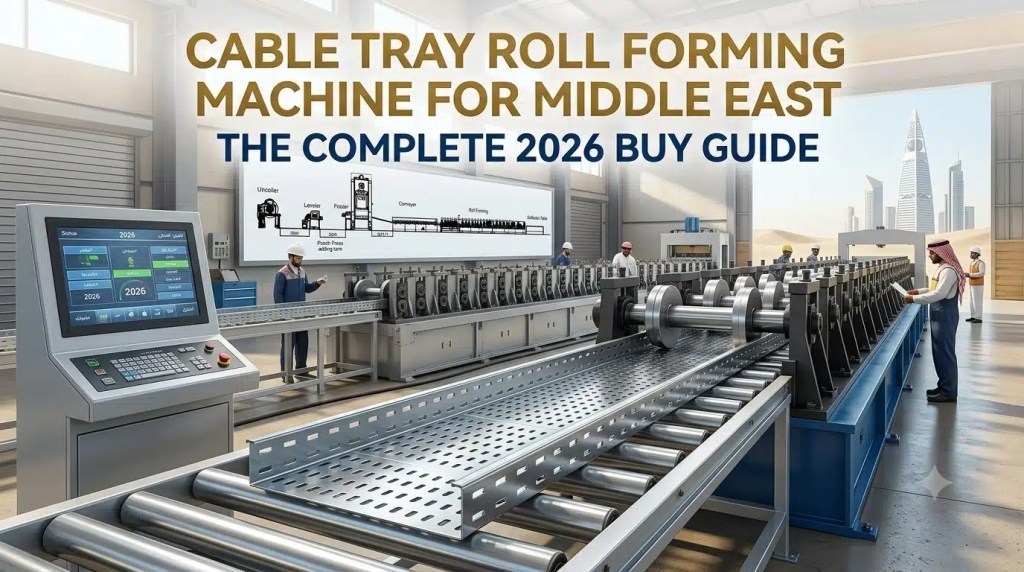
Si busca una máquina perfiladora de bandejas portacables para Oriente Medio, esta guía de compra le ofrece la información esencial. La demanda está en auge. Megaproyectos en Arabia Saudita, Emiratos Árabes Unidos y Qatar requieren kilómetros de sistemas de gestión de cables. La verdadera pregunta no es si comprar una, sino qué máquina cumplirá con las expectativas.
Oriente Medio no es un mercado indulgente. Las temperaturas ambiente en una fábrica de Dammam pueden alcanzar los 50 grados Celsius en agosto. Hay polvo por todas partes. Sus gabinetes eléctricos y sistemas hidráulicos deben soportarlo. Cualquier máquina perfiladora de bandejas portacables que se envíe aquí debe sobrevivir a condiciones que destruyen equipos más baratos en seis meses. Al mismo tiempo, los plazos de los proyectos vinculados a Visión Saudí 2030 El gasto en infraestructura no se mueve. Necesitas una máquina que funcione.
Believe Industry Company lleva exportando máquinas para bandejas portacables a los mercados del Golfo Pérsico desde 2005. Hemos atendido a más de 30 países. La experiencia adquirida en esas instalaciones se refleja en cada máquina que fabricamos hoy en día. Esta guía explica todo lo que un comprador necesita saber antes de realizar un pedido.
El gasto en construcción en los países del CCG superó los 140.250 millones de dólares en proyectos activos y planificados en 2025. Gran parte de ello corresponde a centros de datos, sistemas de metro, ciudades industriales y parques solares. Todos ellos necesitan sistemas de bandejas portacables a gran escala. Por eso, la demanda de una máquina perfiladora de bandejas portacables capaz de soportar las condiciones del Golfo sigue aumentando año tras año.
Los fabricantes locales de bandejas portacables en Riad, Jebel Ali y Doha solían comprar bandejas terminadas de Europa o China. Ese modelo está cambiando. Los aranceles de importación, los retrasos logísticos y las políticas de localización bajo programas como Nusaned de Arabia Saudita están impulsando a los fabricantes a establecer su propia producción. Línea de Producción de Bandejas Portacables Se amortiza más rápido de lo que la mayoría de los compradores esperan. Para una máquina inteligente de bandejas portacables destinada a operaciones en Oriente Medio, el coste se amortiza en 12 a 18 meses, incluso con precios de bandejas conservadores.
En el Golfo Pérsico también existen preferencias específicas en cuanto a materiales. Predomina el acero galvanizado en caliente. La bobina pregalvanizada es adecuada para trabajos en interiores. El acero inoxidable 304 y 316L se utiliza con frecuencia en instalaciones costeras y petroquímicas. Su máquina perfiladora de bandejas portacables necesita herramientas que puedan procesar al menos dos de estos materiales. Tres es aún mejor.
| Material | Rango de espesor | Resistencia a la corrosión | Aplicación típica de Oriente Medio | Factor de costo |
|---|---|---|---|---|
| Acero pre-galvanizado | 0.8-2.0 mm | Moderado (solo en interiores) | Edificios de oficinas, centros comerciales, almacenes | Base (1x) |
| Acero galvanizado por inmersión en caliente | 1,0-2,5 mm | Alta (exterior, húmedo) | Cableado exterior, estaciones de metro, aeropuertos | 1.3x |
| Acero inoxidable 304 | 0,8-1,5 mm | Muy alto (costero) | Plantas desalinizadoras, subestaciones costeras | 2.5x |
| Acero inoxidable 316L | 0,8-1,5 mm | Extremo (en alta mar, químico) | Plataformas petrolíferas y de gas, refinerías petroquímicas | 3.5x |
Esta tabla de materiales es importante al configurar la máquina de bandejas portacables para la producción en Oriente Medio. Una fábrica en Sharjah que realiza principalmente trabajos comerciales en interiores puede funcionar con acero pregalvanizado y galvanizado en caliente. Una fábrica en Jubail que abastece a contratistas de Aramco necesitará acero inoxidable 316L desde el primer día.
Un solo formadora de rollos de bandejas portacables La máquina de Believe Industry no se limita a producir un solo perfil. Permite alternar entre varios tipos de bandejas en la misma línea. Una máquina perfiladora de bandejas portacables bien diseñada elimina la necesidad de tres líneas separadas en su taller. Esto es lo que puede producir una sola máquina:
Esa flexibilidad es fundamental. Una fábrica en Sharjah que produce bandejas para un nuevo complejo hospitalario necesitará todos estos tipos de perfiles. Una línea de producción inteligente de bandejas portacables para compradores de Oriente Medio cubre toda la gama sin necesidad de equipos adicionales. Comprar máquinas separadas para cada perfil supone un desperdicio de espacio y capital.

Cada máquina de bandejas portacables Para Oriente Medio, los componentes básicos son los mismos. Las diferencias de calidad radican en los detalles. Al comprar una máquina perfiladora de bandejas portacables, la lista de componentes ofrece mucha más información que el folleto. Esto es lo que incluye la línea:
1. Desenrollador hidráulico (10-15 toneladas) Sujeta la bobina de acero. El desenrollador de las máquinas Believe Industry es motorizado y cuenta con un mandril expansible. Su capacidad varía de 5 a 15 toneladas, según el tamaño de la bobina. La opción de carro portabobinas permite que un solo operario cargue las bobinas sin necesidad de una carretilla elevadora.
2. Unidad de nivelación y alimentación Aplana la tira antes de que entre en la estación de perforación. Cabezal nivelador de siete rodillos. Este paso es fundamental. Si la tira no está plana al entrar en la perforadora, la posición de los agujeros variará milimétricamente, lo que se acumulará a lo largo de una bandeja de 3 metros.
3. Estación de punzonado servohidráulico Aquí es donde fallan muchas máquinas. Believe Industry utiliza tres configuraciones de perforación (ver la tabla comparativa a continuación). El juego de troqueles es de cambio rápido. Los operarios cambian los troqueles para perforar bandejas, bandejas sólidas o tapas en menos de 15 minutos.
4. Tren de laminación (18-22 estaciones) Soportes de conformado progresivo. Cada soporte añade una ligera curvatura a la tira hasta que emerge el perfil final de la bandeja. Las laminadoras de Believe Industry utilizan rodillos de Cr12MoV endurecidos a HRC 58-62. Los rodillos guía con cojinetes sellados mantienen la tira recta en todo el ancho.
5. Desconexión del servomotor en vuelo Una cizalla volante que corta la bandeja conformada a la longitud deseada sin detener la línea de producción. Accionada por servomotor para una precisión de longitud de ±0,5 mm. La cuchilla está fabricada en acero SKD11 con una vida útil aproximada de 500 000 cortes antes de necesitar afilado.
6. Unidad hidráulica de plegado y ranurado (para curvas y cubiertas) Para la producción de curvas internas, curvas externas o cubiertas, esta estación se encarga de los pasos de conformado adicionales. Sujeción hidráulica con control de tiempo de carrera mediante PLC.
7. Apilador automático Las bandejas terminadas se apilan automáticamente en una mesa de salida. Believe Industry ofrece opciones de apiladores neumáticos y servoeléctricos. Apilador automático Reduce los costes laborales en aproximadamente un 40 por ciento en comparación con el apilamiento manual.
8. Sistema de control PLC PLC Siemens o Mitsubishi con interfaz hombre-máquina (HMI) de pantalla táctil de 10 pulgadas. Los operarios configuran el ancho y largo de la bandeja, el patrón de orificios y la cantidad de lotes desde una sola pantalla. El PLC almacena hasta 100 programas de recetas para diferentes perfiles de bandeja.

Tres aspectos distinguen las máquinas de Believe Industry de las alternativas económicas. Cada uno de ellos es importante cuando se producen 2000 bandejas al día para un proyecto que conlleva multas por retraso en la entrega.
1. Rango de ancho: de 50 a 600 mm, ampliable hasta 1000 mm, ajuste totalmente automático.
La mayoría de las máquinas perfiladoras de bandejas portacables para Oriente Medio tienen un ancho máximo de 500 o 600 mm. La nuestra ofrece un ancho mayor. Si su mercado requiere bandejas de 800 o 1000 mm de ancho para tendidos de cables de alta tensión, la máquina lo gestiona. El cambio de ancho es automático. El operario introduce el nuevo ancho en la interfaz hombre-máquina (HMI) y los rodillos laterales y las guías se reposicionan automáticamente mediante servomotores. El cambio se realiza en menos de 2 minutos. Sin necesidad de cambiar espaciadores manualmente, sin ajustes de calces, sin ensayo y error.
2. Tres métodos de golpeo para tres niveles de velocidad
No todas las fábricas necesitan 15 metros por minuto. Algunas necesitan precisión en lugar de velocidad. Otras necesitan un alto rendimiento. Believe Industry ofrece tres Prensa de punzonado configuraciones en el mismo bastidor de máquina:
| Método de perforado | Velocidad | Ideal para |
|---|---|---|
| Punzonado hidráulico servoaccionado | 2 a 3 m/min | Trabajos de bajo volumen y alta precisión; bandejas de acero inoxidable. |
| Prensa punzonadora servohidráulica | De 4 a 6 m/min | Producción de volumen medio; diferentes tipos de bandejas en el mismo turno. |
| Prensa mecánica servoaccionada de alta velocidad | De 12 a 15 m/min | Grandes volúmenes; series largas de un solo perfil; grandes pedidos de infraestructura |
La tercera opción utiliza una prensa mecánica de manivela accionada por un servomotor. Alcanza una producción de entre 12 y 15 metros por minuto en bandejas perforadas. Esto equivale aproximadamente a entre 3000 y 4000 bandejas de tres metros por turno de 8 horas. Para una fábrica en Dammam que trabaja como subcontratista para NEOM, esta producción marca la diferencia entre obtener ganancias y tener que pagar penalizaciones.
3. Una máquina, múltiples perfiles
Un solo máquina de fabricación de bandejas portacables Believe Industry fabrica curvas interiores, curvas exteriores, tapas para bandejas portacables y conductos para bandejas portacables. No se necesitan máquinas dobladoras ni formadoras de tapas adicionales. El cambio de perfil implica cambiar la matriz de punzonado y, posiblemente, la herramienta de plegado. La mayoría de los operarios aprenden el procedimiento de cambio en una semana.
| Tipo de perfil | ¿Producido en la misma máquina? | Tiempo de cambio |
|---|---|---|
| Bandeja portacables perforada | Sí (perfil principal) | Base |
| Bandeja portacables de fondo sólido | Sí | 5-10 minutos (cambio de troquel de perforación) |
| Tapa de bandeja portacables | Sí | 10-15 minutos (cambio de herramientas) |
| Bandeja portacables con curvatura interior | Sí | 15-20 minutos (montaje de la unidad plegable) |
| Bandeja portacables con curvatura exterior | Sí | 15-20 minutos (igual que la curva interior, configuración del espejo) |
| Canaleta para bandejas de cables | Sí | 10-15 minutos (ajuste de profundidad) |
Esta capacidad multiperfil es precisamente lo que necesitan la mayoría de los compradores de Oriente Medio. No se limitan a fabricar bandejas perforadas, sino que crean sistemas completos de gestión de cables.

Una máquina para fabricar bandejas portacables en Oriente Medio, destinada al mercado del Golfo Pérsico, debe cumplir con estándares específicos. Los consultores del proyecto en Dubái y Riad verificarán las certificaciones.
La norma IEC 61537 rige los sistemas de bandejas y escaleras portacables a nivel internacional. La mayoría de las especificaciones de proyectos del Golfo hacen referencia directa a ella. Cualquier línea de producción de bandejas portacables para proyectos en Oriente Medio debe producir bandejas que cumplan con esta norma. Sus bandejas deben cumplir con la clasificación de carga y los requisitos de materiales definidos en IEC 61537.
Para el mercado saudí específicamente, la certificación SASO (Organización Saudí de Normas, Metrología y Calidad) se aplica a la maquinaria importada y a los productos de producción local vendidos a proyectos gubernamentales. Las máquinas de Believe Industry están construidas para producir bandejas que cumplen con SASO Requisitos para instalaciones eléctricas. Proporcionamos paquetes completos de documentación que incluyen certificados de materiales, informes de inspección dimensional y datos de pruebas de carga.
NEMA VE 1 Se suele hacer referencia a esta norma junto con la IEC en proyectos con especificaciones mixtas en los que participan empresas de ingeniería estadounidenses. Nuestras máquinas se pueden configurar para producir perfiles de bandeja que cumplen con la norma NEMA, con las alturas de brida y las capacidades de carga adecuadas.
La máquina en sí debe contar con la certificación CE para los sistemas eléctricos y de seguridad. All Believe Industry formadoras de rodillos El barco está equipado con paneles de control con marcado CE, circuitos de parada de emergencia y protecciones de seguridad.
A Costo de la línea perfiladora de bandejas para cables El análisis debe tener en cuenta la economía específica de la producción en el Golfo Pérsico. Los costos laborales son más altos que en China o el Sudeste Asiático. Los costos de los materiales fluctúan según los precios mundiales del acero, sumados a las primas regionales. Sin embargo, los precios de venta de las bandejas terminadas también son más elevados, especialmente en el caso de contratos de suministro vinculados a proyectos.
Una fábrica típica en los Emiratos Árabes Unidos que produce 1.500 bandejas por día a un precio de venta promedio de 8 to 12 por bandeja pueden recuperar el costo de la máquina en 12 a 18 meses. Ese es el cálculo estándar. El cálculo cambia drásticamente si vende a proyectos de NEOM o Red Sea Global, donde el precio por bandeja puede alcanzar 20 toneladas to 35T para bandejas de gran formato, de acero inoxidable o con especificaciones personalizadas. Una máquina perfiladora de bandejas portacables que funcione a 15 m/min en pedidos con especificaciones NEOM puede amortizarse en menos de 8 meses.
Believe Industry proporciona una hoja de cálculo detallada del retorno de la inversión (ROI) personalizada según el costo de sus bobinas, la tarifa de mano de obra y el precio de venta local. No publicamos cifras genéricas de recuperación de la inversión, ya que carecen de sentido si no se introducen sus propios datos.
Si está buscando una máquina de bandejas portacables para operaciones en Oriente Medio, esto es lo que recomendamos. Necesita una configuración que pueda manejar los volúmenes iniciales sin sobrecapitalizar. Configure la línea con:
Esta configuración aterriza en el 45,000 to Rango de 255.000 FOB Shanghái, dependiendo de las opciones y la personalización. A máquina perfiladora de rodillos personalizada El proceso de cotización tarda aproximadamente 3 días hábiles. Envíenos los planos de sus bandejas y le enviaremos una hoja de especificaciones completa y un precio fijo.
Believe Industry ha instalado máquinas de bandejas portacables para clientes de Oriente Medio en Arabia Saudita, Emiratos Árabes Unidos, Kuwait, Qatar y Omán. Conocemos la logística. Cada línea de producción de bandejas portacables para clientes de Oriente Medio se envía con un kit de instalación completo y repuestos regionales. Las máquinas se envían en dos contenedores de 40 pies de altura o en contenedores de plataforma, según la longitud de la línea. El tiempo de tránsito típico desde Shanghái a Jebel Ali es de 22 a 28 días. A Dammam, aproximadamente de 25 a 30 días.
La instalación in situ requiere de 5 a 7 días laborables con la presencia de nuestro ingeniero. La formación se imparte simultáneamente. Al quinto día, sus operarios manejan las bandejas de producción bajo supervisión. Al séptimo día, trabajan de forma independiente.
El inventario de repuestos se envía con cada máquina. Incluye un año de repuestos para piezas de desgaste: rodillos, cojinetes guía, cuchillas de corte, troqueles para los patrones de perforación más comunes, sellos hidráulicos y PLC de respaldo. El envío de repuestos tarda de 5 a 7 días por vía aérea a cualquier capital del Golfo.
Nuestro sector energético y eléctrico Los clientes suelen realizar pedidos adicionales de juegos de troqueles y herramientas de plegado especializadas a medida que amplían su gama de productos. Mantenemos un registro digital de cada máquina enviada, por lo que volver a pedir las mismas herramientas se realiza mediante un solo correo electrónico.
Configuración de gama media con punzonadora servohidráulica y ajuste automático de ancho de 50 a 600 mm. Presupuesto 50.000 a 255 000 FOB. Esta configuración cubre el 90 % de los perfiles de bandejas que especifican los contratistas eléctricos saudíes. Comience con bandejas y tapas perforadas. Añada herramientas para doblado interior y exterior una vez que tenga pedidos estables.
El plazo de producción es de 45 a 55 días. El transporte marítimo de Qingdao a Jebel Ali tarda de 22 a 28 días. Desde la firma del contrato hasta que el equipo esté listo para la producción en sus instalaciones, calcule un total de 80 a 90 días. El transporte aéreo reduce el tiempo de envío a 5 a 7 días, pero cuesta aproximadamente cuatro veces más. Para la primera máquina, el plazo del transporte marítimo suele ser adecuado, ya que de todos modos necesitará esas semanas para la preparación de los cimientos, las conexiones eléctricas y la contratación del operario.
Sí. Se cambia el juego de troqueles perforados. El troquel perforado perfora orificios de ventilación. El troquel sólido es un paso en blanco. El cambio tarda de 5 a 10 minutos. La mayoría de los proyectos en Oriente Medio requieren una combinación de ambos tipos. Los tendidos de cables resistentes al fuego a menudo necesitan bandejas sólidas. Los tendidos generales de alimentación y datos utilizan perforados. Tener ambos en uno máquina enrolladora de bandejas portacables Elimina la necesidad de una segunda línea.
Esta es una de las preguntas más frecuentes de los compradores que buscan una máquina para bandejas portacables para la producción en Oriente Medio. Las máquinas de Believe Industry procesan acero galvanizado con un espesor de 0,8 mm a 2,5 mm. El procesamiento de acero inoxidable abarca de 0,8 mm a 1,5 mm. Las especificaciones de los proyectos del CCG suelen requerir de 1,2 mm a 2,0 mm para bandejas estándar y de 1,5 mm a 2,5 mm para canaletas de cables de alta resistencia. Máquina perfiladora de perfiles para perfiles solares Comparte el mismo rango de espesores, lo cual resulta útil si su fábrica también suministra perfiles de montaje para paneles solares.
La certificación SASO se aplica a las bandejas como productos terminados vendidos en el mercado saudí. La máquina no necesita la certificación SASO, pero debe llevar el marcado CE para garantizar la seguridad eléctrica. Believe Industry proporciona la documentación CE y los certificados de prueba de la máquina. Para las bandejas, suministramos un paquete de conformidad que muestra cómo los parámetros de la máquina se ajustan a los requisitos de la norma IEC 61537 y SASO. Su organismo de certificación local utiliza este paquete para emitir la certificación del producto de bandejas con mayor rapidez.
Una línea típica de conformado de bandejas portacables de Believe Industry requiere entre 25 y 30 metros de longitud y entre 4 y 5 metros de ancho. Esto incluye el desenrollador, la estación de punzonado, el laminador, el cortador y el apilador con pasarelas para el operario. Para fábricas con espacio limitado, ofrecemos una configuración compacta que reduce la línea a 18 metros. Esta versión compacta utiliza una unidad combinada de nivelación y alimentación que ahorra aproximadamente 5 metros de longitud de suelo. Indíquenos las dimensiones de su fábrica al solicitar un presupuesto y diseñaremos la línea a medida.
Sí. La estación de punzonado servohidráulico almacena múltiples programas de punzonado. Los patrones de orificios más comunes para los mercados de Oriente Medio incluyen orificios redondos (de 6 mm a 12 mm de diámetro), orificios ranurados y patrones personalizados para especificaciones de proyectos concretos. Cambiar entre patrones lleva menos de 5 minutos. El operador selecciona el programa en la interfaz hombre-máquina (HMI) y la matriz de punzonado se indexa automáticamente. Algunos proyectos en Qatar y los Emiratos Árabes Unidos requieren patrones de orificios específicos para instalaciones de cables resistentes al fuego. Enviamos la máquina con las tres matrices de punzonado más comunes incluidas.
Una máquina perfiladora de bandejas portacables estándar de Believe Industry funciona con alimentación trifásica de 380 V y 50 Hz. La potencia total instalada es de aproximadamente 45 a 55 kW, según la configuración. La versión con servomotor y prensa mecánica de alta velocidad consume cerca de 65 kW. Podemos suministrar la máquina configurada para 400 V o 415 V para que coincida con los voltajes de la red eléctrica local del Golfo. Se incluye un transformador reductor si su fábrica funciona con 480 V. Asegúrese de que el panel eléctrico de su fábrica tenga una capacidad de disyuntor de al menos 100 A para el circuito de la máquina, además de espacio libre para la iluminación y los equipos auxiliares.
Enviamos un ingeniero a sus instalaciones durante 7 días laborables. Los dos primeros días se dedican a la instalación mecánica y la alineación. Los días 3 y 4 se realizan la puesta en marcha eléctrica y la configuración de parámetros del PLC. Del día 5 al 7 se llevan a cabo ciclos de producción completos con sus operarios. Al finalizar el día 7, su equipo opera la máquina de bandejas portacables de forma independiente. La formación abarca el arranque y la parada diarios, el cambio de troqueles, los ajustes de ancho, la resolución de problemas básicos y los programas de mantenimiento. Además, proporcionamos módulos de formación en vídeo en árabe e inglés para la incorporación de nuevos operarios. Tras la marcha del ingeniero, se incluye asistencia remota a través de WeChat o WhatsApp durante los primeros 12 meses.
Diariamente: limpiar los desechos del área de punzonado, verificar el nivel de aceite hidráulico, verificar las paradas de emergencia. Semanalmente: inspeccionar la alineación de los rodillos, verificar el filo de las cuchillas de corte, lubricar las transmisiones de cadena. Mensualmente: inspeccionar las conexiones eléctricas para detectar holgura causada por vibración, verificar la batería de respaldo del PLC, limpiar los ventiladores de refrigeración en los servomotores. Anualmente: cambio completo de aceite hidráulico, inspección y reemplazo de rodamientos de rodillos si es necesario, reafilado o reemplazo de matrices de punzonado. Believe Industry proporciona un libro de registro de mantenimiento detallado con cada línea de producción de bandejas portacables. El libro de registro sigue un formato de lista de verificación que su equipo de mantenimiento puede completar en 15 a 20 minutos por turno. La mayoría de las piezas que se desgastan de forma predecible (cuchillas de corte, matrices de punzonado, cojinetes guía) se envían con la máquina como un kit de repuesto de un año.
El mercado de bandejas portacables de Oriente Medio está creciendo rápidamente y no parece que vaya a desacelerarse pronto. El Banco Mundial Perspectivas económicas del CCG Los proyectos mantuvieron el gasto en infraestructura hasta 2030 y más allá. La producción local es la opción más inteligente.
A máquina de conformación de perfiles para bandejas de cable Believe Industry cuenta con más de 15 años de experiencia real en la región. Ajuste automático de ancho, tres opciones de velocidad de perforación y verdadera capacidad multiperfil en una sola línea. Estas no son meras características de marketing; son realidades de producción que nuestros clientes en Dammam, Sharjah y Doha experimentan en cada turno.
Si está evaluando proveedores o tiene una solicitud de cotización para un proyecto, contáctenos. Esta guía de compra de máquinas perfiladoras de bandejas portacables para Oriente Medio cubre los aspectos técnicos. Nosotros nos encargamos directamente de los aspectos comerciales. Envíenos los planos de sus bandejas y sus objetivos de volumen anual. Le enviaremos las especificaciones de la máquina, un precio fijo y un cronograma de entrega. Sin rangos imprecisos. Sin llamadas posteriores para preguntar por su presupuesto.
| Fecha | Cambio |
|---|---|
| 23 de junio de 2026 | Publicación inicial. Guía de compra completa que incluye especificaciones de la máquina, 3 métodos de punzonado, capacidad para múltiples perfiles, comparación de materiales, cumplimiento normativo, retorno de la inversión y 10 preguntas frecuentes. |
| . | Esta sección se actualizará cada vez que se revise el artículo. |
Este artículo debería revisarse nuevamente cuando ocurra alguno de los siguientes eventos:


3 máquinas de perfilado en frío de canal strut listas para enviar a...
Leer másMáquina formadora de bandejas de andamio lista para enviar a un comprador de los Estados Unidos...
Leer másMáquinas de Roll Forming marinas: 5 perfiles de construcción naval Una máquina de roll...
Leer másMáquina de conformación por rodillo para vías: 5 perfiles de infraestructura. Una vía...
Leer más English English English
  Español
  Português
  Русский
  العربية
  Bahasa Melayu
  Türkçe
  ไทย
ไทย  Bahasa Indonesia English English English Español
Português
Русский
العربية
Bahasa Melayu
Türkçe
ไทย
Bahasa Indonesia
Bahasa Indonesia English English English Español
Português
Русский
العربية
Bahasa Melayu
Türkçe
ไทย
Bahasa Indonesia
Suscríbete ahora para seguir leyendo y obtener acceso al archivo completo.