عنوان
رقم 1، طريق Yd، منطقة هويشان، مدينة ووشى، جيانغسو. 214183
ساعات العمل
من الإثنين إلى الجمعة: 9 صباحًا - 5 مساءً
السبت: 9 صباحًا - 4 مساءً
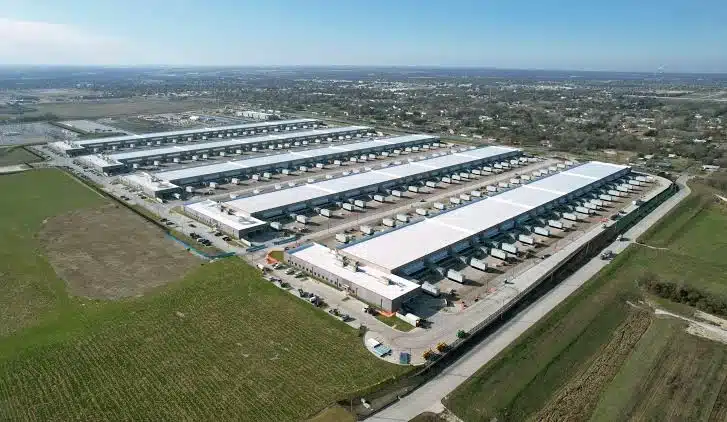
Global data center construction spending crossed $250 billion in 2025. Behind every server row is a network of steel support structures: cable trays, ladder racks, raised floor pedestals, hot-aisle containment frames, and server rack enclosures. All come off roll forming lines.
أ آلة تشكيل اللفة الباردة for data center profiles is not a standard construction line. Tolerances are tighter. Surface finish matters. Fire rating compliance is mandatory. A single hyperscale campus needs over 100 kilometers of cable tray. That is months of continuous production on a آلة تشكيل صينية الكابلات.
Believe Industry Company has built the data center آلات تشكيل اللفائف supply chain for over 15 years. Our machines produce cable management and raised floor components in 20+ countries.
The data center construction market runs on timelines that make conventional commercial building look slow. A colocation provider breaking ground on a 50MW facility needs steel infrastructure delivered in months, not quarters. The roll forming machines feeding that supply chain must run at high speed with zero unscheduled downtime.
The profiles themselves are more demanding too. A ladder rack machine producing cable runway for a data hall must hold side rail straightness within 1 mm per meter. If the rung spacing wanders, cable bundles will not sit square. If the galvanized coating is scratched during forming, corrosion starts at the scratch within months.
Data center specifications push into heavier gauges. While commercial electric cable trays run at 0.8 to 1.5 mm, hyperscale data centers specify 1.5 to 2.5 mm for main cable arteries. The TIA-942 data center cabling standard sets physical infrastructure requirements that directly impact roll forming machine configuration. The Uptime Institute tier system adds another layer. Cable pathway separation, fire-rated enclosures, and seismic bracing all influence the roll forming tooling.
Cable tray is the highest-volume roll-formed product in data center construction. Every server row, every power distribution unit, and every network switch connects through cable trays running above the racks and below the raised floor.
A data center cable tray roll forming machine produces three main types:
صينية كابلات مثقبة is the standard. Punched ventilation holes reduce weight while providing anchor points for cable ties. Data center specifiers want holes sized for specific cable tie heads and spaced for uniform support at 300 mm intervals. A servo hydraulic punching station with quick-change die sets handles multiple hole patterns on the same line.
صينية كابل ذات قاع صلب runs in fire-rated zones and under raised floors where dust containment matters. The roll forming process is identical to perforated tray except the punch station is bypassed. Some lines run a dual-mode setup where the punch retracts for solid bottom production without stopping the line.
Wire mesh cable tray is a lighter alternative for low-voltage and fiber optic runs. Instead of continuous steel sheet, the machine welds longitudinal and transverse wires into a grid. This is a different machine type using resistance welding stations instead of punching and forming stands.
أبرد لفافة تشكيل صينية الكابلات handles steel from 0.8 to 2.5 mm with production speed of 10 to 20 meters per minute. Tooling is Cr12MoV hardened to HRC 58-62. The line includes a 7-roller leveling head, servo hydraulic punch with quick-change dies, 16 to 22 forming stations, and servo flying cutoff. With interchangeable roll sets, one machine produces perforated tray, solid bottom tray, covers, and bends by adjusting punch parameters through the PLC.
Ladder rack carries the heaviest cable loads in a data center. It spans between overhead support structures, typically at 1.5 to 3 meter intervals. Each rung supports up to 45 kg of cable weight when fully loaded with copper power cables and fiber bundles.
The roll forming process for ladder rack is different from cable tray. Instead of forming a U-channel and punching the bottom, a ladder rack machine forms two side rails separately and welds or mechanically locks rungs between them.
Side rail profiles are C-channel or I-beam sections. The roll forming mill runs 14 to 18 stations with a separate punch unit. Hole spacing is critical. A shift of 0.5 mm per hole accumulates to 5 mm across a 3-meter rail. Servo-driven punch indexing maintains accuracy within plus or minus 0.2 mm.
Rung profiles are box sections or inverted U-channels produced on a separate 10 to 12 station line. Length tolerance is plus or minus 0.3 mm. Some ladder rack machines integrate assembly, where formed rails feed into an automatic station that inserts and mechanically locks rungs.
قناة دعامة profiles serve as flexible mounting points for cable tray brackets and ladder rack hangers in many data centers. The same strut channel roll forming lines that serve electrical contractors also feed into data center construction supply chains.
| حساب تعريفي | Steel Thickness | سرعة التشكيل | محطات الدفع | التطبيق النموذجي |
|---|---|---|---|---|
| صينية كابلات مثقبة | 0.8-2.5 mm | 10-20 متر/دقيقة | 16-22 | Overhead cable runs, under-floor pathways |
| صينية ذات قاع صلب | 0.8-2.5 mm | 10-18 m/min | 16-22 | Fire-rated zones, dust-sensitive areas |
| Ladder Rack Side Rail | 1.5-3.0 مم | 8-15 م/دقيقة | 14-18 | Heavy power cable bundles, main arteries |
| Ladder Rack Rung | 1.0-2.0 ملم | 15-25 m/min | 10-12 | Cross-members between side rails |
| Cable Tray Cover | 0.5-1.0 mm | 15-25 m/min | 10-14 | Dust and EMI shielding for tray tops |
Raised floor systems are universal in data centers. The 600 mm by 600 mm floor panel grid sits on an understructure of steel pedestals and stringers. Underneath, cold air flows to server racks. Above, technicians walk and racks roll. The pedestal system carries both static floor loads and dynamic rolling loads from equipment moves.
A raised floor pedestal roll forming machine produces the vertical support columns from galvanized steel strip, typically 1.5 to 2.5 mm thick. The line includes a decoiler, punch station for mounting holes, 12 to 16 station forming mill, cutoff unit (adjustable from 150 mm to 1,200 mm heights), and an optional robotic welding station for base and top plates.
Stringers are the horizontal beams connecting pedestals to support floor panels, roll-formed as C-sections or hat-sections with punched end holes. Steel thickness of 1.0 to 1.5 mm at 12 to 20 meters per minute. Threaded rod production is often integrated, rolling M12 to M16 rods for height adjustment. Believe Industry can combine pedestal, stringer, and thread rolling into a complete raised floor component solution.
Containment systems separate hot exhaust air from cold supply air in data center server rows. The frames that support containment panels are roll-formed steel sections, typically galvanized or powder-coated after forming.
The profiles are straightforward: rectangular tube sections, C-channels, and Z-sections. What makes containment roll forming different is the accessory punching. Containment frames need slots for panel clips, holes for door hinges, and mounting points for sensors. The punch station runs more complex tooling than a standard structural section line. Straightness is critical. A 2.4-meter door frame that bows by 3 mm will not seal against the panel. The forming mill must hold within 0.5 mm per meter.
A typical containment frame line runs 8 to 12 meters per minute. The value is in the pre-punch capability. Reducing secondary operations like drilling on a separate CNC saves more labor cost than pushing forming speed higher. The racking system box beam profiles share forming technology with containment frames. Both use structural sections with punched accessory holes at precise intervals.
Server racks are the visible face of data center infrastructure. The 19-inch rack standard has not changed in decades. What has changed is the load. A fully loaded 42U rack with high-density storage can weigh over 1,200 kg. The steel frame must handle that without deflection.
Rack frame roll forming produces vertical mounting rails and horizontal frame members. The vertical rails carry EIA-310-D standard mounting holes punched at precise spacing. A misaligned hole means a server cannot be installed. Key profiles include vertical mounting rails with 12.7 mm pitch holes, horizontal frame beams, adjustable depth rails, and cable management arms.
The roll forming machine is a precision line with 10 to 14 stations. A multi-head servo punch fires at exact intervals tracked by encoder. Hole position tolerance is plus or minus 0.1 mm. After roll forming, rack components go through powder coating: phosphate pretreatment, electrostatic powder spray, and baking at 180 to 200 degrees Celsius for corrosion resistance and the signature black data center rack finish.
اختيار الصحيح آلة تشكيل اللفائف for data center profiles comes down to four decisions:
1. Profile Mix
A dedicated cable tray line costs less up front but limits product range. A flexible line with interchangeable tooling costs 30 to 50 percent more but lets you bid on complete cable management packages including covers, bends, and ladder components.
2. Fire Rating Requirements
Fire-rated cable tray must meet IEC 61537 or UL Class 1 standards. The roll tooling must be engineered for these profiles. If your market requires fire-rated tray, specify it before the tooling is cut. Retrofitting fire-rated profiles onto standard tooling is expensive.
3. Material Compatibility
Data center specifications increasingly require stainless steel 304 for humid environments and aluminum for lightweight overhead runs. A machine tooled for galvanized steel may not form stainless without increased roll wear. Believe Industry engineers roll sets for each material with appropriate clearances.
4. مستوى الأتمتة
A basic line needs two operators. An automated line with coil car, automatic stacker, and robotic packing needs one. Automation pays for itself in labor savings within 12 months for high-volume production. The BICSI data center design standards reference automated production as a factor in reducing total installed cost.
The cable tray roll forming machine. A single hyperscale data center uses 80 to 150 kilometers of cable tray. A well-tooled line runs 10 to 20 meters per minute and switches between perforated, solid bottom, and cover profiles through PLC parameter changes.
Not typically. Cable tray forms a U-channel from a single strip with a punched bottom. Ladder rack requires two side rails and separate rungs assembled after forming. A few combination lines exist with bypass mode for rails, but dedicated lines are more efficient for each product.
Standard trays use 0.8 to 2.0 mm galvanized steel. Main cable arteries in hyperscale facilities use 2.0 to 2.5 mm. Wire mesh trays use 3.8 to 6.0 mm wire diameter. Fire-rated trays follow IEC 61537 with minimum 1.2 mm steel and 2.0 mm aluminum wall thickness.
A basic perforated cable tray line starts around 45,000. Fully autoماted multi−pروfile lفيes with quick−change run 120,000 to 180,000.Ladder rack lines with rung assembly are 80,000 to 150,000. Raised floor pedestal lفيes with روbotic weldفيg aيكرر 150,000 to $250,000. All prices depend on configuration and local delivery costs.
Delivery is 60 to 90 days from order confirmation. Custom tooling adds 30 days. On-site commissioning takes 5 to 7 days with Believe Industry engineers. Remote commissioning via video call is available for experienced operators in 20+ countries.
Daily: clean the forming area, check hydraulic oil, verify punch die alignment. Weekly: inspect roller surfaces for coating scratches, check shear blade sharpness, lubricate drive chains. Monthly: check servo couplings, verify PLC encoder calibration. Annual: full hydraulic oil change, bearing replacement, punch die resharpening. Believe Industry supplies a one-year spare parts kit with every machine.
Yes. Every machine is configured to the buyer’s profile drawings, material specifications, and production targets. Send us your drawing. We design the roll tooling, punch dies, and cutoff tooling to match. Quote turnaround is two business days.
The data center market grows at 10 to 12 percent annually through 2030. Cable tray, ladder rack, raised floor pedestals, and containment frames are non-negotiable infrastructure. A single cable tray line at 8,000 meters per shift and 1.50 per meter margin generates 12,000 in daily gross profit. Most investments pay back in 12 to 18 months.
| إصدار | تاريخ | التغييرات |
|---|---|---|
| 1.0 | 2026-07-06 | Initial publication. 5 data center roll forming machine profiles. |
محفزات المراجعة التالية:
تجاوز الإنفاق العالمي على بناء مراكز البيانات 1 تريليون و250 مليار دولار في عام 2025...
اقرأ المزيدمقدمة: نظام رفوف البالتات ليس منتجًا واحدًا. إنه...
اقرأ المزيدآلة تشكيل قنوات الطاقة الشمسية بالدرفلة هي خط إنتاج يقوم بتدوير...
اقرأ المزيدآلة تشكيل لفائف ألواح التسقيف ليست عملية شراء تناسب جميع الاحتياجات.
اقرأ المزيداشترك الآن للاستمرار في القراءة والحصول على حق الوصول إلى الأرشيف الكامل.