Alamat
No 1, Yd Road, Daerah Huishan, Bandar Wuxi, Jiangsu. 214183
Waktu Kerja
Isnin hingga Jumaat: 9AM - 5PM
Sabtu: 9AM - 4PM
Alamat
No 1, Yd Road, Daerah Huishan, Bandar Wuxi, Jiangsu. 214183
Waktu Kerja
Isnin hingga Jumaat: 9AM - 5PM
Sabtu: 9AM - 4PM

Jawapan Ringkas: A step beam vs box beam roll forming machine decision comes down to section shape, station count, and budget. Beli step beam lines form a closed type profile in about 28 stands and cost more. A box beam line needs about 14 forming steps to roll form to C plus 5 seam stations, so it costs less. Both can weld end clips and run manual or automatic changeover.
A step beam vs box beam roll forming machine choice decides how you build the horizontal load-bearing members of every pallet rack you sell. This guide compares the two lines on the five facts that move buying decisions. New to the beam family? Start with our mesin rasuk bertangga explainer, then return.
Lengkap Mesin Roll Forming Rak Palet system pairs uprights with beams and bracing, and the beam holds the load.
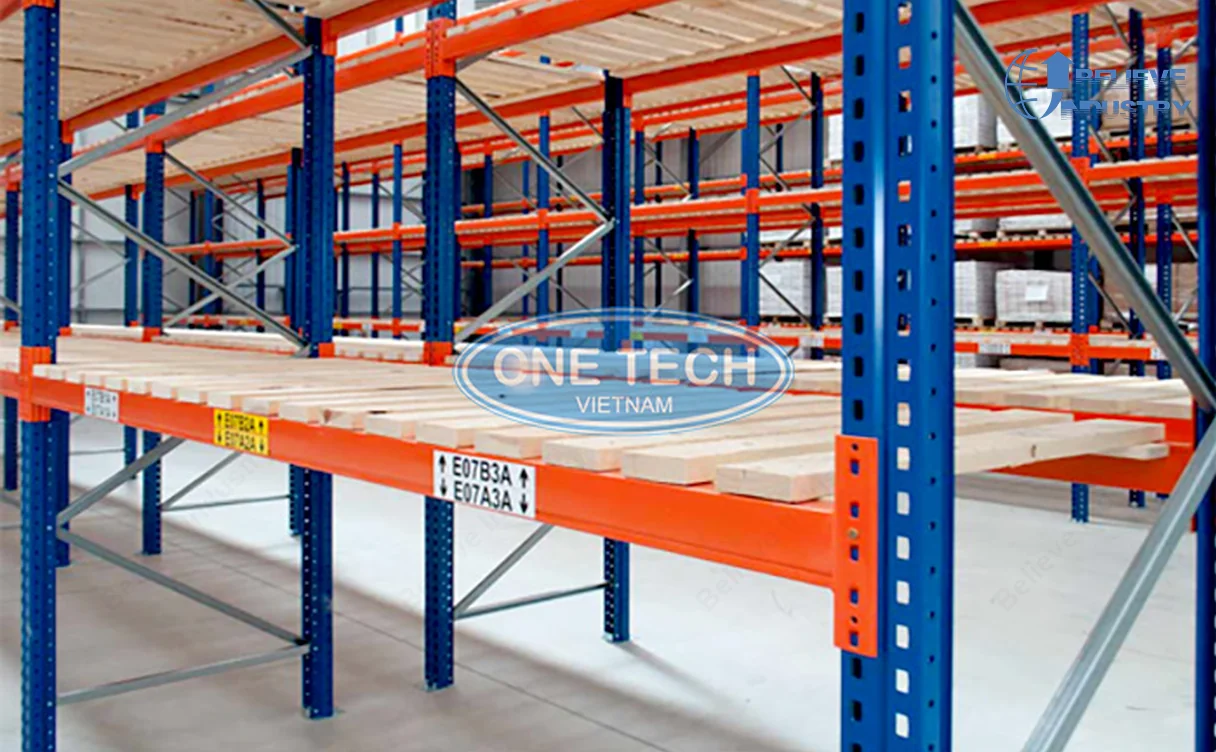
A step beam vs box beam roll forming machine produces one of two closed type sections, so the difference sits in flange geometry rather than in whether the profile is open. The closed step beam keeps a formed step, or ledge, on the bottom flange. Roll formed from a single strip, the step supports in-step wire mesh deck, clip-in pallet bars, and solid shelf panels so the load surface stays flush. The box beam is a plain closed rectangular tube, most often built from two interlocked U-channel pieces welded top and bottom, with end brackets welded for the upright. A step beam vs box beam roll forming machine decision therefore comes down to a stepped ledge that carries decking versus a smooth closed tube for maximum bending efficiency.
Both beams get end connectors welded at each end so they lock into the upright, and what differs is what happens between the ends. The step beam folds material into a stiffening ledge, so the fold adds torsional rigidity. The box beam keeps its full depth in the load path, which is why a step beam vs box beam roll forming machine buyer chasing deflection lands on the box beam line. Box beams pair only with universal waterfall mesh decking, while step beams accept all three deck styles, including flush in-step decks. The Rack.ca beam profile guide covers decking types. For the step beam vs box beam roll forming machine family, the mesin rasuk langkah rak palet is the higher-spec line, and the box beam line is the lower-cost entry point.
| Ciri | Closed step beam | Rasuk Kotak |
|---|---|---|
| Section type | Closed profile with a formed step | Closed rectangular tube |
| Forming method | About 28 stands plus a weld | 14 steps to C plus 5 seam stations |
| Bending efficiency | Slightly lower, step folds material | Higher, full depth in the load path |
| Decking | In-step mesh, clip-in bars, solid panels | Universal waterfall mesh |
| Relative line cost | Lebih tinggi | Lower baseline |

On stiffness, a step beam vs box beam roll forming machine comparison starts with both sections being closed. Neither twists like an open channel, so both handle uneven loads well. The step beam folds a ledge into the bottom flange, and that fold acts as a stiffening rib, so it resists twist slightly better than a plain rectangle. The box beam keeps an uninterrupted depth, so it deflects less under point load. For a 2.7 meter span with evenly distributed pallets the difference rarely matters; for long spans, cantilevered displays, or point loads, match the section to the span. The Material Handling Industry association treats both profiles as valid rack design, so this is a decking and budget decision.
When you compare load capacity, the step beam vs box beam roll forming machine gap is smaller than most buyers expect. Both are closed sections, so at the same thickness and height the two sit close. The box beam carries a modest edge, roughly 5 to 12 percent, because its uninterrupted depth keeps more material in the load path, while the step beam folds part of the strip into the ledge. Section height matters more: a deeper beam simply holds more.
Most step beams run 80 mm, 100 mm, or 120 mm deep in 1.5 to 2.5 mm steel. Box beams use the same depth range but start near 1.8 mm because the weld adds a step. Steel grade matters as much as shape, and our upright column steel grade guide explains how S355 grades lift capacity without adding thickness. On a step beam vs box beam roll forming machine, picking height and grade together beats chasing a heavier profile.
| Tinggi keratan | Rasuk Langkah | Rasuk Kotak |
|---|---|---|
| 80 mm | Light loads | Light loads |
| 100 mm | Mid-tier racking | Mid-tier racking |
| 120 mm | Heavy racking | Heavy, longest spans |
If your customers buy racking with flush in-step decking, a step beam vs box beam roll forming machine decision starts with the step beam line. If they specify universal waterfall mesh and long spans, the box beam line earns its place.
A step beam vs box beam roll forming machine cost gap shows up first in the station count. Beli step beam lines run about 28 forming stands, because the strip must reach a closed section with a stepped flange in one pass. A box beam line needs only about 14 forming steps to roll form the strip to C, then 5 stations to close and seam. Fewer stands means a shorter frame, a simpler drive, and a lower price, so the box beam line is the cheaper machine to buy.
On welding, both lines split into two methods: argon arc, or spot weld, for lower volume, or laser continuous weld for a cleaner, faster seam, and the laser option costs more on either line. A step beam vs box beam roll forming machine can also integrate an automatic end-clip welder that fixes the connectors to each beam end. Changeover can be manual or fully automatic; the automatic option shortens profile changes but adds servo tooling cost.
Expect a step beam line to land above a comparably sized box beam line, because the extra forming stands and closed step tooling are what you pay for. The buyer guide for warehouse rack machines covers the full system cost range, so weigh stations, not machine names, when you budget.
| Butir | Step beam line | Box beam line |
|---|---|---|
| Ruang Bentuk | About 28 | About 14 to C |
| Closing and seam | Additional weld station | 5 stations |
| Kaedah kimpalan | Argon arc spot weld or laser continuous weld | Argon arc spot weld or laser continuous weld |
| End-clip welder | Optional automatic | Optional automatic |
| Penyetelan | Manual or automatic | Manual or automatic |
| Relative investment | Lebih tinggi | Lower baseline |
For a first-time rack maker, the box beam line is the lower-risk entry. The step beam line is the second purchase once decking orders justify the closed step profile.
Tooling is where the step beam vs box beam roll forming machine paths diverge most. A step beam needs about 28 progressive roll stands to bend the strip into a closed profile with a stepped flange, then a flying cutoff. A box beam needs the same opening passes to reach C, then 5 closing and seam stations that fold the edges together and weld the seam by argon arc or laser, then a straightener that removes weld distortion. Each added station is another calibration point, so the 28 stand line asks more from your setup crew. Pembuat covers roll forming basics for new buyers.
The payoffs differ: the box beam yields a plain closed tube needing no seam touch-up paint, while the step beam yields a flush ledge that carries in-step mesh decking. An automatic end-clip welder can fix connectors at the same time. A good roll set in Cr12MoV steel hardened to HRC 58 to 62 lasts for years. Changeover between beam depths can be manual, where an operator adjusts the rolls, or fully automatic, where powered stands reset the pass line. On a step beam vs box beam roll forming machine, tooling life and changeover speed are the quiet cost drivers that decide uptime.

Buyers often ask for a single step beam vs box beam roll forming machine that makes both. Coil handling, punching, cutoff, and weld cell are shared, but the forming rolls are not: the step beam needs the full 28 pass set for the stepped flange, and the box beam needs 14 passes to reach C. Running one profile on the other roll set is not practical, so the combo rarely pays off. For uprights, our roll formed vs press brake comparison covers a similar question.
Use this rule. If your orders are mostly universal waterfall mesh on standard spans, start with the box beam line. If a growing share specify in-step wire mesh or flush solid decking, add a step beam line and budget for the extra stations. A step beam vs box beam roll forming machine buyer who needs one deck style should never pay for the other.
We have 15+ years of roll forming experience since 2005, with 80+ engineers and 500+ projects shipped to 50+ countries. Our beam lines carry ISO 9001 and CE certification, which matters for exporters into Europe and the Middle East. Every step beam vs box beam roll forming machine we build shares these certifications and tolerances.
Line speed depends on the punching method. A hydraulic punch and cutoff runs about 3 to 4 m/min, a servo tracking punch reaches 15 to 20 m/min, and a rotary punch pushes past 30 m/min. The fly-saw cutoff at 20 to 35 m/min never stops the strip. A step beam vs box beam roll forming machine from our shop runs the same speed tiers, explained in our upright machine speed guide.
Every step beam vs box beam roll forming machine we build supports inline punching for upright connection holes, automatic cut to length, and an optional auto stacker at 15 to 25 m/min. Roller material is Cr12MoV hardened to HRC 58 to 62, and one supplier covers uprights, beams, and bracing.

Q: What is the main difference between a step beam and a box beam roll forming machine?
The difference is flange geometry and station count, not open versus closed. Both lines produce a closed type section. The step beam line forms a stepped flange in about 28 stands, while the box beam line uses about 14 forming steps to roll form to C plus 5 stations to close and seam. Because of the extra stands, the step beam machine costs more.
Q: Which beam line carries more load, step beam or box beam?
For the same height and thickness the two sit close, because both are closed sections. The box beam carries a modest edge of about 5 to 12 percent since its full depth stays in the load path, while the step beam folds part of the strip into the ledge. Section height is the larger factor.
Q: How much more does a step beam roll forming line cost than a box beam line?
A step beam line typically costs more than a comparable box beam line, and the reason is station count plus the closed step tooling. The box beam line is the lower-cost entry because it needs about 14 forming stands plus 5 seam stations. Welding method also moves the price, since laser continuous weld costs more than argon arc spot weld on either line.
Q: Can one roll forming machine make both step beams and box beams?
Not in practice. Both are closed sections, but the roll sets differ: 28 stepped-flange passes versus 14 passes to C plus closing. The shared coil line, cutoff, and weld cell are the only common parts, so most shops that need both end up with two lines.
Q: What line speed should a step beam vs box beam roll forming machine run?
It depends on the punching method. A hydraulic punch and cutoff runs 3 to 4 m/min. A servo tracking punch reaches 15 to 20 m/min. A rotary punch exceeds 30 m/min. Pick the tier that matches your daily volume and profile change frequency.
Q: Why choose Believe Industry for a beam roll forming line?
We have shipped 500+ roll forming projects to 50+ countries since 2005, with ISO 9001 and CE certification. Our beam lines share the roller and control standards of our upright lines, and we support inline punching, cut to length, and auto stacking from one supplier.
Kemas kini terakhir: 2026-10-26. Believe Industry Company has designed and manufactured roll forming machines since 2005, with 80+ engineers and 500+ projects shipped to 50+ countries. All beam line specs reflect shipped configurations.
Log Perubahan Artikel
Pemicu Semakan Seterusnya


Fencing & Security Roll Forming Machine: 5 Gate and Barrier...
Baca lagi

3 Mesin Roll Forming Saluran Strut Sedia untuk Dihantar ke...
Baca lagi
How Much Does a Floor Deck Roll Forming Machine Cost?...
Baca lagi
Step Beam vs Box Beam Roll Forming Machine: Which Beam...
Baca lagi English English
 Español
 Português
 Русский
 العربية
 Bahasa Melayu
 Türkçe
 ไทย
 Bahasa Indonesia