Adres
No 1, Yd Yolu, Huishan Bölgesi, Wuxi Şehri, Jiangsu. 214183
Çalışma Saatleri
Pazartesiden Cumaya: 09:00 - 17:00
Cumartesi: 09:00 - 16:00

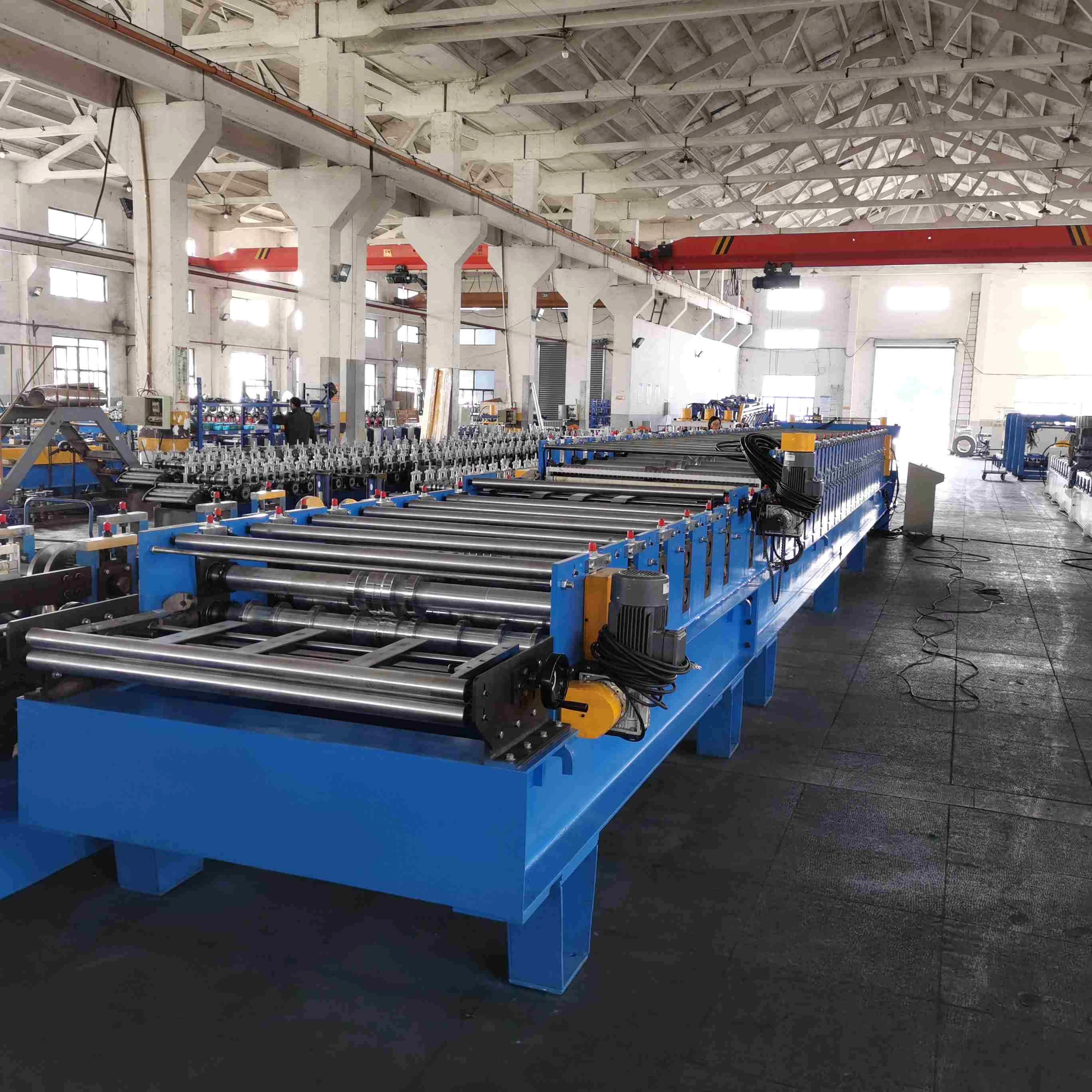
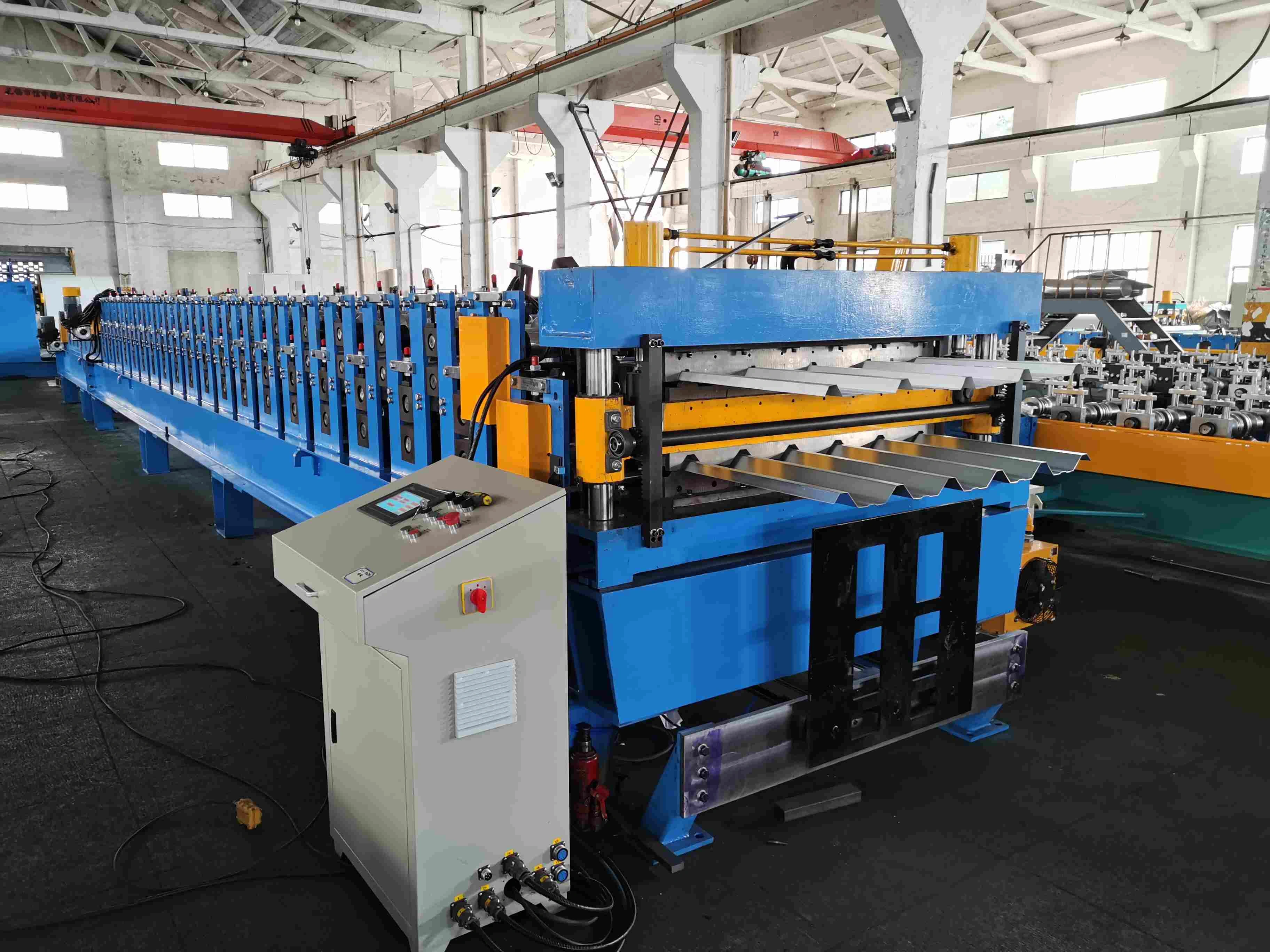
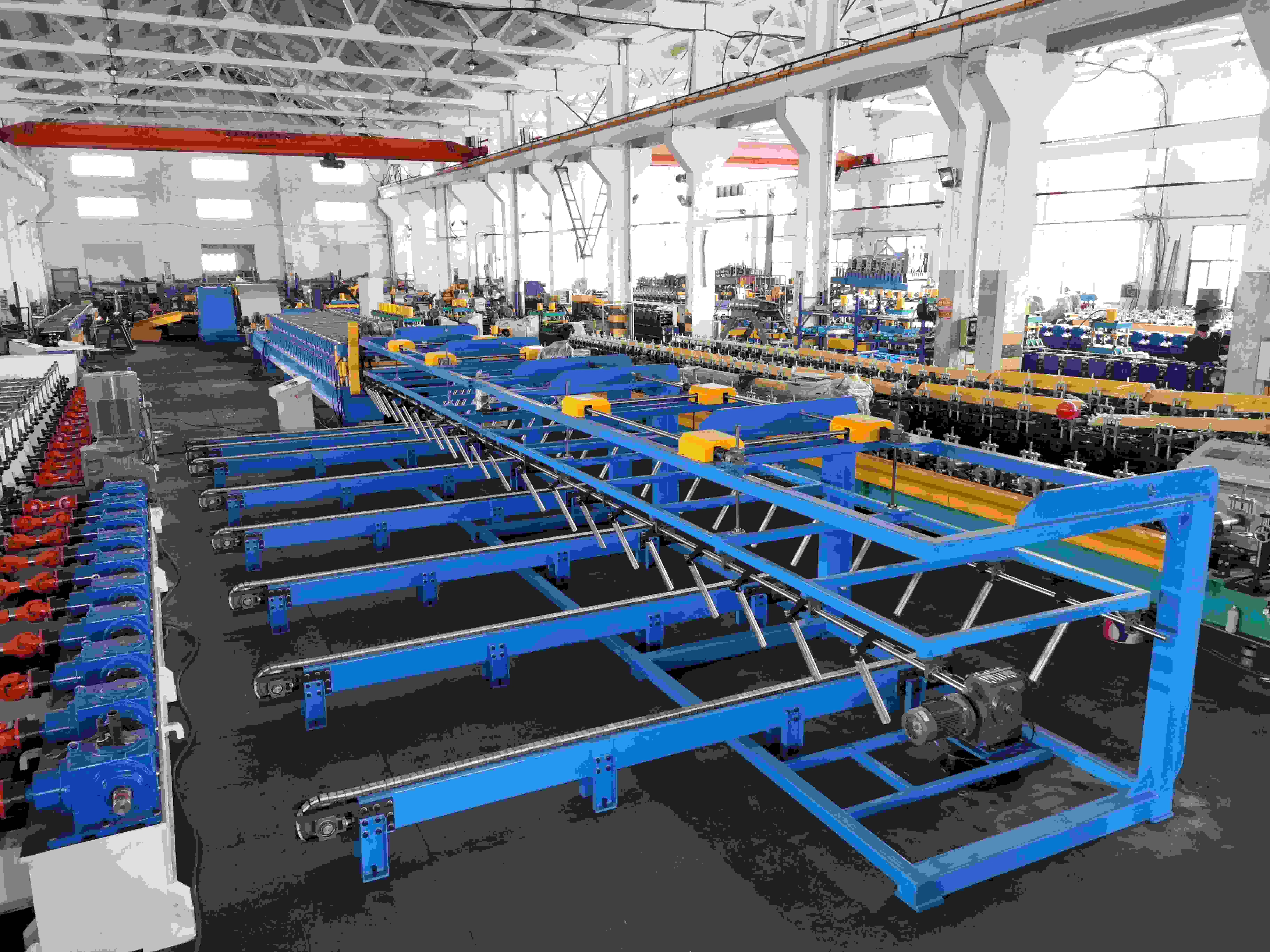
A Double Layer Roll Forming Machine is an advanced industrial manufacturing system designed to produce two distinct metal profiles on a single machine base. Consequently, this innovative equipment integrates an upper and a lower forming level to maximize factory floor space. Furthermore, it allows operators to switch between different profiles, such as trapezoidal and corrugated roofing sheets, without needing a second machine. Therefore, upgrading to a Double Layer Roll Forming Machine directly reduces capital investment while boosting overall production capacity.
Before investing in heavy machinery, it is crucial to understand the final product. A double layer metal sheet typically refers to the dual output capabilities of the equipment, producing versatile roofing and cladding panels. For instance, the upper level might produce a standard corrugated sheet, while the lower level produces a complex trapezoidal profile. Moreover, these cold-formed steel products boast exceptional durability and structural integrity.
Additionally, these specialized metal panels serve a wide variety of industrial and commercial applications. Primarily, construction companies use them for massive warehouse roofing and side paneling. Furthermore, they are highly popular in residential metal roofing projects due to their modern visual appeal and weather resistance. Consequently, owning a machine with dual layer machine mechanics gives manufacturers the flexibility to supply multiple construction sectors simultaneously.
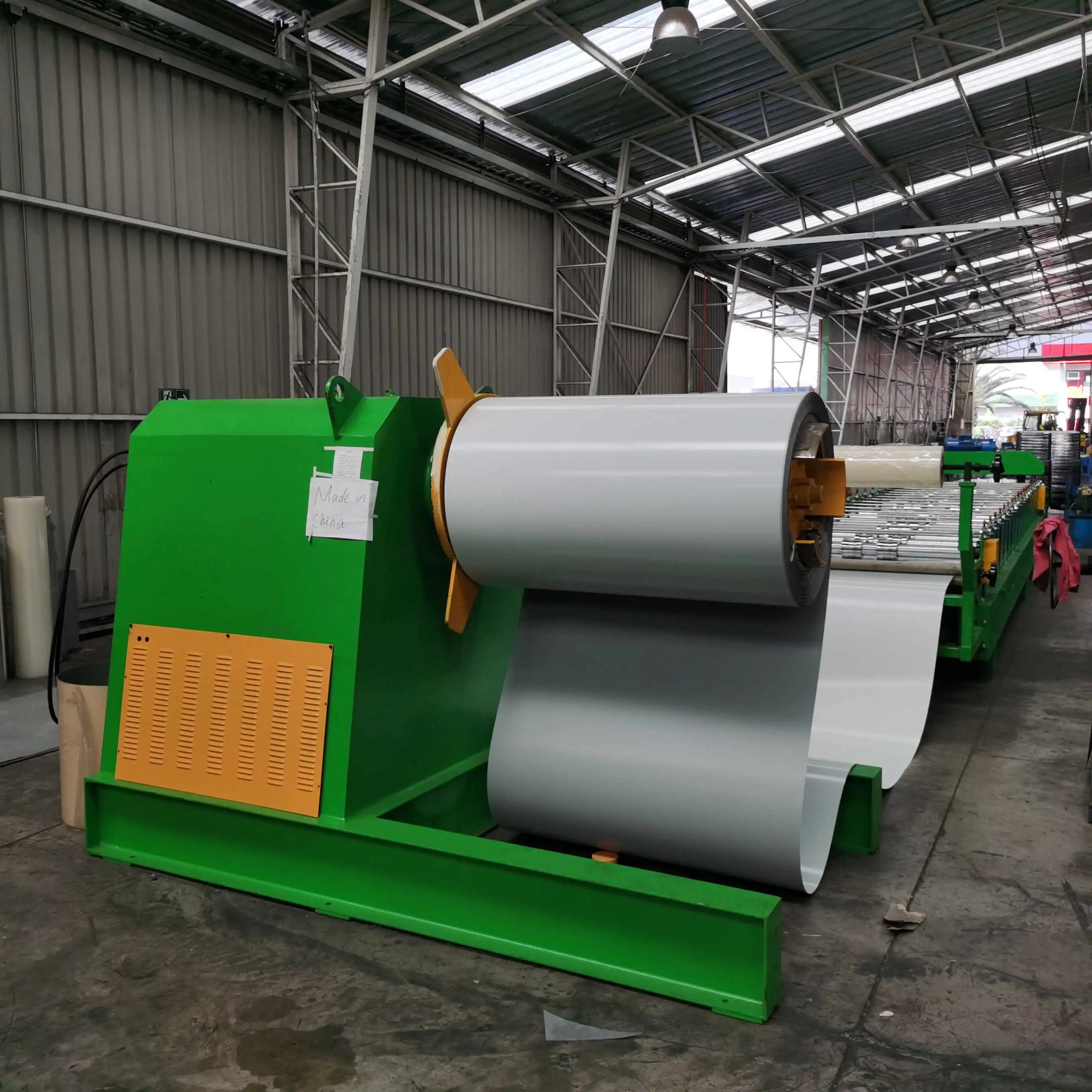
The operational process of a Double Layer Roll Forming Machine is highly efficient and automated. First, the process begins at the Decoiler. Specifically, a Decoiler is the heavy industrial component that holds and safely unrolls the massive metal coil into the main forming line. Subsequently, the flat metal strip feeds into either the upper or lower level of the rolling stations.
However, only one level of the machine can operate at a single time to prevent mechanical crashes. Therefore, an operator uses an advanced digital control panel to select the desired active profile. Moreover, the material moves through a series of hardened steel rollers that gradually bend the metal at room temperature. Ultimately, the continuous strip is cut to the exact required length by a hydraulic shearing system. If your facility currently operates separate slitting line systems, integrating this two-in-one equipment will dramatically streamline your daily workflow.
When considering a Double Layer Roll Forming Machine, it is vital to weigh the operational benefits against the production limitations.
Significant Space Savings: Ideal for workshops with limited floor area, as it occupies the footprint of just one machine.
Budget Optimization: Reduces initial investment by sharing the hydraulic station, PLC system, and uncoiler.
Quick Changeover: Operators can switch between profiles by simply changing the feeding path and selecting the program on the PLC.
Reduced Production Capacity: Since both layers cannot run at once, the total output is roughly 50% of what two separate machines would produce.
Maintenance Complexity: The “crowded” nature of the double-stacked stands can make manual adjustments and cleaning more difficult than on a standard mill.
Upgrading your production line to a Double Layer Roll Forming Machine offers immense financial and operational benefits. Primarily, factory floor space is a highly expensive commodity for any growing manufacturer. By combining two distinct profiles into one structural frame, you effectively reclaim up to 50% of your total manufacturing footprint. Furthermore, this consolidated setup requires only one central control system and one hydraulic power unit.
Additionally, academic and institutional research strongly supports the shift toward cold-formed metal technologies. According to technical documentation archived by academic platforms regarding structural engineering, the cold roll forming process significantly increases the yield strength of the metal through mechanical cold working. Conversely, traditional hot-rolled methods consume vastly more energy and produce weaker structural components. Therefore, utilizing a modern dual layer roll forming machine ensures you are maximizing material strength while keeping utility costs remarkably low.
Understanding the technical capabilities of your equipment is vital for long-term manufacturing success. Therefore, we have clearly outlined the specific parameters that define a premium Double Layer Roll Forming Machine. Moreover, these specifications highlight the robust engineering required to handle high-volume dual profile production smoothly. Additionally, you can easily compare these metrics against standard roll forming machines to truly appreciate the engineering upgrades.
| Component Category | Technical Specification | Data / Measurement |
| Coil Handling (Decoiler) | Max Weight Capacity | 5 Tons to 10 Tons |
| Bobin İç Çapı | 508 mm to 610 mm | |
| Bobin Dış Çapı | 1250 mm (Maximum) | |
| Expansion Type | Manual or Hydraulic System | |
| Main Roll Forming Unit | Active Forming Speed | 15 – 20 meters per minute |
| Number of Roller Stations | 16 to 22 steps per layer | |
| Silindir Malzemesi | High-grade 45# forged steel | |
| Roller Surface Treatment | Hard Chrome Plating (0.05mm) | |
| Main Shaft Diameter | 70 mm to 80 mm (Solid Steel) | |
| Frame Wall Thickness | 18 mm to 20 mm | |
| Main Motor Power | 5.5 kW to 7.5 kW | |
| Transmission System | High-strength Chain Drive | |
| Hydraulic Cutting System | Cutting Die Material | Cr12MoV (Heat Treated) |
| Cutting Power | 4.0 kW to 5.5 kW | |
| Length Tolerance | ± 1.5 mm per 3 meters | |
| Shear Type | Post-forming Hydraulic Cut | |
| Control System | PLC Manufacturer | Panasonic / Siemens / Delta |
| Interface | Digital Touch Screen HMI | |
| Inverter Brand | Yaskawa / Schneider | |
| Electrical Supply | 380V, 50Hz, 3-Phase (Customizable) |
As you evaluate these numbers, remember that every component is specifically designed to ensure seamless two-in-one metal profile forming. Consequently, investing in high-quality parts drastically reduces unexpected factory downtime. Furthermore, reading a Comprehensive Analysis of Roll Forming Machine setups will provide even deeper insights into optimizing these metrics. You can also review related corrugated metal panel equipment to compare specific output geometries for your next project.
In conclusion, integrating a Double Layer Roll Forming Machine into your manufacturing facility is a brilliant strategic move. It drastically reduces your factory footprint while delivering the exact versatility of two distinct product lines. Therefore, you can easily respond to local market demands faster and much more profitably. Moreover, the superior cold-forming technology ensures your final products are stronger, more accurate, and aesthetically flawless.
Are you ready to revolutionize your daily production capabilities and cut your capital equipment costs in half? Do not let valuable factory space go to waste any longer. Contact the Believe Industry team today to schedule a comprehensive consultation with our engineers. Request a customized quote for your very own Double Layer Roll Forming Machine and start dominating the metal fabrication market immediately!
A Double Layer Roll Forming Machine is an industrial manufacturing system that produces two distinct metal profiles on a single stacked frame. Consequently, it allows manufacturers to save space and reduce the total cost of buying two separate machines.
A space-saving dual layer machine reclaims factory space by vertically stacking two complete sets of forming rollers onto one unified metal base. Therefore, it completely eliminates the physical footprint that a second, standalone machine would otherwise occupy on your floor.
No, both layers of a Double Layer Roll Forming Machine cannot operate simultaneously due to the shared central motor and cutting systems. However, the machine is meticulously designed for extremely fast changeovers, allowing operators to switch between the upper and lower profiles in minutes.
This dual level roofing sheet equipment can easily make a wide variety of panels, including traditional corrugated sheets, trapezoidal panels, and glazed roof tiles. Moreover, the specific roller profiles are entirely customized based on your unique construction market requirements.
The typical production speed of a two-in-one metal profile forming machine ranges safely between 15 and 20 meters per minute. Additionally, this consistent operating speed ensures high-volume output while simultaneously maintaining strict dimensional accuracy.
It is not difficult to operate a Double Layer Roll Forming Machine because it features a highly intuitive PLC touch screen interface. Furthermore, factory operators simply input the desired cut length and batch quantity, and the automated system effortlessly handles the rest.
You maintain your Double Layer Roll Forming Machine by regularly lubricating the drive chains and inspecting the hydraulic cutting blades for signs of wear. Additionally, keeping the forming rollers completely clean from metal shavings ensures a pristine finish on all your roofing sheets.
Birbirine kenetlenen duvar paneli rulo şekillendirme makinesi, soğuk haddeleme yöntemiyle çalışan bir makinedir...
Devamını okuİskele iş tahtası rulo şekillendirme makinesi, otomatik bir endüstriyel makinedir...
Devamını okuDepolama rafı rulo şekillendirme makinesi akıllı bir fabrikadır...
Devamını okuBasamaklı kiriş makinesi, gelişmiş bir endüstriyel rulo şekillendirme makinesidir...
Devamını oku