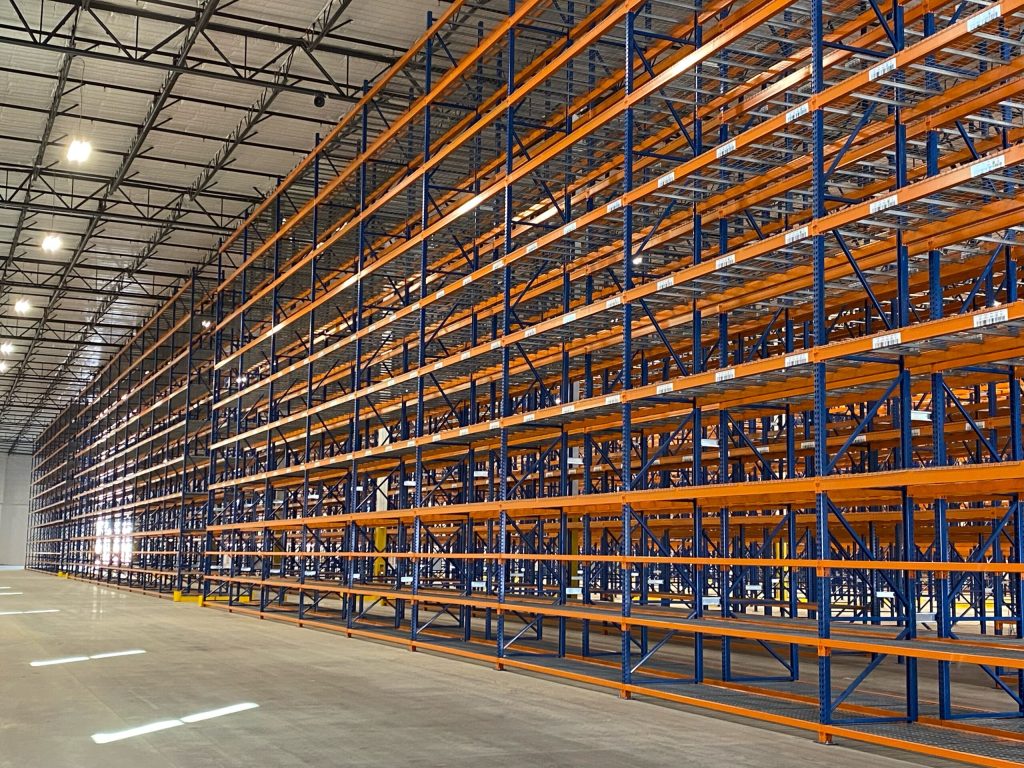
Automated Warehouse Racking Machinery

Automated Warehouse Racking Machinery: AS/RS, Shuttles, and Feeding Lines

Need a Roll Forming Machine for Your Project?
Get a free quote from Believe Industry — 15+ years of custom roll forming manufacturing.
Request a Quote Download Catalogue

Automated Warehouse Racking Machinery: AS/RS, Shuttles, and the Lines That Feed Them

Automated warehouse racking machinery is the combination of storage systems and the production lines that supply them. The storage side covers automated storage and retrieval systems, shuttles, and mobile racking. The supply side is the roll forming line that makes the uprights and beams those systems stand on. This guide covers both, because a warehouse automation plan fails if the racking hardware cannot be made or replenished fast enough.
Demand for automated warehouse racking machinery has risen with e-commerce and labour cost pressure. Operators want fewer aisles, taller stores, and faster retrieval, which pushes the racking profile toward tighter tolerance and higher volume. The roll forming line behind it must keep pace or the automation investment sits waiting on parts.
Short answer: Automated warehouse racking machinery includes AS/RS cranes, shuttle systems, and mobile racking, all built from roll formed uprights and beams. The lines that feed them use modular tooling, in-line punching, and digital monitoring to hold tolerance and cut changeover. Standards such as FEM, RMI, and ASTM set the safety and steel limits.

Types of automated warehouse racking machinery

The storage technology sets the demand on the racking profile. A tall AS/RS needs straight, repeatable uprights. A shuttle system needs beams that lock fast. Mobile racking needs the same profiles in higher volume because aisles shrink. Matching the automated warehouse racking machinery to the profile keeps the line and the warehouse in step.
SystemProfile demandLine need
AS/RSStraight, tall uprightsTight tolerance, long length
ShuttleBeam lock speedFast beam changeover
Mobile rackingHigh volumeHigh throughput line
Each system scales differently, so the roll forming feed should be sized to the peak, not the average, or the warehouse waits on the line during ramp up. A line sized only to the steady state falls behind the moment a new aisle or a taller bay is added, and lead time on racking then delays the whole automation go-live.

The roll forming lines that feed automated racking

Uprights and beams are the physical base of every automated warehouse racking machinery installation. A multi-profile upright line with quick-change tooling supplies several column sizes from one setup. A beam line with in-line punching supplies the connectors that let the system reconfigure bays without bolts.
For a deeper look at the production side, our pallet rack production speed guide covers line throughput, and the warehouse logistics roll forming guide links the line to the warehouse. The upright rack roll forming machine buyer guide and the multi-spec upright column line cover the two core lines.

Modular cassette and fast changeover

Automated warehouse racking machinery runs many short orders, so changeover time decides output. Cassette tooling puts roll sets on a common shaft so the operator slides one profile out and the next in. That cuts a two hour swap to minutes and keeps the line feeding the warehouse through mixed demand.
The same logic applies to punch dies. A roll forming punching die installation guide explains how preset dies shorten the stop. For automated racking, where bay sizes shift by project, fast changeover is the difference between a line that keeps up and one that bottlenecks the whole site.

In-line punching and springback control

Connectors must fit every time, so the automated warehouse racking machinery punch is set before the bend, while the strip is flat. Servo punching holds hole pitch to a fraction of a millimetre, which keeps beams clipping into uprights without rework. Springback is predicted and overbent at the last station so the cooled section holds its angle. That accuracy is what lets an automated system reconfigure a bay in minutes rather than rebuild it.
Real-time springback compensation reads the strip and adjusts the roll. On high-tensile steel this protects the coating and the dimension, which matters for automated warehouse racking machinery that must pass audit on every column.

Digital twin and predictive maintenance

Modern lines log stand load, roll temperature, and punch count. A digital twin compares the live line to a model and flags a roller before it drifts out of tolerance. Predictive maintenance replaces the part during a planned stop instead of after a scrap run, which protects the steady supply the warehouse depends on.
This matters because a stopped line stops racking delivery. For automated warehouse racking machinery, where the warehouse runs lean on spare parts, a missed maintenance window cascades into delayed fit-out. Monitoring turns that risk into a scheduled task.

Energy efficiency and system integration

Automated warehouse racking machinery runs long shifts, so drive choice affects the power bill. Hybrid servo drives draw only what the pass needs, unlike a fixed-speed line that spins through idle time. On a multi-profile line that stops and starts with each order, that saving is large over a year.
Integration is the harder part. The roll forming line, the warehouse management system, and the racking layout should share one data view. When the line knows the warehouse demand, it can prioritise the profile that is short, which keeps the automated warehouse racking machinery stocked without overproducing slow-moving sizes. A shared view also flags a profile running low before the warehouse hits a stockout, turning a reactive rush into a planned run.

Standards that automated racking must meet

Racking must meet regional safety rules. European systems follow FEM 10.2.02, US systems follow RMI ANSI MH16.1, and the steel grade follows ASTM A1008. A line set to these limits produces columns and beams that pass buyer audit and avoid costly rejection.
StandardRegionCovers
FEM 10.2.02EuropeRacking design and load
RMI ANSI MH16.1United StatesRack specification
ASTM A1008GlobalSteel grade
Confirm the exact class your buyer requires before the line is built, because the standard drives the profile tolerance and the coil grade.
For the basics, read what is cold roll forming. The coil width and thickness calculator sizes the strip, and the roll forming machine line page explains the full system behind automated warehouse racking machinery.

Frequently Asked Questions

Q: What counts as automated warehouse racking machinery?

A: It includes AS/RS cranes, shuttle systems, and mobile racking, plus the roll forming lines that make the uprights and beams they stand on. The term covers both the storage tech and its supply line.

Q: Which roll forming line feeds automated racking?

A: A multi-profile upright line with quick-change tooling and a beam line with in-line punching. Together they supply the columns and connectors that automated systems reconfigure without bolts.

Q: Why does changeover matter so much?

A: Automated racking runs many short, mixed orders. Cassette tooling and preset punch dies cut swap time from hours to minutes, which keeps the line feeding the warehouse through shifting demand.

Q: How is hole pitch kept accurate?

A: Servo punching places holes while the strip is flat, before the bend, to a fraction of a millimetre. Springback is overbent at the last station so the cooled beam holds its angle and clips in cleanly.

Q: Which standards apply to automated racking?

A: Europe follows FEM 10.2.02, the US follows RMI ANSI MH16.1, and steel grade follows ASTM A1008. Confirm the class your buyer requires, because it sets the profile tolerance and coil grade.

Q: What does predictive maintenance do for the line?

A: It logs stand load, roll temperature, and punch count, then flags a part before it drifts. Replacing it on a planned stop avoids a scrap run that would delay racking delivery to the warehouse.

Article Changelog

Originally published: March 2, 2026
Last updated: October 12, 2026
Changelog:
  • October 12, 2026: Refreshed for GEO compliance. Removed the clickbait “7 Powerful Innovations” title and the “2026” year stamp, added a direct-answer block, two tables, six FAQ with bold Q, and a spelled-month changelog. Expanded from 1,011 to about 1,600 words. Added three authority links (FEM, RMI, ASTM) and eight internal links including the pillar page. Kept the automated-warehouse angle, distinct from the pallet rack production speed post by covering storage systems plus the lines that feed them.
Next Review Triggers:** New FEM or RMI revision, a 20 percent shift in search interest for “automated warehouse racking machinery”, launch of a new shuttle or AS/RS standard, or a new servo punch speed class.

Table of Contents

New Updates