Address
No 1, Yd Road, Huishan District, Wuxi City, Jiangsu. 214183
Work Hours
Monday to Friday: 9AM - 5PM
Saturday: 9AM - 4PM

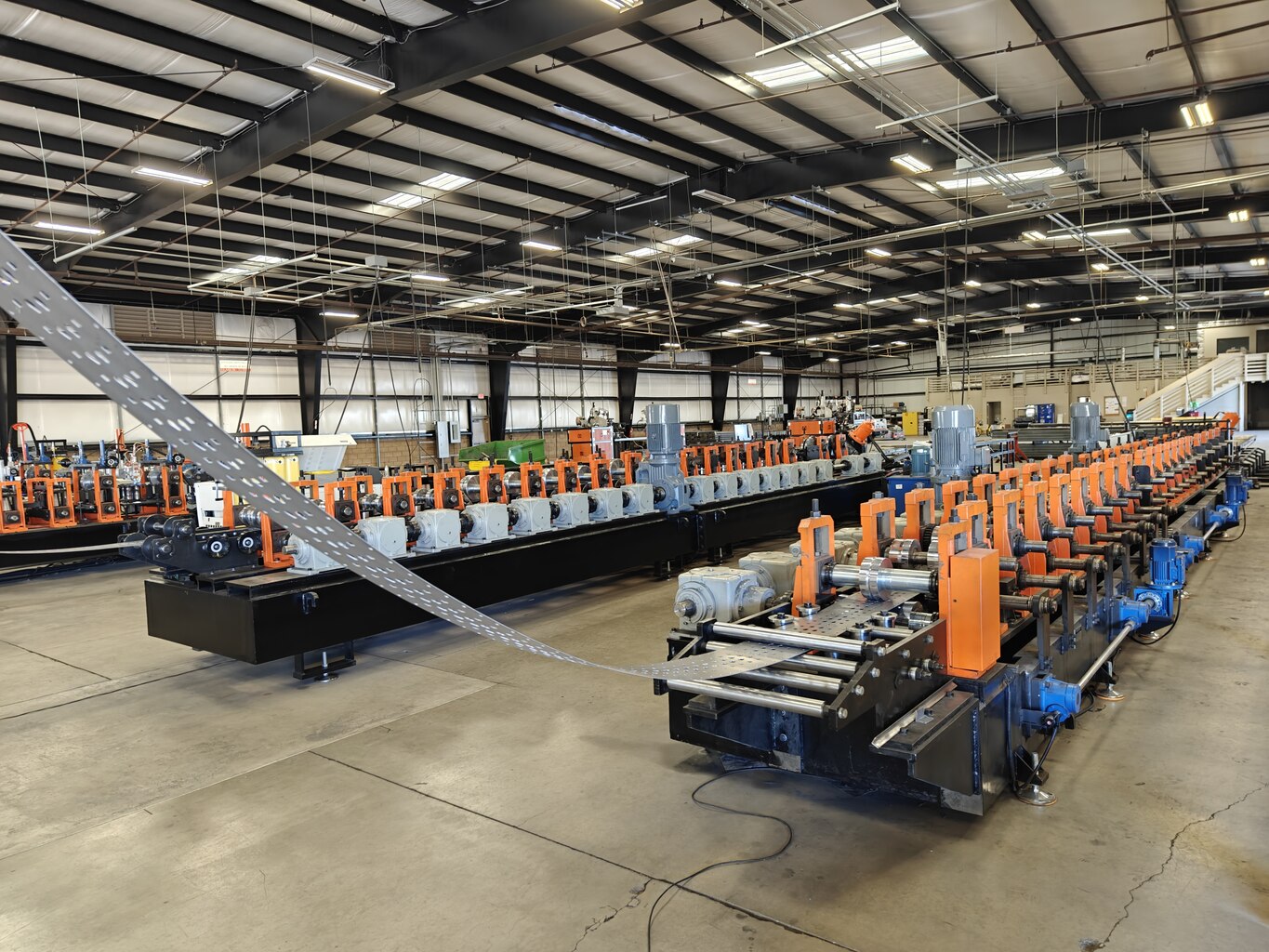
An upright rack roll forming machine turns steel coil into warehouse storage uprights in one continuous process โ punch holes, form the profile, cut to length. Beli RollForming builds these lines for US, EU, Australian Standard racking manufacturers and steel service centers. Whether you need 2mm light-duty uprights or 3.5mm heavy-duty columns, the machine adjusts to your specs.
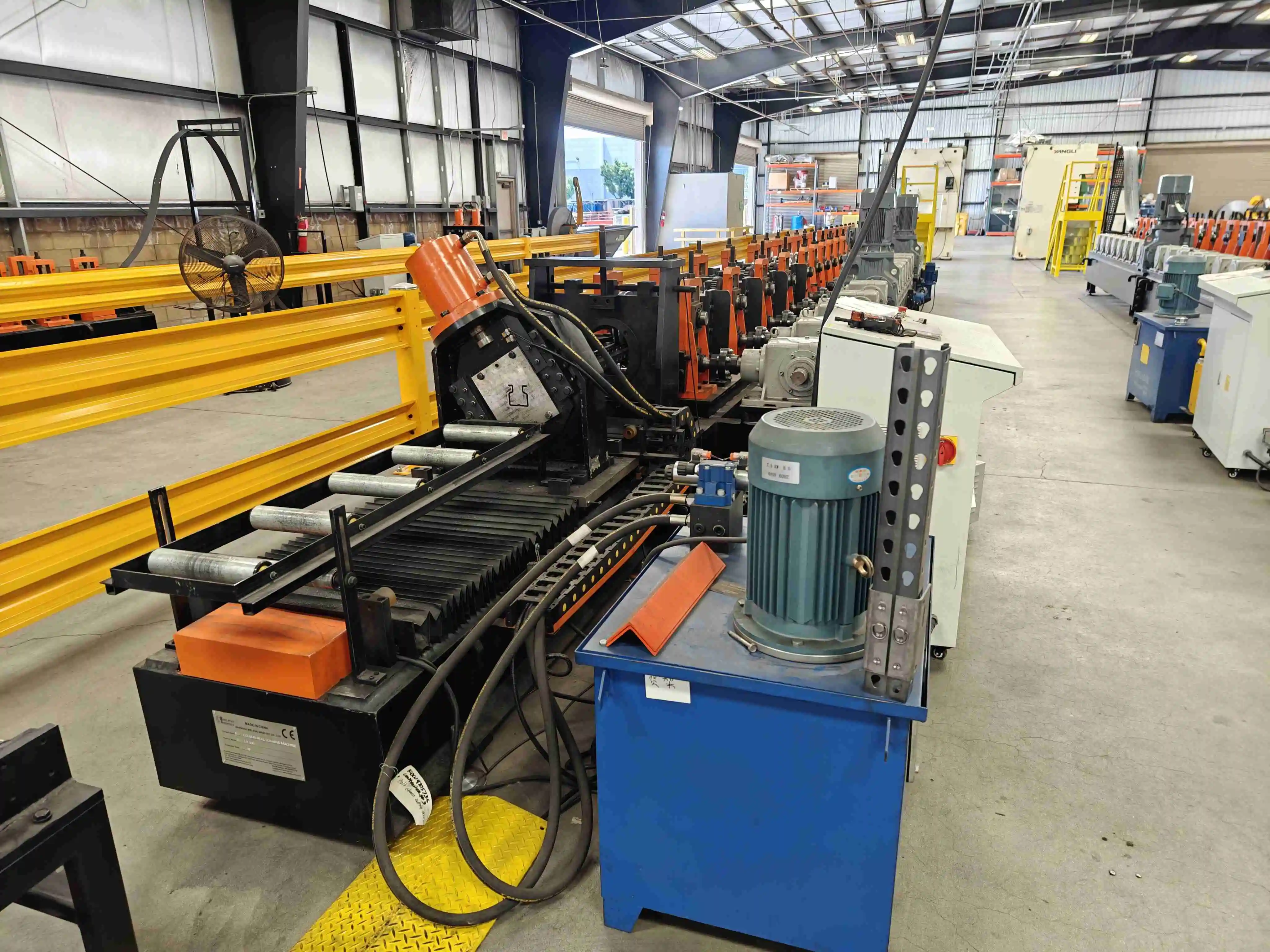
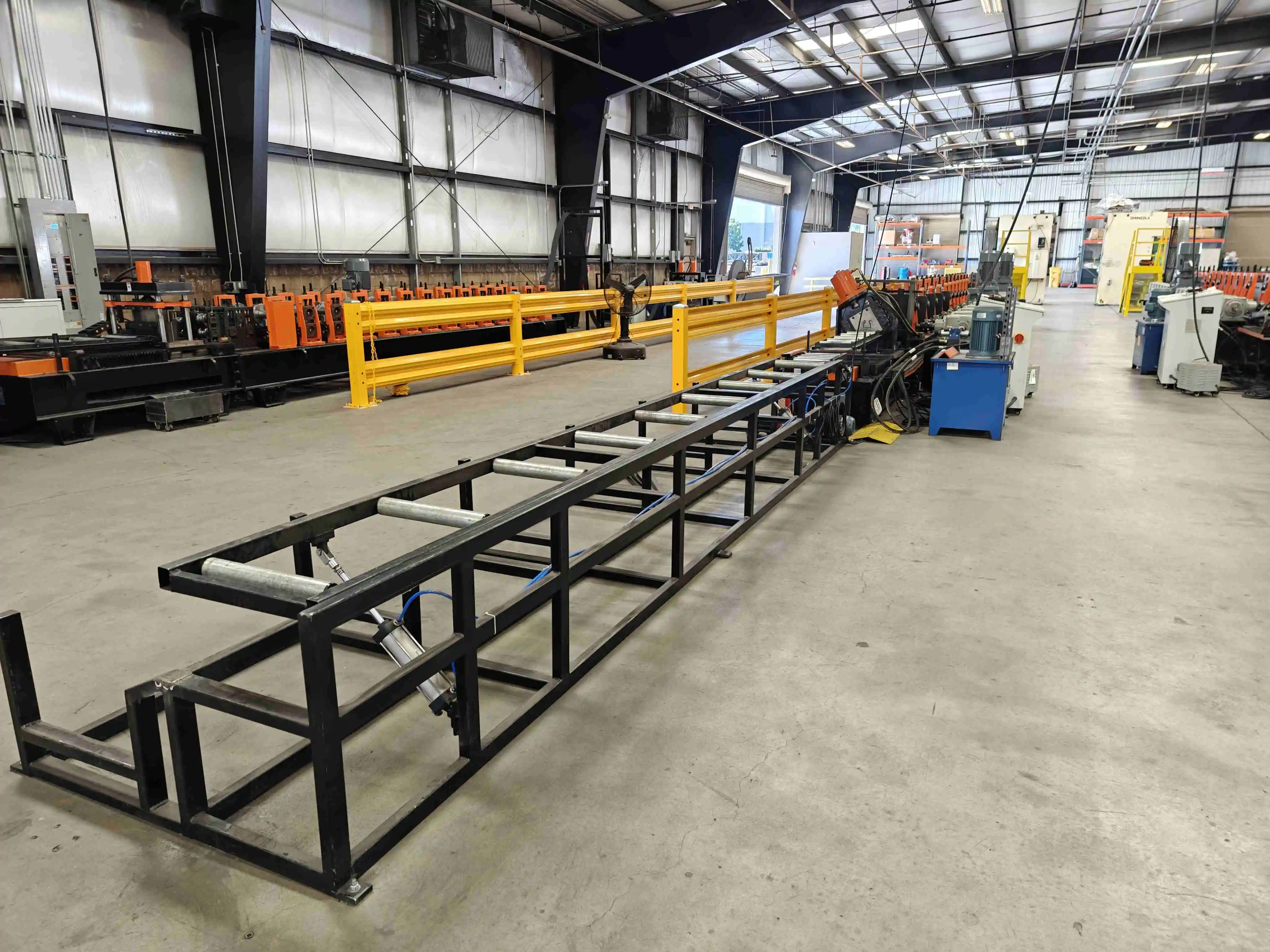
The upright rack roll forming machine is built around one job: producing the vertical columns that hold pallet racking systems together. The machine decoils steel strip, punches holes (tear-drop, slot, or custom patterns), forms the profile into C-type, L-shape, or Omega, then cuts to length โ all without stopping. Read the complete pallet upright frame machine guideย for a full breakdown of line configurations.
An upright rack roll forming machine is essential for creating the vertical framework of storage systems. These components, often called uprights or upright columns, vary significantly in size and design based on specific load capacities.
Depending on your client’s needs, the design styles usually fall into three categories:
L-Shape Profiles: Ideal for light-capacity storage.
C-Shape Profiles: The industry standard for medium-capacity shelving.
Special C-Type/Omega Profiles: Engineered for heavy-duty capacity and maximum structural integrity.
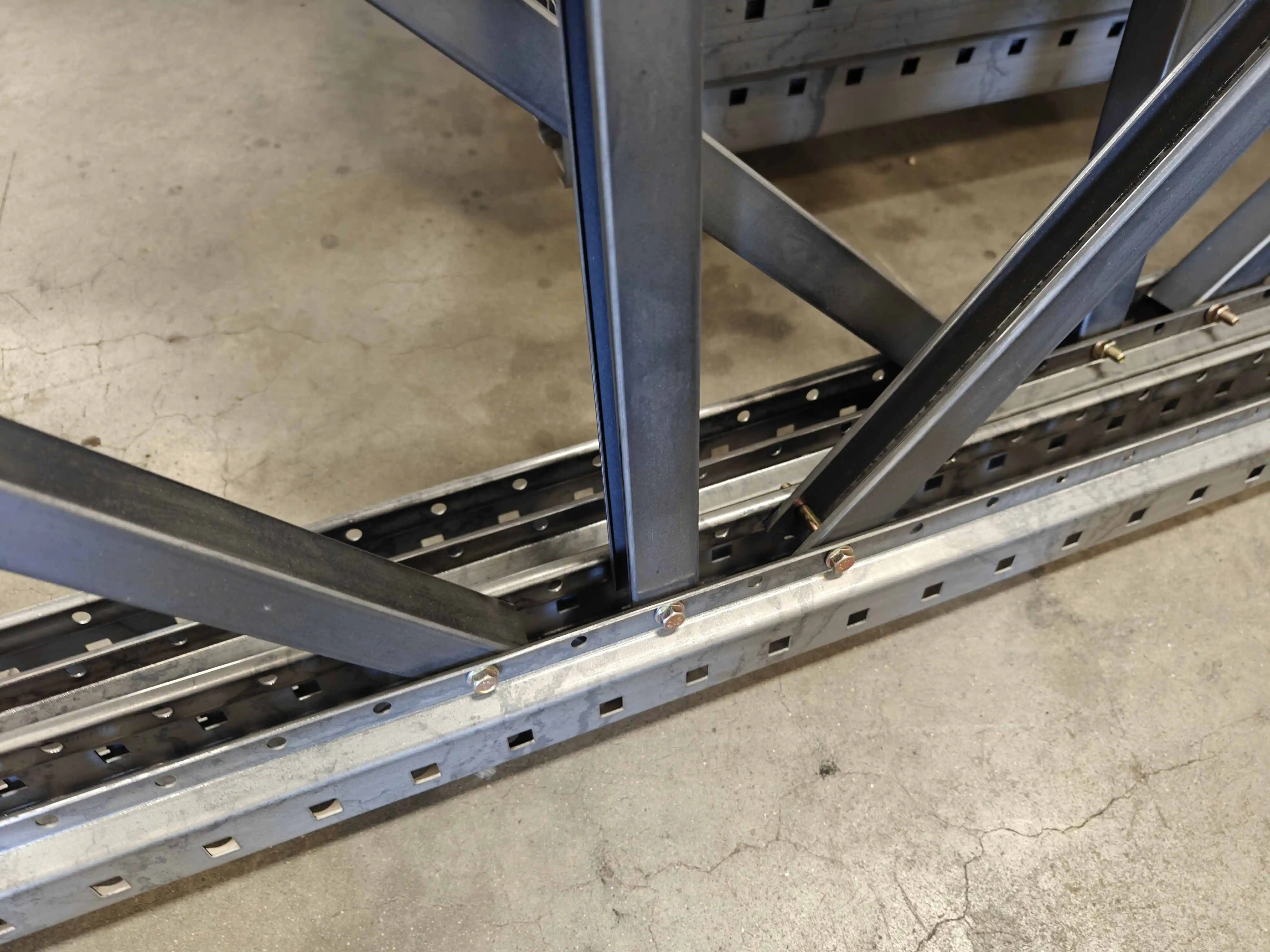
Precision is critical during the manufacturing process. During production, holes (such as the popular Tear Drop Design) and slots are punched with extreme accuracy. This ensures that load beams can be mounted securely into the upright racks without alignment issues. For heavy-duty applications, our machines can process material thicknesses up to 3.5mm with ease.
If you also produce solar mounting structures, ourย solar strut channel roll forming machineย handles that profile on the same equipment platform.
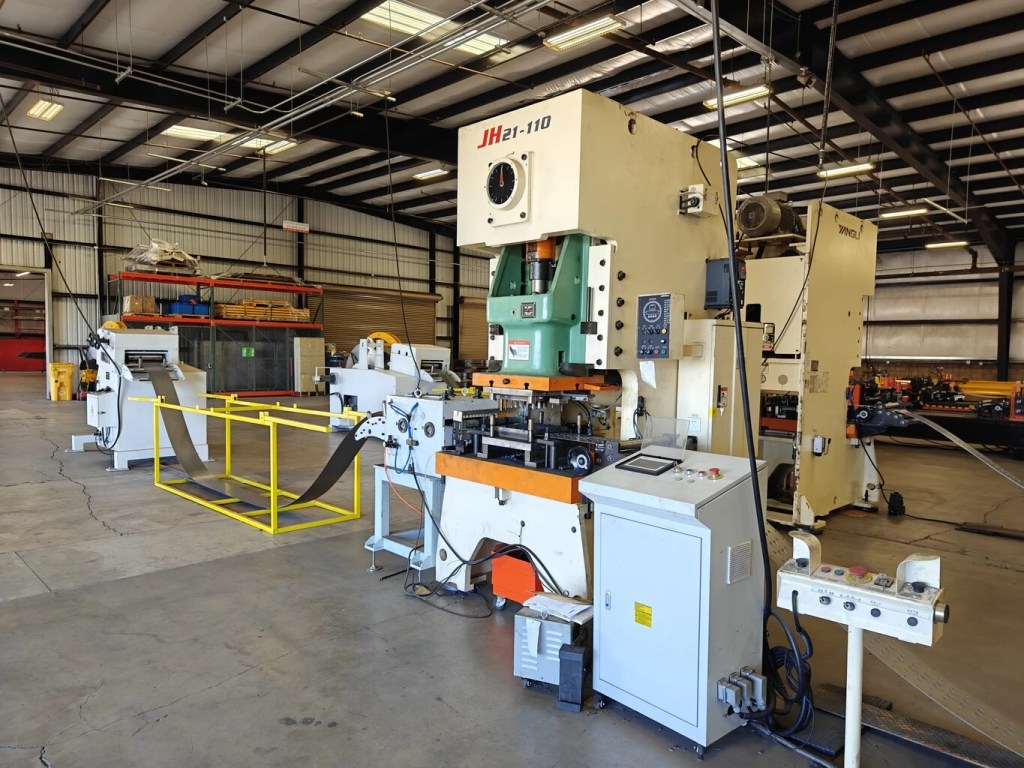
Punching speed and accuracy determine your daily output. We configure every upright rack roll forming machine with one of four punching systems, matched to your production volume and hole pattern requirements. The four options range from a separate two-stage line to an integrated high-speed rotary punch.
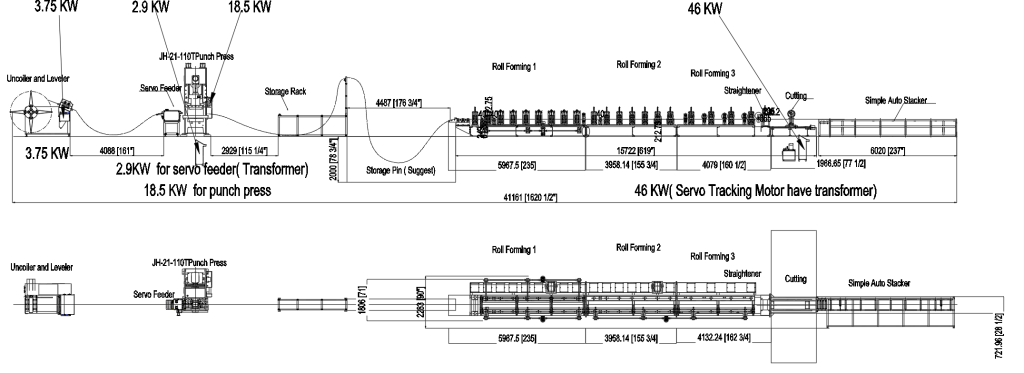
The punching happens on a separate line: decoil โ servo feed โ punch โ recoil the perforated coil. Then the pre-punched coil runs through the roll former independently.
This means your upright rack roll forming machine never waits on the punch. You can run at 20-30m/min regardless of how complex your hole pattern is. The trade-off is extra floor space and capital cost for the separate punching line. Hole accuracy reaches ยฑ0.2mm, and the system handles material thickness from 2.0 to 3.5mm with an output of 2-3 coils pre-punched per shift.
Hydraulic punching gives you tonnage for thick materials without the cost of a mechanical press. The downside: hydraulic cycle time caps your line speed at about 4-6m/min.
This setup makes sense if you’re running thicker materials (3.0-3.5mm) and don’t need high volume. It’s the lowest-cost punching option that still handles heavy-duty uprights. The 80-160 ton hydraulic unit paired with a Yaskawa 3kW servo feeder delivers ยฑ0.3mm hole accuracy.
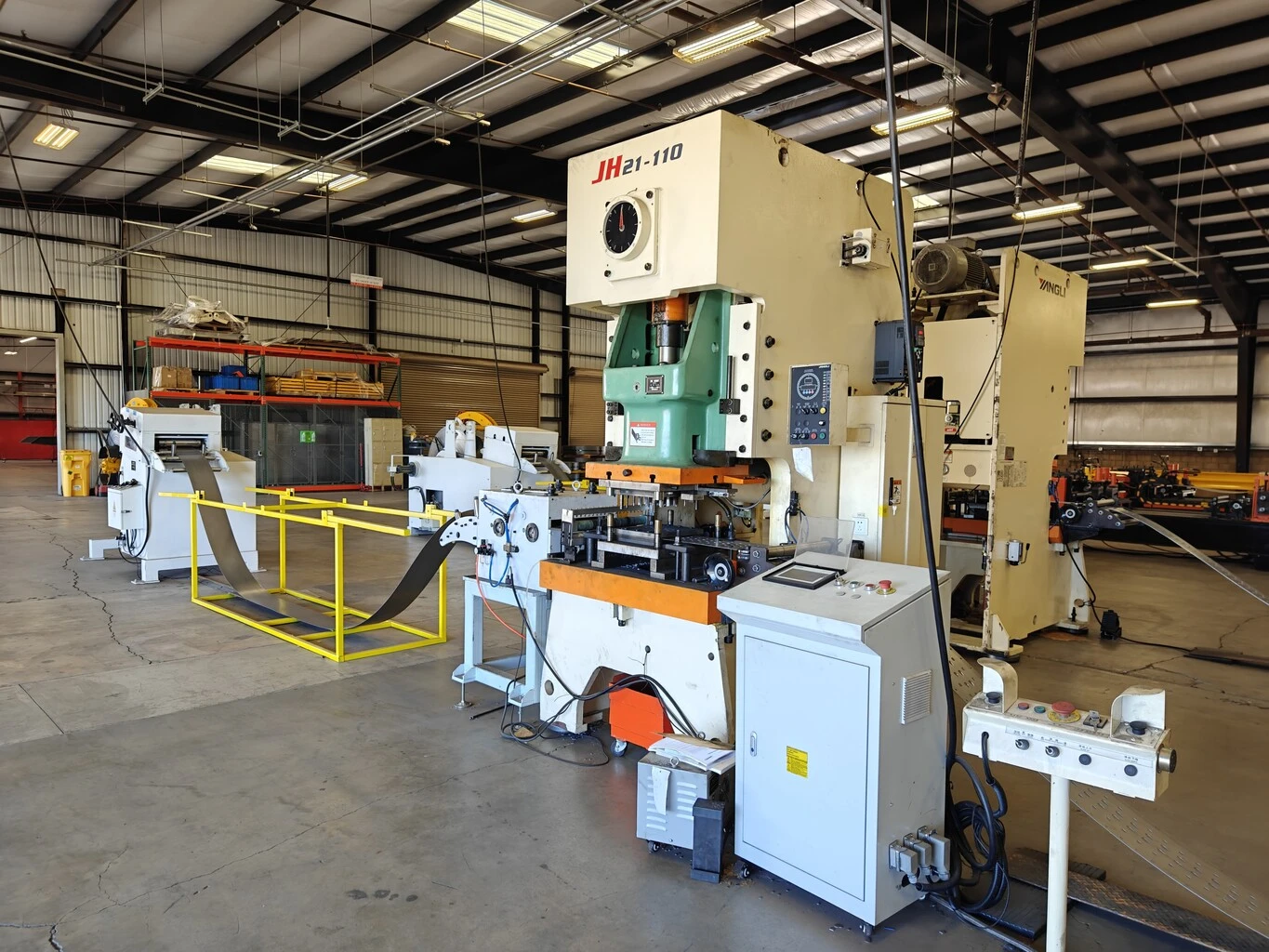
A mechanical punch press (typically 110 tons) cycles faster than a hydraulic unit. With a well-tuned servo feeder, your upright rack roll forming machine will run consistently at 10-15m/min. This is the sweet spot for many buyers โ faster than hydraulic, less expensive than a rotary system, and the tooling is widely supported by local die shops. The APA-110 punch press uses SKD11 dies (HRC 58-62) for ยฑ0.2mm accuracy.
Rotary punching uses rotating dies instead of a per-hit press cycle. No cycle time bottleneck โ your upright rack roll forming machine speed is only limited by the roll former itself. If you’re exporting to Australia or the US and need volume, this is the only option that keeps up. The tooling costs more upfront, and very complex hole patterns may not fit the rotary die geometry. As The Fabricator notes, rotary punching eliminates the intermittent cycle constraint that limits throughput in mechanical presses..
| Punch Method | Line Speed | Hole Accuracy | Max Thickness | Cost | When to Choose |
|---|---|---|---|---|---|
| Offline Punch | No limit (separate line) | ยฑ0.2mm | 3.5mm | High | High volume + complex patterns |
| Inline Hydraulic | 4-6m/min | ยฑ0.3mm | 3.5mm | Low | Budget + thick materials |
| Inline Punch Press | 10-20m/min | ยฑ0.2mm | 3.5mm | Medium | Balanced speed & cost |
| Inline Rotary Punch | 30-50m/min | ยฑ0.3mm | 5 mm | High | Maximum throughput |
Upright profiles aren’t one-size-fits-all. Australian racking uses different hole spacing than European systems. Your upright rack roll forming machine needs to handle changeovers without losing a day of production.
Operators move rollers and dies by hand. Width changes take 1.5-2 hours. Profile changes (switching C-type to L-type) take longer because you’re swapping roller sets. It’s cheaper upfront, but if you’re changing widths more than once a week, the downtime adds up fast. You also need an operator who knows the machine well โ manual adjustment is only as accurate as the person turning the wrenches.
Motors move the rollers and guides to preset positions. The operator enters the target width on the touch screen, and the upright rack roll forming machine adjusts itself. Changeover takes 5-10 minutes. One operator can manage multiple lines because they’re not tied up in mechanical adjustments between jobs. The trade-off is upfront cost (roughly +30-40% over manual) and more complex maintenance. But if you’re running mixed orders, it pays for itself in downtime savings within 6 months.
Theย CZ purlin interchangeable machineย demonstrates the same fast-changeover principle for a different product category.
| ย | Manual | Automatic |
|---|---|---|
| Changeover time | 1.5-2 hours | 5-10 minutes |
| Operator skill | High | Low |
| Upfront cost | Lower | +30-40% |
| Repeatability | Varies by operator | ยฑ0.1mm (PLC-controlled) |
| Maintenance | Simpler | More complex |
| Item | Specification |
|---|---|
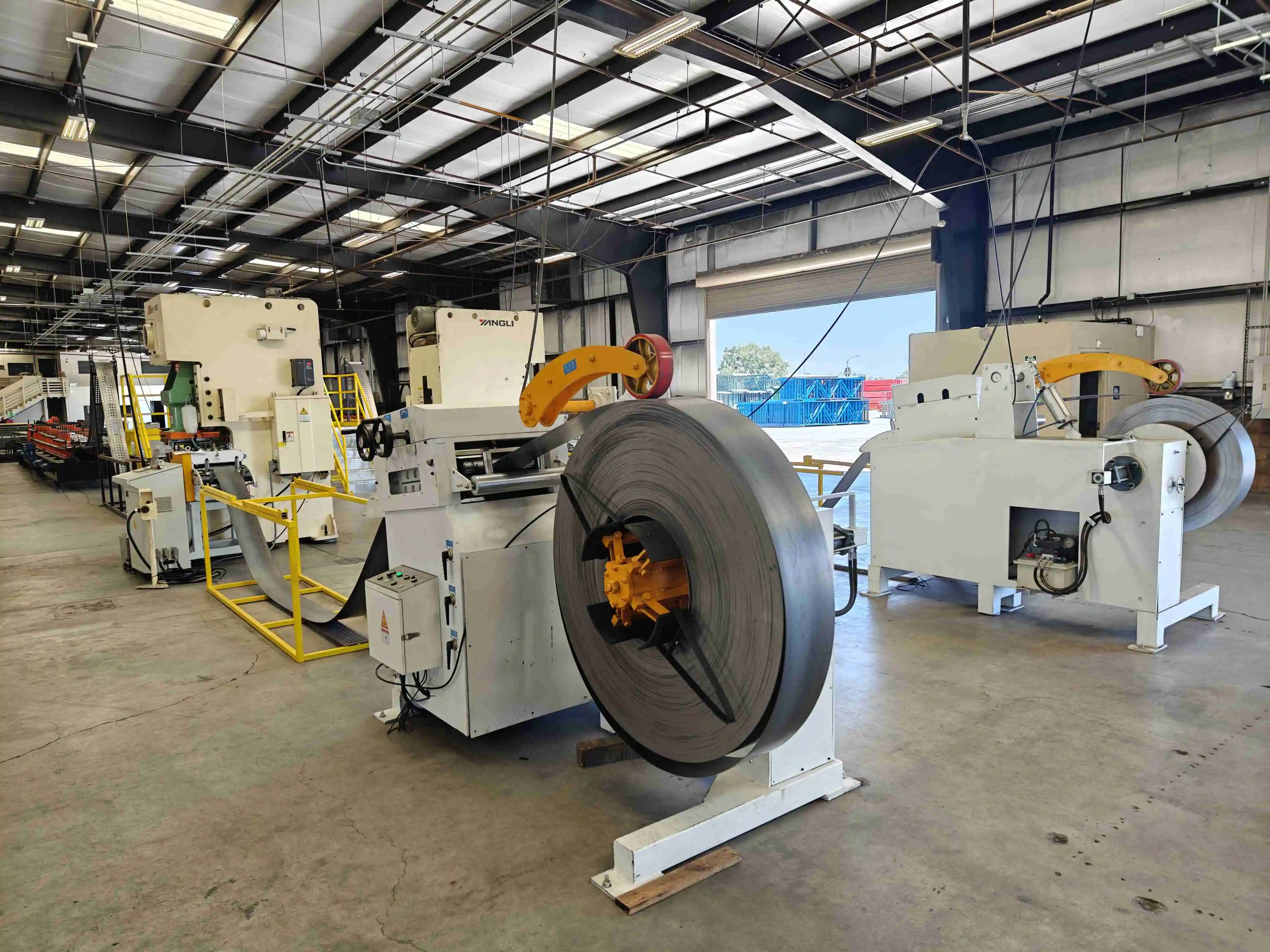
| Structure | Integrated uncoiler and leveler |
| Auxiliary Devices | Equipped with press arm and limit sensor to prevent coil overโuncoiling |
| Feeding & Leveling | 2 sets of pinch rolls + 7โroller leveling device |
| Max. Coil Width | 400 mm |
| Coil Thickness | 2.0โ3.0 mm |
| Coil Inner Diameter (I.D.) | 450โ530 mm |
| Max. Coil Outer Diameter (O.D.) | 1300 mm |
| Item | Specification |
|---|---|
| Feeder Model | NCโ400 Servo Feeder |
| Max. Coil Width | 400 mm |
| Servo Motor | 3 KW Yaskawa servo motor |
| Control System | Siemens PLC + Touch Screen |
| Punch Press Capacity | APAโ110 Ton |
| Punch Die Material | SKD 11 |
| Item | Specification |
|---|---|
| Machine Base | Hโbeam welded base with milled steel plate on top surface |
| Forming Stands | Cast iron stands fixed with positioning keys for high precision; 20 stands with side rolls |
| Transmission | Gear box transmission with highโquality coupling joints |
| Width Adjustment | PLCโcontrolled adjustable operation side for different column widths |
| Auxiliary Device | Equipped with straightening device to ensure straight finished beams |
| Main Motor Power | 18.5 KW ร 2 (with reducer) |
| Adjusting Motor Power | 2.2 KW ร 1 + 1.5 KW ร 2 |
| Line Speed | 15โ20 m/min |
| Hydraulic Motor Power | 7.5 KW |
| Cutting Blade Material | CR12MOV (HRC 58โ62) |
| Cutting Blade Quantity & Function | 2 sets (for 3โinch & 4โinch columns); 45ยฐ cutting device to reduce material waste |
| Hydraulic Station Brand | Wuxi Wanshen (equipped with cooling fan) |
| Item | Specification |
|---|---|
| Operation Function | Users input length, quantity and hole positions via touch screen; realโtime working status display; automatic start/stop after program completion |
| Supported Voltage | 220 V / 240 V / 380 V / 415 V / 440 V / 480 V |
| Core Components | Siemens PLC & Touch Screen, Koyo encoder, Yaskawa inverter |
| Item | Specification |
|---|---|
| Function | Provides power for uncoiler expansion, punching and cutting |
| Power | 2.2 KW + 11 KW |
| Working Pressure | 12โ16 MPa |
An upright rack roll forming machine is one piece of the puzzle. Beli RollForming builds the full range of equipment for pallet racking manufacturers โ from raw coil to finished, welded components ready for assembly.
The welded upright frame is the backbone of any pallet racking system and very famous in US. Our upright rack roll forming machine punches the hole patterns, forms the column profile, and cuts to length.ย
Box beams provide higher load capacity than open profiles. Our box beam roll forming lines start with two matching C-channels, which are roll formed and then passed through a closing station that joins the flanges. A seam welder runs along the longitudinal joint, and the closed beam is then cut to length by flying cut-off. Box beams are often used as load beams in heavy-duty racking systems.
Cross bracing and diagonal bracing connect upright frames to create structural stability. We supply upright rack roll forming machines for C-channel and angle bracing sections, with options for pre-punched bolt holes at the connection points. Bracing components are typically lighter gauge (1.5-2.5mm) and run at higher speeds than upright columns.
Beyond roll forming, we supply the welding and assembly equipment that turns formed components into finished racking:
Racking systems need safety barriers, row spacers, and column protectors. We supply roll forming and punching lines for these secondary components โ lighter gauge, simpler profiles, shorter runs.
This is why most of our pallet racking customers buy from us in stages: first the upright roll former, then the beam line, then the welding equipment. We help you build the production capability as your business grows. Theย top 10 roll forming machine manufacturers guideย covers what to look for in a supplier who can support a multi-stage racking equipment investment.
1. We build racking equipment for global markets.ย We’ve supplied upright rack roll forming machines to manufacturers in Australia, the US, Europe, Southeast Asia, and the Middle East. Each market has its own standard โ AS4084 in Australia, ANSI/MH16.1 in the US, EN 15512 in Europe, and ISO 10721 or GB/T for China. We pre-configure every machine for your target market’s hole spacing, profile dimensions, and electrical requirements before shipment. You get the right spec from day one, not a machine that needs modification at your factory.
2. We build the punching too.ย Most roll forming machine makers outsource punching. We build both. That means when something needs adjustment, you have one supplier responsible for the whole line โ not two vendors pointing fingers.
3. Real production numbers.ย A 30m/min rotary punch line produces about 6,000 meters per 8-hour shift. That’s 300-400 uprights (depending on length) ready for assembly. Racking uprights manufactured toย ANSI/MH16.1ย (US) orย EN 15512ย (Europe) must meet specific hole pattern tolerances and section properties โ our machines are built to hit those tolerances consistently, not just on a sample run.
4. Support that picks up.ย Remote commissioning via video call. Spare parts shipped from Wuxi within 72 hours. Direct WhatsApp line to our technical team โ not a ticket system.
5. See the machine running.ย Watch an upright rack roll forming machine producing tear-drop holes at 20m/min on ourย YouTube channel. The video shows servo feeding accuracy, punch close-ups, continuous flying cutting, and finished upright samples.ย
Offline punch means the coil gets punched and recoiled first, then the pre-punched coil runs through the roll former. Your upright rack roll forming machine never sits waiting for a punch cycle. Inline punch integrates everything into one line โ simpler layout, lower cost, but your line speed is capped by how fast the punch can cycle. Choose offline if you’re running high volumes and can’t afford downtime.
Within a C-type range, yes โ automatic width adjustment handles that. For L-type profiles you need a different roller set. We offer quick-change roller systems that swap in about 30 minutes, so you can run both on the same machine with a short changeover.
ยฑ0.2mm with servo + punch press or offline punch. ยฑ0.3mm with hydraulic or rotary. Tear-drop holes need to be accurate or your beam connectors won’t fit โ we test every die before shipment and include a test report with the machine.
Manual: 1.5-2 hours. Automatic: 5-10 minutes. If you’re changing widths daily, automatic pays for itself in about 6 months from downtime savings alone. Theย roll forming machine cost guideย covers how to budget for the automatic adjustment option.
3.5mm with offline punch or inline hydraulic punch. For inline punch press, we recommend max 3.0mm. For rotary punch, max 2.5mm โ the tooling life and punching accuracy suffer above that. Thicker materials need more punching force, which slows cyclic punching methods.
Yes. We’ve supplied lines to manufacturers across Australia, the US, Europe, Southeast Asia, and the Middle East. We configure for AS4084 (Australia), ANSI/MH16.1 (US, governed by the Rack Manufacturers Institute), EN 15512 (Europe), and GB/T or JIS standards as needed. Electrical configuration covers 480V/60Hz (US), 380V/50Hz (Europe/Asia), and 415V/50Hz (Australia). All documentation is available in English, and some customers request Spanish, Portuguese, or Russian documentation as well.
12-month warranty on all components. Lifetime technical support via WhatsApp and email. SKD11 punch dies and rollers kept in stock for 72-hour shipping. Remote commissioning included. On-site support available at cost plus travel.
Yes, if the hole pattern fits the die stages. We design the die layout from your drawing โ send us the profile drawing (DWG/DXF/PDF) and we’ll engineer the die layout and quote. Complex patterns may need two dies, which we’ll flag upfront.
About 14,400 meters per 8-hour shift at continuous running. For a standard 2.4m upright: roughly 6,000 pieces per shift. Real-world output depends on coil joint frequency, material thickness, and how often you’re changing lengths. Use theย metal coil calculatorย to estimate coil weight and length for your production planning.
Send your profile drawing, required speed, material thickness range, and hole pattern. We respond within 24 hours with a configuration recommendation and detailed quote. No obligation โ and we’ll usually suggest ways to optimize your spec for cost or performance.
Send us your profile drawing and production requirements. We’ll configure the right punch solution for your volume and market.
WhatsApp:ย +86 186 1692 7760
Email:ย enquiry@believeindustry.com
If you make warehouse racks, you already know this: the...
Read MoreWhat a Roll Forming Corporation Actually Does A roll forming...
Read MoreAย pallet upright frame roll forming machineย turns flat steel coils into...
Read MoreStanding seam roll formerย machines produce standing seam roofing panels with...
Read More