Table of Contents

Cable Tray Roll Forming Line Cost: 7 Crucial Factors for High-Efficiency ROI in 2026

Cable Tray Roll Forming Line Cost

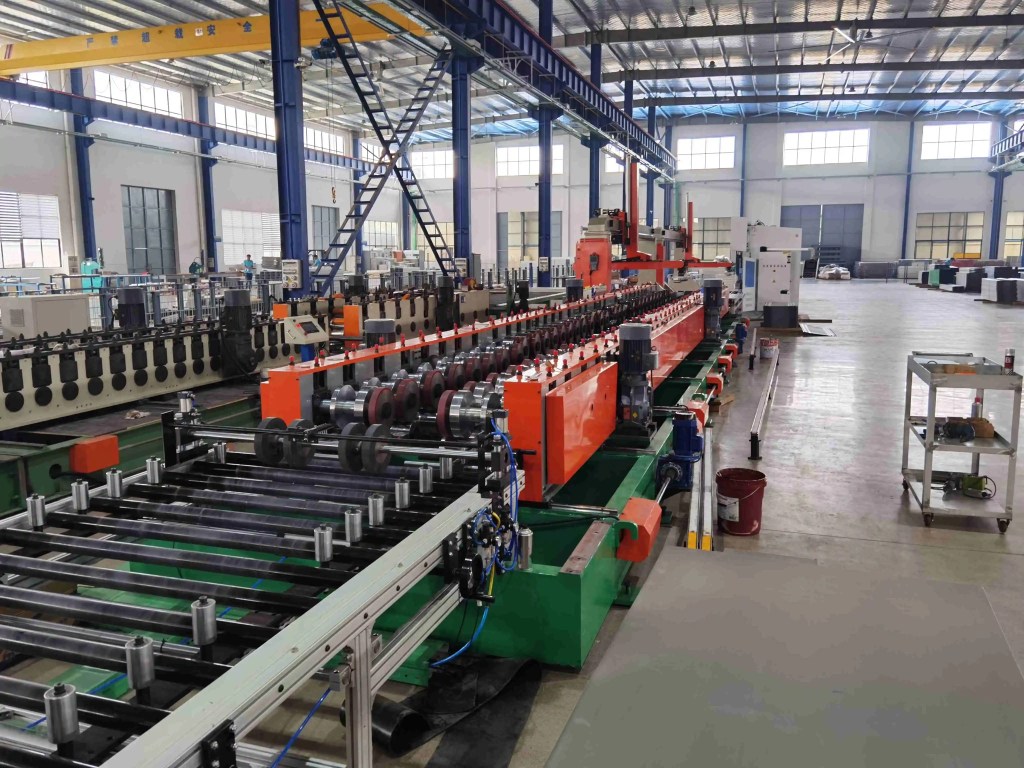
In 2026, a professional-grade cable tray roll forming line cost typically ranges from $45,000 to $225,000 USD. This pricing is driven by seven critical factors: automation level, material thickness capacity, punching system complexity, tooling quality (Cr12Mov), drive system precision, machine rigidity (deflection control), and Industry 4.0 integration. Investing in high-spec automated lines reduces long-term operational costs by eliminating manual setup and reducing scrap rates.

The 7 Crucial Factors Influencing Cable Tray Roll Forming Line Cost

As global demand for data centers and renewable energy infrastructure surges, the cable tray roll forming line cost has become a pivotal metric for manufacturers. At Beli Rollforming, we define the value of an investment through these seven specific technical and economic pillars.

1. Automation Level and Width Adjustment

Automation is the primary variable in your initial investment.

  • Manual/Spacer Adjustment: Lower upfront cost, but requires 30–60 minutes of downtime for every profile change.

  • PLC-Driven Auto-Adjustment: The 2026 gold standard. It allows operators to change tray widths (100mm to 600mm) via touchscreen in under 5 minutes. While full automation can increase the cable tray roll forming line cost by 15-25%, the drastic reduction in labor costs provides a significantly faster ROI.

2. Material Thickness and Load Capacity

A machine designed for 1.0mm light-duty trays is significantly cheaper than one designed for 2.5mm heavy-duty industrial trays. Thicker materials require larger shaft diameters and more robust gearboxes. According to a comprehensive analysis of roll forming machine engineering, under-specifying material thickness leads to premature motor failure and frame warping.

3. Punching System Complexity

Cable trays require intricate hole patterns for ventilation and mounting.

  • Single Hydraulic Station: Cost-effective but slower.

  • Multi-Station Servo-Punching: Increases the cable tray roll forming line cost but allows for high-speed, varied hole patterns without stopping the line, boosting output by up to 40%.

4. Tooling Quality (Rollers and Dies)

The engineering behind the rollers directly impacts longevity. As noted in the Roll Forming Handbook by George T. Halmos, “The manufacture of rolls is the most important parameter that affects costs.”

  • GCr15 Steel: Common in budget machines but wears faster.

  • Cr12Mov Vacuum-Quenched Steel: Beli Rollforming’s standard. It maintains 0.05mm tolerances over millions of meters, protecting your investment.

5. Drive System and Synchronization

Modern lines utilize servo-driven systems for the punching and cutting units. Servo motors provide the precision needed for high-speed tracking cutting. While chain-driven systems are cheaper, they cannot match the 15m/min speeds and length accuracy of servo-integrated lines.

6. Machine Rigidity and Deflection Control

A low cable tray roll forming line cost often masks a lack of structural rigidity. Research by Pedro Barbieri Figueiredo Ferreira (University of Porto) demonstrates that forming forces can cause roll stands to flex (deflection), leading to “Bow and Twist” defects. Beli uses reinforced “Torii” stands to ensure the machine remains rigid under high stress.

7. Industry 4.0 and Remote Connectivity

In 2026, the ability to monitor production data and perform remote diagnostics is essential. Integrating IoT sensors for predictive maintenance slightly raises the cable tray roll forming line cost but prevents catastrophic downtime through early wear detection.

2026 Comparison: Standard vs. High-Speed Cable Tray Lines

FeatureStandard Cable Tray LineHigh-Speed Automatic Line (2026)
Average Cost$45,000 – $65,000 USD$85,000 – $125,000+ USD
Production Speed5 – 8 meters / min12 – 15+ meters / min
Width AdjustmentManual / Spacer-basedPLC Auto-Adjustment (< 5 min)
Punching SystemSingle Hydraulic StationMulti-Station Servo-Punching
Tooling MaterialGCr15 SteelCr12Mov Vacuum-Quenched Steel

2026 Maintenance & Cost-Efficiency Strategy

To ensure your cable tray roll forming line cost remains a one-time investment rather than a recurring expense, a proactive maintenance schedule is essential. In 2026, predictive maintenance—using sensors to detect tool wear before it impacts product quality—is the industry standard for high-EEA-T manufacturing.

Annual Maintenance & Operational Cost Projection

Maintenance TaskFrequencyEstimated Annual CostImpact on ROI
Roller CalibrationMonthly$500 (Labor)Prevents bow and twist defects
Hydraulic System FlushBi-Annually$1,200Maintains punching force & speed
Sensor & PLC UpdatesAnnuallyIncluded in SupportEnsures Industry 4.0 connectivity
Wear Part ReplacementAs Needed$2,000 – $5,000Extends machine life by 10+ years

6 High-Value FAQs

What is the average cable tray roll forming line cost?

In 2026, expect a range of $45,000 to $225,000 depending on automation and speed.

Can one machine produce different tray heights?

Yes, using “split-spacer” designs or auto-side-adjust systems allows for height variations.

How long does it take to see a full ROI?

Most high-speed lines pay for themselves within 12-18 months through labor savings.

Is training included?

We provide comprehensive video training and remote commissioning support. Learn more in our guide on how to install a roll forming machine remotely.

Does the price include software?

Yes, a pre-programmed multilingual PLC interface is standard.

How long does a roll forming machine last?

With proper roll forming alignment and calibration, these machines last 10-15 years.

Conclusion: Securing Your Competitive Edge in 2026

The cable tray roll forming line cost is more than a line item on a balance sheet; it is a strategic investment in your facility’s long-term production capability. As we have explored, the most successful manufacturers in 2026 are those who look beyond the initial sticker price to prioritize the 7 Crucial Factors: automation, material versatility, high-grade Cr12Mov tooling, and structural rigidity.

By choosing a system that minimizes machine deflection and maximizes throughput via PLC-driven width adjustment, you effectively lower your cost-per-meter and eliminate the hidden expenses of manual labor and material waste. In a market where infrastructure speed is paramount, your equipment must be an asset, not a bottleneck.

Take the Next Step with Beli Rollforming

Ready to transform your production capacity? Whether you are looking for a high-speed automated powerhouse or a reliable standard line, our engineers at Beli Rollforming are here to provide a comprehensive analysis of roll forming machine options tailored to your specific project requirements.

  • Request a Custom Quote: Get a detailed breakdown of the cable tray roll forming line cost for your specific profiles.

  • Technical Consultation: Speak with an expert about integrating Industry 4.0 diagnostics into your next line.

  • Global Support: Benefit from our proven remote installation and calibration services.

Contact Believe Industry Company today and build the future of infrastructure.

Visit Beli Rollforming Official | Get a 2026 Technical Quote

Request a Quote

Inquiry Form

Discover more from Believe Industry Company| Roll Forming Machine Manufacturer, Supplier & Exporter

Subscribe now to keep reading and get access to the full archive.

Continue reading