Alamat
No 1, Jalan Yd, Daerah Huishan, Bandar Wuxi, Jiangsu. 214183
Waktu Kerja
Isnin hingga Jumaat: 9AM - 5PM
Sabtu: 9AM - 4PM
Alamat
No 1, Jalan Yd, Daerah Huishan, Bandar Wuxi, Jiangsu. 214183
Waktu Kerja
Isnin hingga Jumaat: 9AM - 5PM
Sabtu: 9AM - 4PM

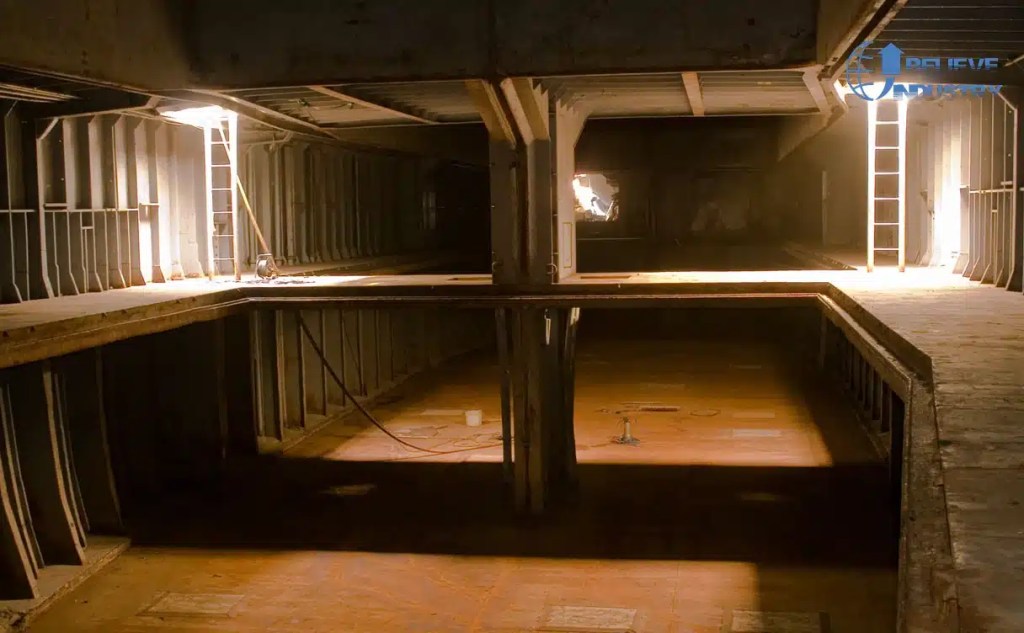
A marine roll forming machine builds the long steel sections a ship needs before anyone lays a plate. Deck stiffeners, bulkhead channels, pipe supports, and cable trays all start as flat coil and become load-bearing shapes inside a block. A marine roll forming machine is a line built for salt air, heavy plate feeds, and class survey rules that a land-based line never faces.
Jawapan ringkas: A marine roll forming machine forms flat steel coil into ship sections such as deck stiffeners, bulkhead channels, pipe supports, cable trays, and coaming frames. Five profile families cover most yard work. Material grade sets the line: Grade A and AH36 for structural sections, 316L for corrosion exposed parts. Speed runs 10 to 25 m/min. Class approval and salt spray exposure decide the finishing.
A shipyard profile lives in a wet, salty, moving environment. Salt water sits on every surface, and every weld is inspected. That changes three things, and each one lands on the marine roll forming machine.
Steel arrives thicker. Ship plate feeds run from 6 mm to 12 mm, well past the 0.8 mm to 2.0 mm typical of a rack or purlin line. Heavier gauge means bigger motors and stronger stands on the marine roll forming machine.
Tolerance is tighter. Class surveyors check profile flatness and web alignment against the drawing. The marine roll forming machine needs a floating roller or auto-correction rather than a fixed setup, because ship sections run long and drift shows up in the block.
Coating must survive salt. Galvanizing alone is not enough offshore. Sections above the waterline often get a paint system to ISO 12944 C5-M or CX, and cabin or tank-adjacent parts use 316L stainless.
Deck stiffeners are the highest volume marine roll forming job on most yards. A flat bar or bulb flat strip feeds the line, gets slotted or drilled, then cut to length for one deck panel.
The critical variable is slot pitch. Bulb flat often runs with pre-slotted holes at 200 mm to 300 mm centres. Punching speed sets the line speed. A hydraulic press handles 3 to 4 m/min, a mechanical press 10 to 15 m/min, and a rotary punch unit clears 30 m/min or more.
| Stiffener type | Kaedah penebukan | Usable line speed |
|---|---|---|
| Flat bar, slotted | Pras hidraulik | 3 hingga 4 m/min |
| Flat bar, slotted | Mechanical press | 10 hingga 15 m/min |
| Bulb flat, slotted | Penebuk putar | Lebih 30 m/min |
A yard building small vessels on one shift usually buys the mechanical press. A yard building container ships buys rotary, because the stiffener count runs into the tens of thousands. The marine roll forming machine also ships sections with pre-drilled end holes for the connection fittings.

Watertight bulkheads carry flat bars and channels that stop the hull from flexing. This is a fixed-dimension, high-repeat job. The same channel runs hundreds of times on one vessel class, so the marine roll forming machine pays for itself on tooling alone.
Channel size is typically 150 mm to 300 mm deep with a 6 mm to 10 mm web. The marine roll forming machine adds punching for lightening holes and drainage slots at the bottom of the web. Punch press choice follows the same three classes as the stiffener line.
Pipe supports sit behind every bilge pipe, fuel line, and ballast line. They are usually a channel or a tee section welded to a pad. Sections are short, so the line runs with a stop-and-cut station rather than continuous running length.
Coating matters more here than shape. Pipe supports collect condensation and salt, and they sit close to tanks. Many yards specify hot dip galvanized to AS/NZS 4680 or a paint system to ISO 12944 C5-M. Confirm the coating class before the marine roll forming machine is built, since galvanizing and forming sit in different buildings.

Cable trays on ships run long, so they are the one marine profile that matches the land tray market. Difference is the environment. Vibration, washdown, and salt mean 316L or heavy marine-grade galvanizing rather than standard zinc.
Tray lines run faster than stiffener lines because no punching is needed on every metre. Perforated tray needs in-line holes, which drops speed to 8 to 12 m/min. Ladder tray without holes runs 20 to 25 m/min.
We covered tray types in our what is a cable tray guide. Wire ducts inside accommodation run the same section as land tray in a lower grade environment. Where the marine roll forming machine already runs tray, adding a duct profile costs a roll set, not a second line.
Hatch coamings, bulwark stanchions, and accommodation module frames use light gauge sections. These run at high line speed on thinner material, from 1.5 mm to 4 mm, and the marine roll forming machine here sits closer to a wall panel line than a stiffener line.

Accessory modules are where the newest shipyards buy. A yard building offshore service modules wants a flexible line that changes profile without retooling. Servo stations switch a section in minutes, which pays off across a mixed product book.
| Gred | Penggunaan biasa | Forming note |
|---|---|---|
| Grade A | General hull structural | Mild spring back, forgiving on a standard line |
| AH36 / DH36 | Higher strength hull sections | Higher tonnage, needs heavier drive |
| 316L stainless | Tank-adjacent, accommodation, offshore | High spring back, needs floating rollers and tooling wear allowance |
| Keluli tergalvani | Pipe supports, deck fittings | Zinc dust during forming, check for surface damage |
Spring back is the constant across all of them. A marine roll forming machine set up for Grade A will not hold angle on 316L. Stainless needs more stations and a re-rolled pass to reach the drawing angle. Cold work also embeds stress, which is why class rules cap cold bending for critical members.

Coil width planning is the other half of the job. A kalkulator lebar dan ketebalan gegelung covers how flat width maps to finished width after forming. The panduan pemilihan gegelung keluli goes deeper on grade and coating.
Line speed follows the profile and the punching method, not the machine brand. A marine roll forming machine with hydraulic punching on deck stiffeners runs 3 to 4 m/min. Remove the punching and the same line runs 20 m/min on light sections.
| Work | Kelajuan | Output per 8h shift |
|---|---|---|
| Stiffener with hydraulic punch | 3 hingga 4 m/min | 120 to 170 lengths at 9 m |
| Stiffener with mechanical press | 10 hingga 15 m/min | 400 to 600 lengths at 9 m |
| Ladder tray, no punching | 20 hingga 25 m/min | 6,000 hingga 10,000 m |
Speed matters less than consistency here. The high volume roll forming selection guide covers how speed, automation, and scrap rate interact on cost per tonne.
Class approval attaches to the material, not to the machine. The buyer still needs traceability from the marine roll forming machine side. Every coil should carry a mill certificate matched to the grade, and the line should keep heat numbers through to the finished section so survey can follow the batch.
Surveyors also check section geometry against the approved drawing, which is why punching die installation accuracy shows up in survey findings. Reference points for the buyer are the DNV rules and ABS rules for marine materials, plus ISO 12944 for coating durability classes.
Yards working offshore structures rather than vessels face a related material question. Our oil and gas roll forming guide covers the pipe support and platform profiles next to shipbuilding work.
Believe Industry has built custom roll forming lines since 2005. More than 80 engineers, 500+ projects shipped to 50+ countries, ISO 9001 and CE certified. Marine and offshore projects are part of that record.
Q: What speed does a marine roll forming machine run on deck stiffeners?
A: Speed depends on punching method. Hydraulic punch runs 3 to 4 m/min, mechanical press 10 to 15 m/min, and rotary punch 30 m/min or more. Light sections without punching run up to 20 to 25 m/min.
Q: Can one marine roll forming machine handle both AH36 and 316L stainless?
A: Yes, with the right roller setup. Stainless needs more forming stations and extra spring back allowance. Most yards run separate roll sets per grade and swap them rather than sharing tooling.
Q: What steel grade is used for ship deck stiffeners?
A: Grade A and AH36 are the most common structural grades. DH36 is used where higher strength is needed. Stainless 316L appears on tank-adjacent and offshore fittings where salt spray corrosion governs the choice, and a marine roll forming machine running 316L needs its own roll set.
Q: How much galvanizing does a marine pipe support need?
A: Hot dip galvanizing to AS/NZS 4680 or the ISO 12944 C5-M coating class is common for pipe supports above the waterline. Offshore and splash zone parts need ISO 12944 CX or a paint system on top of the galvanizing.
Q: Do marine lines need class society approval on the machine itself?
A: No. Class approval applies to the material and finished section, not the machine. The buyer needs mill certificates with heat numbers and a forming line that holds the approved profile geometry within tolerance.
Q: Are cable tray lines for ships the same as land-based tray lines?
A: The section is similar but the material is not. Ship cable tray uses 316L stainless or heavy marine-grade galvanizing because of vibration, washdown, and salt. See our cable tray production guide for the standard tray line.
Diterbitkan kali pertama: October 14, 2026
Kemas kini terakhir: October 14, 2026
Log perubahan:
Next Review Triggers:** New IMO or ISO coating class published, DNV or ABS rule change affecting formed sections, a move to higher strength grades on new vessel classes, or a 20 percent change in search interest for “marine roll forming machine”.


Marine Roll Forming Machines: 5 Shipbuilding Profiles A marine roll...
Baca lagi

Mesin roll forming untuk rel: 5 profil infrastruktur. Rel...
Baca lagi
Persediaan mesin tiang rak: 12 langkah ke profil pertama yang baik...
Baca lagi
Apakah itu profil U? 7 fakta piawaian siri P1000. Satu...
Baca lagi English English
  Español
 Português
 Русский
 العربية
 Bahasa Melayu
 Türkçe
 ไทย
ไทย
 Bahasa Indonesia