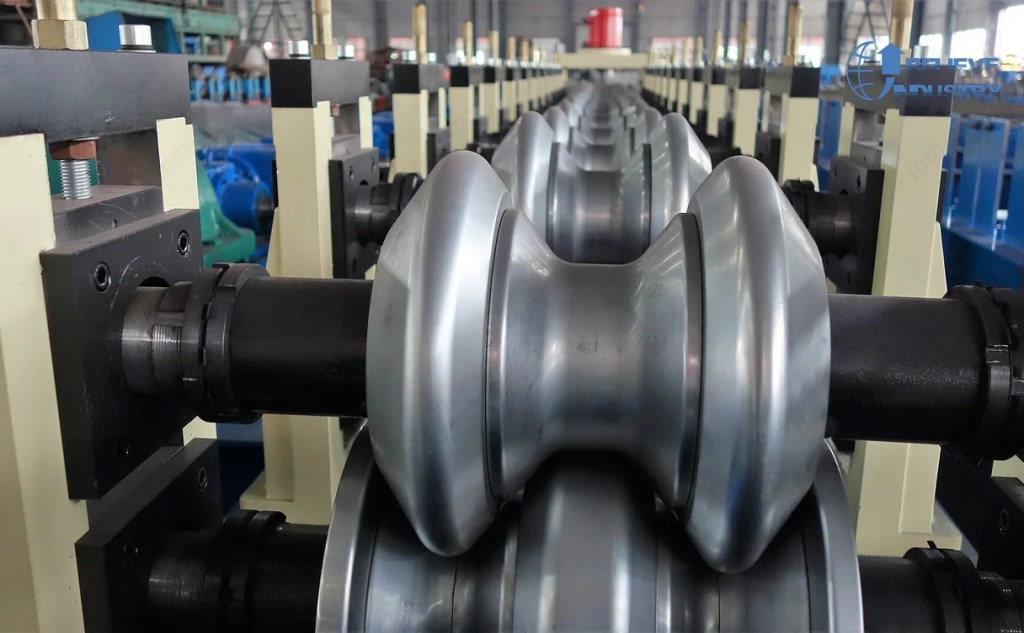
roll formed upright column roll forming machine profile rolls

Roll Formed Upright Column vs Press Brake: 6 Facts That Decide Cost

Need a Roll Forming Machine for Your Project?
Obtenha um orçamento gratuito da Believe Industry — mais de 15 anos de fabricação de máquinas de conformação sob medida.
Solicite um orçamento Download Catalogue

Roll Formed Upright Column vs Press Brake: 6 Facts That Decide Cost

Choosing between a roll formed upright column and a press brake upright is a volume decision disguised as a machine decision. Both processes produce a load bearing pallet rack upright that must pass the same rack standard.
The difference is how the steel is worked, and that difference shows up in profile accuracy, hole alignment, labour, scrap and output. Below are six facts that decide which route wins for your order book. The linha de máquinas de perfilagem de rolos that builds the fast route is the opposite of the brake press most rack shops already own.
Resposta curta: A roll formed upright column runs from coil at continuous speed, holds profile and hole position across the whole length, and drops unit cost sharply above roughly 400 uprights a month. A press brake upright bends one piece at a time, needs manual hole making, and stays cheaper only for short runs, prototypes and one off specials. Roll forming wins on strength consistency, not on peak section size.
roll forming machine profile rolls pallet rack upright column
The photo above shows a roll forming machine profile roll set. Each roll contributes one small bend, and the section grows gradually along the line.

Fact 1: profile accuracy over the full column length

A press brake forms each bend over a short lever arm. The operator sets the angle by feel and by trial, so a tall column is a stack of small decisions. Drift accumulates from the bottom bend upward, and the finished upright leans or bows slightly.
A roll formed upright column passes the same profile through every roll station. The shape is fixed by tooling, not by the operator, so the first column of a run and the thousandth column share the same contour. That is why a roll formed upright column shows less camber over a 2.4 m length than a press brake upright of the same gauge.
The practical effect is on the rack frame. A bowed upright pushes the beam connector out of plane, so the frame needs shimming during assembly. On a rack that will be loaded to rated capacity, straightness is a compliance issue as well as a fitting issue.
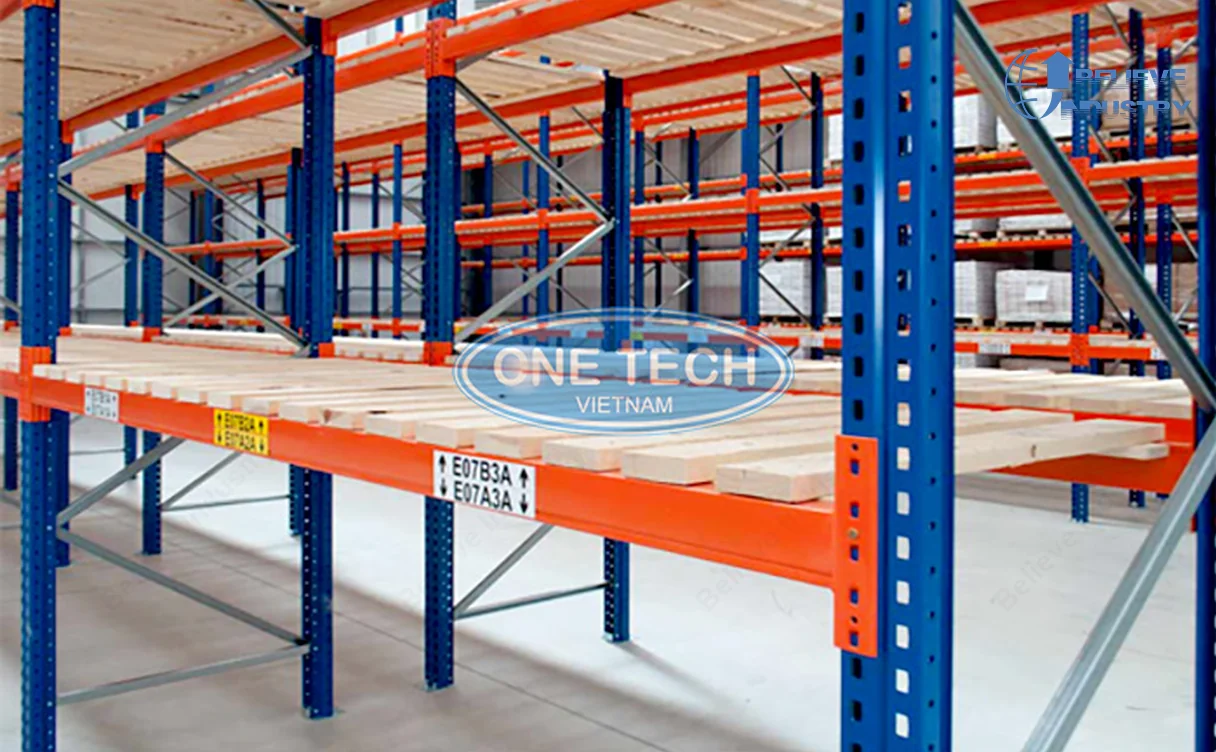
pallet rack upright columns and step beams
Every upright in this frame carries the same hole pitch, and the beams only seat because that pitch repeats.

Fact 2: hole alignment and pattern change cost

Hole position sets the whole rack. Every upright in a frame must share the same hole pitch, and every beam connector must land on it. On a press brake upright, holes come from a drill line or a magnetic drill after forming. The operator holds the part against the fixture, and the position varies across shifts and across operators.
A roll formed upright column is punched in line while the strip is still flat. The punch stroke is servo indexed, so pitch and start position repeat to a fraction of a millimetre without an operator in the loop. Flat punching also keeps the hole round. A hole drilled into a formed flange can distort, which changes how the beam connector seats.
Pattern change is where the two routes separate most clearly. A press brake upright moves to a new pitch by editing a drill program. A roll formed upright column moves by changing the punch cam and the encoder count, then proving one piece. For a shop running several frame heights, that difference in changeover time decides the schedule.
FatorRoll formed upright columnPress brake upright
Profile referenceFixed by roll toolingSet per operator per bend
Hole positionServo indexed in lineDrill fixture or magnetic drill
Pitch changePunch cam plus encoderEdit drill program
Straightness over 2.4 mTooling constantDrift risk
Best fitRepeat frames, high volumePrototypes, one off specials

Fact 3: labour cost per upright

Labour is the number that moves most. A press brake cycle is slow by design. The operator loads a strip cut to length, makes the bends, unloads, and takes the piece to a separate hole making station. Handling dominates the cycle, so a press brake upright carries more minutes of labour than the brake itself uses.
press brake bending die forming one upright at a time
One press brake stroke handles one piece. That is the root of the labour difference in both this fact and Fact 4.
A roll formed upright column is loaded once as a coil. One operator runs a full shift on a line with a stacker and does not touch each column after the last station. Labour per roll formed upright column drops to a fraction of the press brake figure, and the saving grows as the line runs longer.
This matters most where labour is expensive. In Australia, Europe and North America a roll formed upright column usually reaches a labour cost floor that a press brake upright cannot match. In low wage regions the gap narrows, but the scrap gap in Fact 4 still stands.

Fact 4: scrap rate and material yield

A press brake upright often needs a trial piece. The first few columns from a new setup are adjusted, and if they are out of tolerance they become scrap. On short runs the setup pieces can be a real share of the batch.
Roll forming reduces trials rather than eliminating them. Once the flower pattern is proved and the punch timing is set, output is repeatable, so scrap falls to material that is genuinely off spec. A well set roll formed upright column line often runs scrap under two percent, where a press brake upright job chasing a narrow tolerance can sit far higher.
Because the coil is continuous, a roll formed upright column also cuts drop to almost nothing. A press brake upright job starting from cut blanks stacks a remnant after every column. Across a year that remnant becomes a measurable cost line on top of the roll forming saving.

Fact 5: output per shift and per year

Speed must be read by punching method, the same way it works on any racking line. The forming rolls are not the bottleneck. A hydraulic punch on a dense upright pattern runs about 3 to 4 m/min. A press punch runs about 10 to 15 m/min. A servo rotary punch can pass 30 m/min on a light pattern.
Convert that to uprights. A typical upright profile of about 2.4 m gives roughly 24 uprights per 10 m of formed strip at zero scrap, before counting the coil that becomes off spec material. A single shift of eight hours then supports a range rather than a single figure, because the punch class sets it. A roll formed upright column line is specified from the hole count, not from the frame cycle the brochure prints.
Punch methodVelocidade da linhaUprights per shift, indicativeNotas
Puncionamento hidráulico3 a 4 m/min100 to 170Dense slot patterns, heavy gauge
Press punch10 a 15 m/min400 to 600Standard pitch, most rack work
Servo rotary punch30+ m/min1,500 to 2,500Light patterns, high volume
A press brake upright output is limited by cycle time, so one operator produces a fraction of the servo line figure even with a second brake. Any volume argument that ignores the punch class is wrong.

Fact 6: strength consistency and section capability

Both routes use the same grade of steel, so material strength is equal. The difference is section geometry and residual stress. A roll formed upright column is bent gradually over many stations, so the outer fibre sees a controlled strain. A press brake upright concentrates the bend at one die, which raises local stress at the bend root.
high tonnage press brake bending station
A press brake needs tonnage and a long bed to reach a deep section. Roll forming reaches the same section with more, lighter stations.
In service, that shows as consistent load capacity across a frame rather than a scatter of results. Racking load tables assume uniform capacity, and uniform capacity is what roll forming delivers.
Roll forming is not unlimited. A roll formed upright column handles the shallow and medium profiles that make up most rack frames. A very deep box upright, a heavy gauge section, or a short run of heavy columns can still favour a press brake. The honest rule is this: roll forming wins when the shape repeats, and a brake wins when the shape changes constantly.

Where each process wins

The decision is not ideological. It is a volume and tolerance question with a clear break point.
Sua situaçãoBetter choiceWhy
One frame height, hundreds per monthRoll formed upright columnPunch and roll tooling amortised fast
Several frame heights, frequent changeoverRoll formed upright column with quick change punch camChangeover is an encoder job, not a drill job
Prototype run, fewer than 20 uprightsPress brake uprightNo line setup to justify
One off specials and non standard bracketsPress brake uprightFlexibility beats speed
Very deep box section, heavy gauge, short runPress brake upright, or a heavy gauge CTL lineBeyond standard racking roll forming
Buyers auditing straightness to FEMRoll formed upright columnTooling constant across the run
A shop that runs both is not confused. Many start on a press brake for prototypes and add a máquina de perfilagem de rolos once the standard frame has a repeat order behind it. The test is simple. Quote the same frame from both routes, then compare cost per roll formed upright column at your real monthly volume.
warehouse pallet rack rows assembled from formed uprights
Racking output like this is only repeatable when the uprights arrive with a consistent profile and hole pitch.

Standards and buyer audit

Whichever route you choose, the formed upright must meet the rack standard your buyer applies. In Europe that means FEM 10.2.02 for racking design and test. Steel grade and material testing come from ASTM A1008 e RMI practice in North America, and Australia and New Zealand buyers usually work to the AS/NZS 4084 family.
Ask for measured straightness and hole pitch data rather than a certificate with no numbers on it. Both routes can meet the standard. The difference is how easily they repeat it.

Perguntas frequentes

Q: Is a roll formed upright column always cheaper?

A: No. Below roughly 400 uprights a month the line setup, roll tooling and punch cam cost usually exceeds the labour saving, so a press brake upright is cheaper. Above that volume the roll formed upright column route wins on labour and scrap.

Q: Which process gives a straighter upright?

A: The roll formed upright column. The profile is fixed by roll tooling across the whole length, while a press brake upright is a stack of operator set bends that can drift over a 2.4 m column.

Q: Are press brake uprights weaker?

A: Material strength is the same. A press brake bend concentrates strain at one die, so local consistency varies. Racking capacity is steadier when the part comes off a roll formed line.

Q: How fast should the line run?

A: It depends on the punch method, not the rolls. Hydraulic about 3 to 4 m/min, press punch about 10 to 15 m/min, servo rotary over 30 m/min on light patterns.

Q: How do I change hole pitch on the line?

A: Change the punch cam and the encoder count, then prove one piece. On a press brake upright the same change means editing a drill program and refixturing the part.

Q: Can one line make several upright profiles?

A: Yes, a multi spec upright column line changes profile by changing the roll set and re-proving the flower pattern. Setup takes longer than a pitch change but far less than retooling a brake press.

Related reading

For the punching side that sets hole position, see upright rack column teardrop and keyhole punching systems. For output numbers by punch class, read upright roll forming machine speed and output. For steel grade choice, see upright column steel grades for pallet racking. O pallet racking roll forming machine system overview links uprights, beams and braces, and roll forming punching die installation covers die setup on the line.

Registo de alterações do artigo

Originally published: September 28, 2026
Última atualização: 2026-09-28
Registro de alterações:
  • 2026-09-28: First publish. Built the comparison around six decision facts (profile accuracy, hole alignment, labour, scrap, output, strength consistency) with four tables, six FAQ with bold questions, and a direct-answer block. Added FEM, RMI, ASTM and AS/NZS authority links plus eight internal links including the pillar page. Set the break point at roughly 400 uprights a month so the article gives a purchase answer rather than a preference.
Next Review Triggers:** A new FEM or AS 4084 revision, a change in European or North American rack safety enforcement, a shift of 20 percent or more in search interest for “roll formed upright column”, or a new servo punch speed class from a major line builder.

Índice

Novas atualizações

Descubra mais sobre Believe Industry Company| Roll Forming Machine Manufacturer, Supplier & Exporter

Assine agora para continuar lendo e ter acesso ao arquivo completo.

Continue lendo