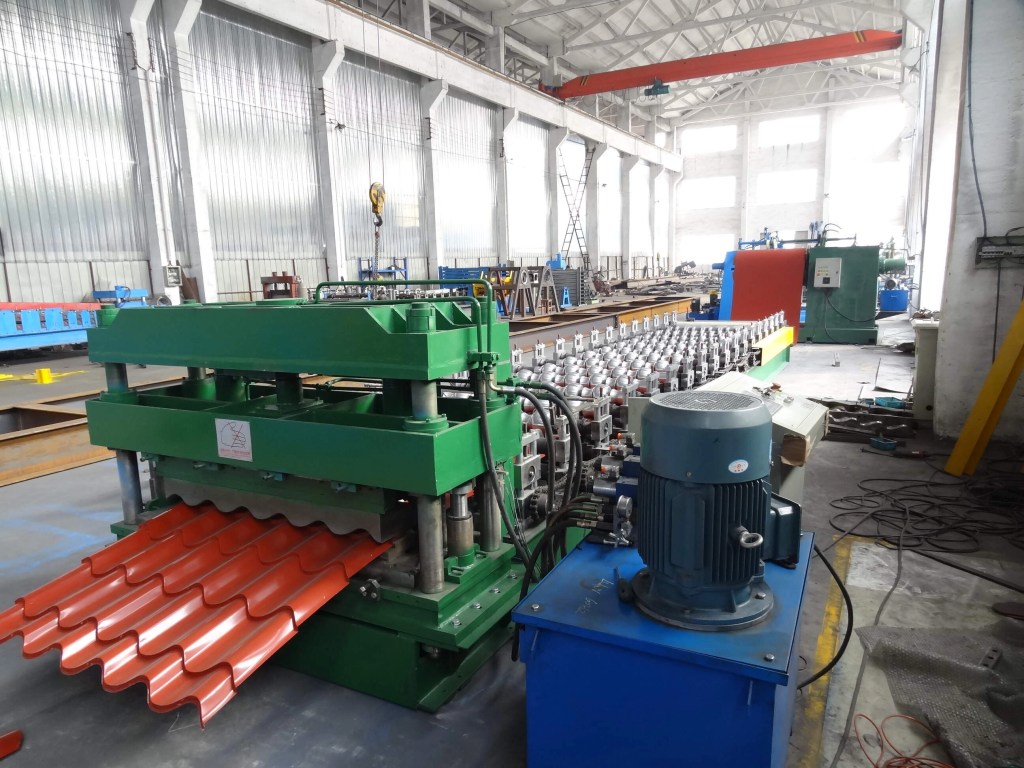
Step Tile Roll Forming Machine Manufacturers Roofing Industry: 7 Ultimate High-Speed Secrets

Step Tile Roll Forming Machine Manufacturers: How to Choose the Right Maker

Need a Roll Forming Machine for Your Project?
Get a free quote from Believe Industry — 15+ years of custom roll forming manufacturing.
Request a Quote Download Catalogue

Step Tile Roll Forming Machine Manufacturers: How to Choose the Right Maker for Roofing

A step tile roll forming machine turns prepainted steel coil into profiled roof sheets that look like traditional clay or concrete tiles. The quality of the finished sheet depends as much on the maker as on the machine. This guide helps roofing contractors and distributors judge step tile roll forming machine manufacturers on the points that actually affect output and service life.
Short answer: A step tile roll forming machine forms roof tile profiles from prepainted steel coil through a series of rolls, then cuts to length. Good manufacturers get the rollers, hydraulic press, PLC control, and coil handling right. Check build quality, changeover time, spare parts, and after-sales support before you buy.

What a step tile roll forming machine makes

The line feeds prepainted galvanized or aluzinc coil, rolls it through shaped stations, and presses the step pattern that gives the tile its look. A flying shear cuts each sheet to length while the line keeps moving. The result is a lightweight roof sheet that mimics tile but installs like a panel.
Most roofing jobs use 0.4 to 0.6 mm steel. The step tile roll forming machine must hold the paint surface through the rolls, because a scratched sheet is rejected on site. Roll path design and soft roller contact protect the coating on every metre.

What to check in a manufacturer

First, check the rollers. Rollers decide profile accuracy and coating protection. Hardened, ground rollers in Cr12 or Cr12MoV hold tolerance over millions of metres. A step tile roll forming machine with cheap cast rollers drifts fast and marks the paint.
Second, ask about the hydraulic press. The step and any embossing need a stable press with even pressure. Weak press units blur the step edge and shorten tool life. Look for a press sized above the rated coil thickness, not matched exactly.
Third, review the PLC and controls. A step tile roll forming machine should store recipes per profile and show length, count, and fault codes. Good controls cut operator error and make changeover a menu pick rather than a manual reset.
Fourth, confirm metal handling. Decoiler, leveller, and guiding must run wide coils true. A step tile roll forming machine with poor guiding wastes coil at the edges and produces wavy sheets that fail flatness on the roof.
Fifth, focus on speed and changeover. High line speed helps only if changeover is quick. A maker who offers cassette or quick-change tooling saves hours per job, which matters more than a few extra metres per minute.
Sixth, check upkeep. Bearings, seals, and hydraulic parts wear. A step tile roll forming machine from a maker with clear manuals, spare part lists, and remote support stays running. Ask for the spare parts price list before you sign.
Seventh, ask for custom design. Roof profiles vary by region. A flexible step tile roll forming machine manufacturer can adapt the step height, width, and pitch to your market instead of forcing a standard shape that buyers reject.
CheckpointWhy it mattersRed flag
RollersProfile accuracy, paint safetySoft or cast rollers
Hydraulic pressClean step edgePress matched to min thickness
PLC controlFewer errors, fast changeoverNo recipe storage
Coil handlingLess scrap, flat sheetsWavy edge waste

Speed and daily output

Line speed for step tile runs from 8 to 15 m/min on most machines, with faster servo lines reaching 20 m/min. Output per shift depends on coil size, changeover, and stacking. A step tile roll forming machine at 12 m/min with a 3 tonne coil makes roughly 2,000 to 3,000 metres of sheet per eight hour shift.
FactorTypical rangeEffect on output
Line speed8 to 20 m/minSets peak rate
Coil weight3 to 7 tonnesFewer stops
Changeover20 to 90 minLost production
StackingManual or autoBottleneck at line end
Plan output around the slowest step, not the top speed. A step tile roll forming machine that cuts fast but stacks by hand still ships at the hand rate.

Materials the line should handle

Roofing coil comes in several finishes. Prepainted galvanized steel is common, with aluzinc and PVDF for longer life. A step tile roll forming machine should handle 0.4 to 0.6 mm without marking the surface, and should accept the widths your market buys.
Coating standards matter for warranty. Steel should meet ASTM A1008 for grade and AS/NZS 1397 or equivalent for metallic coating, while European supply often follows FEM referenced steel specs. Confirm the coil class your buyer requires before the line is built.

Common mistakes when buying

The biggest mistake is choosing on price alone. A cheap step tile roll forming machine with soft rollers and weak controls costs more in scrap and downtime than a better built line. Judge the maker on the seven checkpoints above, not the headline number.
Another mistake is ignoring spare parts. Roofing seasons are short, and a line down for weeks waiting on a bearing loses the whole peak. Confirm spare part stock and lead time before purchase, and keep a local kit of wear items on hand.

How to vet a step tile roll forming machine manufacturer

Request a factory video of the exact line running your profile, not a similar one. A trustworthy step tile roll forming machine manufacturer shows the sheet being cut, stacked, and measured. Ask for a flatness and step-dimension report on a sample sheet.
Check references in your region. A maker with active roofing customers nearby proves field support. Ask about installation, training, and spare part lead time, because a stopped step tile roll forming machine costs more in lost orders than the freight saved on a bare shipment.
For related roofing lines, see our roofing sheet roll forming machine buyer guide and the high speed roof panel roll forming machine overview. The PBR roof panel machine buyer guide covers a related profile, and the residential roofing roll forming application guide looks at home roofing.
Punch and die setup is explained in our roll forming punching die installation guide. The coil width and thickness calculator sizes your strip, and the roll forming machine line page explains the full system. For the basics, read what is cold roll forming.

Frequently Asked Questions

Q: What does a step tile roll forming machine produce?

A: It forms profiled roof sheets that mimic tile from prepainted steel coil. The line rolls the shape, presses the step pattern, and cuts each sheet to length with a flying shear.

Q: Which roller material is best?

A: Hardened ground rollers in Cr12 or Cr12MoV hold tolerance and protect paint over long runs. Soft or cast rollers drift and mark the coating, so avoid them for roofing work.

Q: How fast can a step tile line run?

A: Most run 8 to 15 m/min, with servo lines reaching 20 m/min. Real output depends more on changeover and stacking than on top speed, so plan around the slowest step.

Q: What coil should I use for roofing?

A: Use prepainted galvanized or aluzinc steel at 0.4 to 0.6 mm. Confirm the grade and coating class, such as ASTM A1008 and AS/NZS 1397, that your buyer requires.

Q: How do I check a manufacturer before buying?

A: Ask for a video of your exact profile running, plus a flatness and step report on a sample sheet. Check regional references and spare part lead times before you commit.

Q: Why does changeover matter more than speed?

A: A step tile roll forming machine with slow changeover loses hours per job. Quick-change or cassette tooling recovers that time, which often beats a slightly faster former on total daily output.

Article Changelog

Originally published: March 17, 2026
Last updated: October 12, 2026
Changelog:
  • October 12, 2026: Refreshed for GEO compliance. Removed the clickbait “7 Best Secrets” title and all emoji headings, added a direct-answer block, two tables, six FAQ with bold Q, and a spelled-month changelog. Expanded from 1,317 to about 1,640 words. Added three authority links (ASTM, AS/NZS, FEM) and eight internal links including the pillar page. Kept the manufacturer-selection angle, distinct from the product and buyer-guide posts.
Next Review Triggers:** New PVDF or coating standard, a 20 percent shift in search interest for “step tile roll forming machine”, release of a faster servo step tile line, or change in regional roofing profile demand.

Table of Contents

New Updates

Discover more from Believe Industry Company| Roll Forming Machine Manufacturer, Supplier & Exporter

Subscribe now to keep reading and get access to the full archive.

Continue reading