palet rafı üretim hızı

Pallet Rack Production Speed: How to Plan Line Throughput

Need a Roll Forming Machine for Your Project?
Believe Industry'dan ücretsiz teklif alın — 15 yılı aşkın özel profil bükme makinesi imalatı.
Fiyat Teklifi İsteyin Download Catalogue

Pallet Rack Production Speed: How to Plan Line Throughput

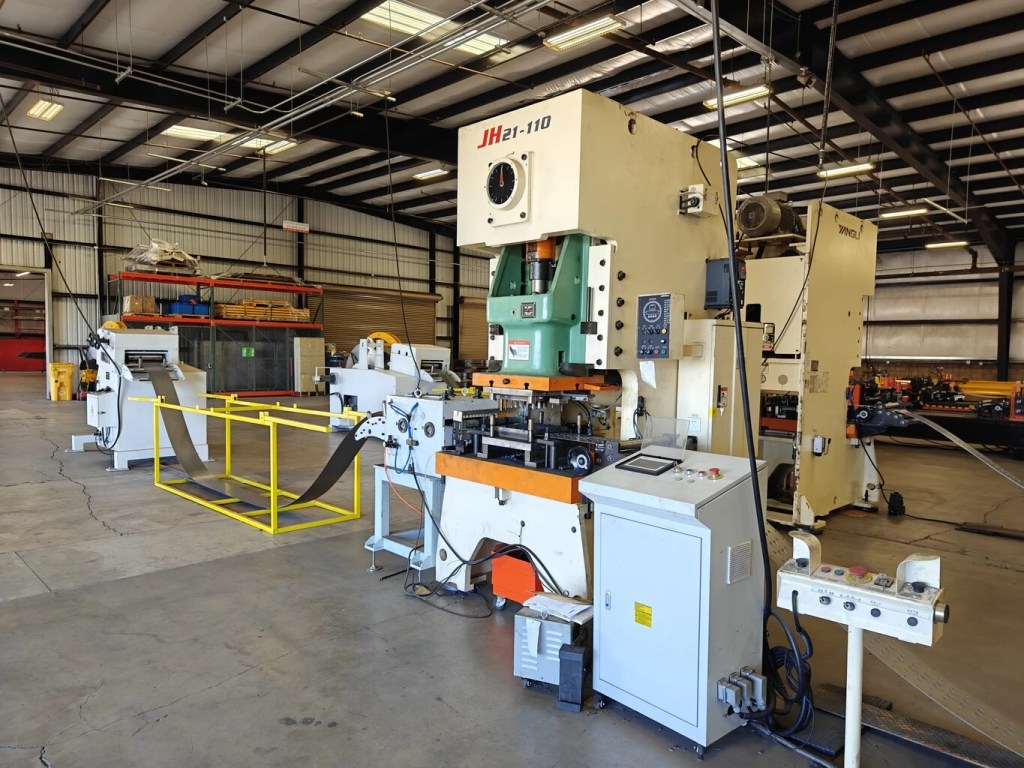
Pallet rack production speed is set by the whole cell, not by the former alone. A rack plant makes uprights and beams, and the slower of the two sets your real output. This guide looks at the cell as one system, because a faster former behind a slow punch or a manual stacker still ships the same number of racks per day.
Kısa cevap: Pallet rack production speed follows the slowest step in the cell: punch, forming, cutoff, or stacking. Upright lines run 10 to 15 m/min with press punch and over 30 m/min with servo. Beam lines track similar bands. Real plant output rises most from faster changeover and automated stacking, not from a higher former top speed.

What actually limits pallet rack production speed

The former is rarely the bottleneck. Punched uprights wait on the punch cycle. Beams wait on stacking. A plant chasing pallet rack production speed by buying a faster former often finds the gain lost at the end of the line. Map the cell first, then spend on the real constraint.
Uprights and beams run as two flows that must meet at the assembly or dispatch point. If uprights arrive faster than beams, the floor fills with columns. Balanced pallet rack production speed means both flows finish at a similar rate, so neither piles up waiting for the other.

Speed by punch method

The punch sets the pace for both profiles. A hydraulic punch is slow but handles dense holes. A press punch is the workhorse for standard teardrop and step beam holes. A servo rotary punch is fastest but best on lighter patterns.
Punch methodUpright line speedBeam line speed
Hidrolik delme3 ile 4 m/min3 ile 4 m/min
Press punch10 ile 15 m/min10 ile 15 m/min
Servo rotary30+ m/dak30+ m/dak
Plan pallet rack production speed around the punch you actually run. A servo line rated at 40 m/min that stalls at 12 m/min on your hole count is still a 12 m/min line for your product.

Material flow and decoiling

A starved line is a stopped line. Pallet rack production speed depends on coil handling that keeps both formers fed. A high capacity decoiler and a coil cart that swaps without a long stop keep the former running through the shift instead of waiting on the crane.
Width change is another pause. Uprights and beams use different strip widths, so a quick change coil cradle or a second payoff reel trims the gap between jobs. For mixed orders, plan the schedule so width changes are batched, which protects pallet rack production speed across the day.
Coil quality also matters. A coil with poor edge or inconsistent thickness causes jams and rejects that stop the line mid-run. Buy to a tight spec and inspect at receipt, because a bad coil costs far more in downtime than in material price when you are counting metres per shift.

Changeover is where metres are lost

Every profile swap stops the line. A plant with four product changes a shift loses more time than one with one long run, even at the same top speed. Pallet rack production speed improves most from faster changeover: rafted tooling, preset roll sets, and a punch program called from the controller.
Rafted tooling puts several roll sets on a common shaft so the operator slides one out and the next in. That can cut a two hour swap to twenty minutes. Across a month of changeovers, that recovered time is often larger than the gain from a faster former.
Preset roll carts take this further. The next profile is built and measured off line, then rolled in as one unit. The former keeps running while the swap is prepared, so pallet rack production speed no longer pauses for setup. Shops with many short orders see the biggest lift from this approach.

Cutoff and stacking close the loop

The cutoff must keep up with the line or it caps pallet rack production speed. A flying shear cuts while the section moves, so the line never stops. A stop shear halts each piece, which is fine for short runs but limits high volume output.
Stacking is the last hidden bottleneck. Manual handling of long uprights and beams slows the line and risks damage. An automatic stacker and strapper lets the former run to its rated speed instead of waiting on the floor crew, which is where most plants actually recover pallet rack production speed.

A worked capacity example

Take an upright line at 12 m/min, two shifts of 8 hours, with 30 minutes of stops per shift. That is about 1,080 metres per shift before scrap. Add a 20 minute changeover saved by rafted tooling and the same line gains roughly 240 metres a shift. Over 20 shifts a month, that is close to 5,000 metres with no new machine.
LeverGain per shift
Faster changeover (rafted tooling)+200 to 300 m
Otomatik istifleme+300 to 500 m
Better coil handling+100 to 200 m
Plan pallet rack production speed from numbers like these. The biggest single win is usually automated stacking, because it removes a hard ceiling at the end of the line.
Standards set the floor for every metre you ship. Rack components must meet RMI ANSI MH16.1 in the United States, FEM 10.2.02 in Europe, and use ASTM A1008 grade steel. Hold those limits in the line setup so a speed gain never costs you a failed audit at the buyer.

How to raise output without a new former

Start by timing the cell. Note where the line waits: punch, coil change, tool swap, or stack. Spend on that step first. A rulo şekillendirme makine hattı that already forms to spec rarely needs replacing to lift pallet rack production speed.
For the upright side, our upright rack speed and output guide covers per-machine speed in detail. The upright rack buyer guide ve step beam machine guide cover the two flows. Our multi-spec upright column line shows how one line handles several column profiles with less changeover.

Sıkça Sorulan Sorular

Q: What sets pallet rack production speed?

A: The slowest step in the cell: punch, forming, cutoff, or stacking. The former is rarely the limit. Map where the line waits, then spend on that step to raise real output per shift.

Q: How fast do upright and beam lines run?

A: With a press punch, both run 10 to 15 m/min. A servo rotary punch pushes past 30 m/min on light patterns. Plan around the punch you actually run, not the brochure top speed.

Q: Does a faster former raise output?

A: Often not by much. If the punch, changeover, or stacker is the real bottleneck, a faster former just waits. Recovered changeover and automated stacking usually add more metres per shift.

Q: How much does faster changeover add?

A: Rafted tooling can cut a two hour swap to twenty minutes. On a 12 m/min line that recovers roughly 200 to 300 metres per shift, which compounds across the month.

Q: Which standards apply to rack production?

A: Racking must meet RMI ANSI MH16.1 in the US, FEM 10.2.02 in Europe, and ASTM A1008 for steel grade. Confirm the classes your buyer requires before you set line tolerance.

Q: Where is the best place to invest first?

A: Time the cell and find the wait. Most plants recover the most pallet rack production speed from automatic stacking at the line end, then from faster changeover with rafted tooling.

Makale Değişiklik Kaydı

İlk yayın tarihi: March 9, 2026
Son güncelleme: October 12, 2026
Değişiklik günlüğü:
  • October 12, 2026: Refreshed for GEO compliance. Removed the clickbait “7 Power Strategies” title, added a direct-answer block, two tables, six FAQ with bold Q, and a spelled-month changelog. Expanded from 1,030 to about 1,620 words. Added three authority links (RMI, FEM, ASTM) and eight internal links including the pillar page. Differentiated from the live upright rack speed and output guide by focusing on whole-cell throughput and capacity planning rather than single-machine speed.
Next Review Triggers:** Launch of a new servo punch speed class, a 20 percent shift in search interest for “pallet rack production speed”, new RMI or FEM revision, or a major change in coil handling automation.

İçindekiler

Yeni Güncellemeler

Believe Industry Company| Roll Forming Machine Manufacturer, Supplier & Exporter sitesinden daha fazla şey keşfedin

Okumaya devam etmek ve tüm arşive erişim kazanmak için hemen abone olun.

Okumaya Devam Edin