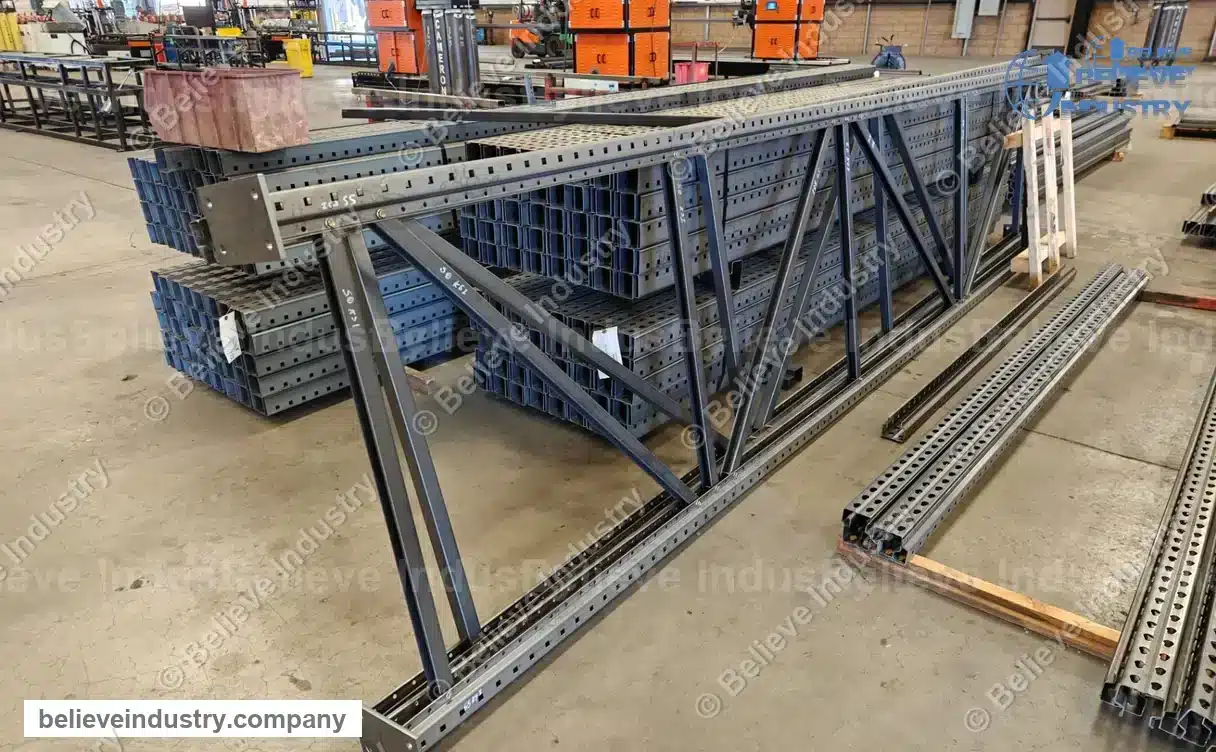
roll formed upright column

Pallet Rack Upright Profile Names: Teardrop and Sammons

Need a Roll Forming Machine for Your Project?
Get a free quote from Believe Industry — 15+ years of custom roll forming manufacturing.
Request a Quote Download Catalogue

Pallet Rack Upright Profile Names Explained: Teardrop, Sammons, Step Beam and Box Beam

Keywords: pallet rack upright profile names, teardrop upright, sammons rack, new style upright, ridg-u-rak, t-bolt rack, structural rack, step beam, box beam, upright vs column, rack punch pattern, rack profile identification

Short answer

Pallet rack upright profile names come from two separate naming systems, and buyers often mix them up. One system names the upright by its beam connection and punch pattern. That gives you names like teardrop, new style, Sammons, Ridg-U-Rak and T-bolt. The other system names the steel section itself. That gives you upright post, step beam, box beam, structural channel and bracing.

A single column can carry both names at once. A teardrop upright is usually a lipped C-channel post punched with teardrop holes on 2 inch centers. The first name describes how the beam locks in. The second describes the shape that comes out of the roll forming line. Neither name is wrong. They answer different questions.

This guide sorts pallet rack upright profile names into the two groups, explains where each name came from, and shows how to tell them apart on the floor. The figures here come from rack lines our engineers have built for buyers in more than 50 countries since 2005, together with the design rules published by MHI and the section guidance on steelconstruction.info.

Why one upright has several pallet rack upright profile names

Walk into two warehouses and ask what the upright is called. One manager says teardrop. Another says Sammons. A third says lipped channel. All three may be looking at the same steel.

The confusion is built into the industry. Rack makers name a system after the way a beam connects to a column. Roll formers name the same part after the profile their rollers produce. Distributors add a third layer by using the original manufacturer name as if it were a generic style. That is how pallet rack upright profile names turn into three different answers, and why pallet rack upright profile names need a short guide like this one.

None of this matters until you order parts. Beams and uprights from different systems are usually not interchangeable. A hole that looks close can sit on 2 inch centers instead of 4. A clip that seems to fit will not lock. Getting the name right saves a return shipment and an unsafe bay.

racking profile samples uprights step beams and c bracing

The two systems behind pallet rack upright profile names

Before you compare individual styles, decide which system you are using. This table separates the two.

Naming systemWhat it describesTypical namesWho uses it
Connection and punch patternThe hole shape and beam locking methodTeardrop, new style, Sammons, Ridg-U-Rak, T-bolt, structuralRack buyers, warehouse managers, parts suppliers
Steel cross sectionThe formed shape of the memberUpright post, step beam, box beam, structural channel, bracingRoll formers, fabricators, tooling engineers

Most pallet rack upright profile names belong to the first system. That is because the connection decides whether parts fit. The section shape decides how much load the member carries. Buyers need both, but they usually ask about the connection first.

Our upright rack column roll forming machine page shows how a post gets its punch pattern and its final section on one line.

Connection style names explained

These are the pallet rack upright profile names you hear when someone talks about compatibility. Each name points to a hole shape, a hole spacing and a beam connector type.

Style nameHow you spot itHole spacingWhere it is common
Teardrop, also called Interlake old styleRounded, droplet shaped punch holes2 inNorth America, the most widely used style
Interlake new styleAngular or rectangular slots2 to 4 inNorth America, mixes with some teardrop parts
SammonsMushroom shaped connector pins4 inWest Coast of the United States
Ridg-U-RakRectangular slots with a spring and two locking pinsVariesNorth America, frequent beam height changes
T-bolt, also called UnarcoRectangular holes with a bolted beam connectionVariesNorth America, bolted systems
KeystoneSlot and tab upright connectionVariesHeavy duty North American storage
StructuralHot rolled channel with bolted beamsBolted, no clip patternCold storage, high impact aisles
Slotted or keyholeRound holes mixed with oblong slotsVariesEurope more than the United States

Teardrop is the default in North America. Its holes accept beam clips from several makers, which is why it appears in more warehouses than any other style. The teardrop rack roll forming machine guide covers the punch tooling behind this profile.

New style is the name buyers use for the angular slot version. Some new style beams seat in teardrop uprights, but you should confirm the clip before you mix a pallet of beams into an existing rack. The safe rule with pallet rack upright profile names is to match the connector, not the color.

Sammons looks like teardrop from a distance. The giveaway is the spacing. Sammons pins sit 4 inches apart, while classic teardrop holes sit 2 inches apart. Buying the wrong beams for a Sammons frame is a common and expensive mistake.

Ridg-U-Rak and T-bolt are brand names that turned into style names. Ridg-U-Rak uses a hook and slot connection with a spring clip. T-bolt uses a bolt through a rectangular hole. Both are still made under those brands, which is why the line between a brand name and a style name is hard to see.

Cross section names explained

The second group of pallet rack upright profile names describes the steel shape. These names matter when you specify a roll forming line, because each section needs its own tooling.

Section nameShapeMain jobTypical material
Upright postOpen C channel with re-entrant lipsVertical load bearing column1.5 to 3.0 mm high strength strip
Step beamStepped C section with a recessed ledgeCarries wire deck or pallet supports1.8 to 2.5 mm strip
Box beamClosed rectangular tubeHeavy loads and long spans1.5 to 2.5 mm strip
Structural channelHot rolled C3 or C4 sectionHigh impact and cold storage baysHot rolled structural steel
Horizontal and diagonal bracingFlat strap or angleTies two posts into one frame2.0 to 3.0 mm strip

The upright post is the part most people call a column. It leaves the line as a C with lips that turn back toward the web. Those lips add stiffness and give the punch pattern a flat face to sit on. The upright column steel grades guide explains why the grade and the gauge matter as much as the shape.

A step beam takes its name from the step formed along the top inner edge. Wire decking drops into that step and sits flush with the beam top. A box beam has no step. It is a closed tube, so it resists twisting better and carries heavier pallets. The step beam versus box beam comparison sets the two side by side.

Structural channel is the odd name in the list. It does not come from a roll forming line at all. It is hot rolled, bolted and much heavier. Buyers choose it where forklifts hit the rack often. Our roll formed versus press brake column comparison shows why forming method changes the section you get.

pallet rack upright columns and step beams assembled

Style name or brand name

One reason pallet rack upright profile names stay confusing is that several styles carry the name of the company that invented them. Sammons, Ridg-U-Rak, Unarco and Interlake all started as manufacturers. Over time their connection patterns became styles that other factories copied.

That creates a real trap. A buyer asks for Sammons and gets a copy that uses the same pin spacing but a different clip. The two may not lock. If you are ordering replacement parts, give the hole spacing and a photo of the beam connector, not just the style name. If you are ordering a machine, give the punch drawing.

Damotech publishes a rack identification chart with more than 40 North American makers, and it warns about exactly this problem. Lookalike punch patterns can differ in spacing, gauge and clip style. The same warning applies to pallet rack upright profile names on a purchase order.

Upright, column, post or frame

Four more pallet rack upright profile names get used loosely, and they do not mean the same thing.

An upright or a column is one vertical member. A post is the same part, a word borrowed from structural steel. A frame is two uprights joined by horizontal and diagonal bracing. When a supplier quotes a frame, you are getting a welded assembly, not a single piece.

This distinction changes how you buy. If a rack layout calls for 40 frames, you need 80 uprights plus bracing and base plates. Ask which one is in the quote. Our racking line installation report from the United States shows the post before it becomes part of a frame.

How to identify an upright on the floor

You do not need a drawing to narrow down pallet rack upright profile names. Three checks cover most cases.

First, look at the hole. A rounded droplet means teardrop. Rectangular slots point to new style, Ridg-U-Rak or T-bolt. Mushroom shaped pins on the beam point to Sammons.

Second, measure the hole centers. Teardrop is usually 2 inches. Sammons is usually 4 inches. A tape measure settles an argument that a photo cannot.

Third, look at the beam connector. A spring clip, a hook, a single bolt or a pair of pins will tell you which locking method the system uses. That is the fastest way to separate pallet rack upright profile names that look alike.

Color helps in some systems but never rely on it. Paint changes between production runs and between suppliers. Hole shape, spacing and connector are the three facts that hold up when you are matching pallet rack upright profile names to a real beam.

United States and European names

The same section can have different pallet rack upright profile names on each side of the Atlantic. North America favors teardrop and clip in beams. Europe favors slotted and keyhole patterns with different pitch, and designs to EN 15512 rather than ANSI MH16.1.

A machine built for one market will not automatically make profiles for the other. Punch pitch, slot width and post depth have to repeat within a tight tolerance across thousands of columns. That is why we pre configure every line for the target standard before it ships. The ANSI MH16.1 design rules summarized by MHI are the reference for North American rack systems.

If you export racks, write both the style name and the standard into your specification. That removes the guesswork from pallet rack upright profile names when a new plant reads your order.

From a name to a machine specification

For a rack manufacturer, pallet rack upright profile names are more than vocabulary. They are the starting point for tooling. A teardrop order means a punch die with droplet holes on 2 inch centers and a C profile with re-entrant lips. A box beam order means a closing station and a seam welder. A step beam order means a formed ledge at the correct height for wire deck.

Write the specification in this order: style name, hole spacing, section shape, gauge, steel grade and standard. That sequence turns a loose name into something a machine builder can quote. Our how to choose a roll forming machine guide shows how to carry those details into a purchase order.

Punch accuracy is part of the same conversation. The punch and die installation guide explains how hole position is held through a production run. Poor punch accuracy makes a correct profile name useless, because the beams will not seat.

welded upright column roll forming machine installed in the United States

Frequently asked questions

Q: What are the two systems behind pallet rack upright profile names?

One system names the upright by its connection and punch pattern, such as teardrop, Sammons or T-bolt. The other names the steel section, such as upright post, step beam or box beam. A single column carries one name from each system.

Q: Are teardrop and new style uprights the same?

They are different patterns. Teardrop uses rounded holes on 2 inch centers. New style uses angular or rectangular slots with pins spaced 2 to 4 inches apart. Some beams cross fit, but confirm the clip before you mix parts.

Q: Why is Sammons called a style and a brand at the same time?

Sammons started as a manufacturer. Its 4 inch mushroom pin connection became a style that other factories copied, so the brand name turned into a generic label in pallet rack upright profile names.

Q: What is the difference between an upright and a frame?

An upright is one vertical column. A frame is two uprights joined by horizontal and diagonal bracing, usually welded into one assembly. A quote for frames includes twice as many columns.

Q: How do I identify an unknown upright?

Check the hole shape, measure the spacing between hole centers, and look at the beam connector. Teardrop is usually 2 inch centers, Sammons is usually 4 inch centers, and the connector tells you the locking method.

Q: Do US and Europe use the same pallet rack upright profile names?

No. North America favors teardrop and clip in connections under ANSI MH16.1. Europe uses slotted and keyhole patterns designed to EN 15512. A line built for one standard needs different punch tooling for the other.

Where to go next

Start with a punch drawing, a section sketch and the standard your market uses. Those three documents settle pallet rack upright profile names before a machine is specified. Our upright rack page lists the machines that form and punch these columns, and the step beam production article follows a beam from coil to finished section. If you tell us the style name and the hole spacing, our engineers will confirm the profile and mark the tooling your line needs.

Last updated: 2026-11-17

Article Changelog

2026-11-17: Initial publication. Two naming systems, connection style table, cross section table, brand versus style notes, upright versus frame terms, floor identification checks, US and Europe comparison, machine specification order and 6 FAQ.

Next Review Triggers

ANSI MH16.1 or EN 15512 revision; a new connection style entering North American distribution; quarterly SERP check for the focus term; a change in teardrop or Sammons hole spacing from a supplier drawing.

Table of Contents

New Updates