The Unstoppable Force in Modern Manufacturing: Why Roll Forming Technology is Shaping Our World

Think about the metal profiles around you right now: the sturdy roof above your head, the durable frame of your car, the shelves holding appliances, even the edges of your office furniture. Chances are, many were shaped not by brute force or complex machining, but by the elegant, continuous power of ​roll forming technology. This highly specialized and efficient manufacturing process is the backbone of countless industries, quietly revolutionizing how we produce long, complex metal shapes with unparalleled precision and speed.

​What Exactly is Roll Forming?​​

At its core, ​roll forming​ is a continuous bending operation where a long strip or coil of metal (like steel, aluminum, copper, or alloys) passes through a meticulously designed series of rotating rolls mounted in consecutive stands. Each set of rolls incrementally bends the metal only a few degrees, gradually shaping it into the desired final cross-sectional profile without significantly changing the material’s thickness.

Imagine it like threading ribbon through a series of progressively tighter guides – each guide imparts a slight, specific bend. By the time the metal strip exits the final stand, it has been transformed into a consistent, complex shape – be it a simple C-channel, a complex multi-lobed tube, a customized roofing panel, or intricate window framing.

roll forming technology

​Why Roll Forming Technology is Dominating Production:​​

  1. Unmatched Efficiency & Speed:​​ For high-volume production, ​roll forming​ is incredibly fast. Once the line is set up and running, it produces a continuous stream of finished profiles at linear speeds often reaching hundreds of feet per minute. This drastically reduces cost per part compared to slower methods like press braking for long parts.
  2. Exceptional Consistency & Precision:​​ Each piece emerging from the roll forming line is virtually identical to the next. The progressive forming ensures minimal springback and maintains incredibly tight tolerances along the entire length. This repeatability is critical for applications requiring perfect fit and assembly.
  3. Design Versatility:​​ Roll forming technology isn’t limited to simple shapes. Modern roll form lines can produce incredibly complex profiles with tight radii, multiple bends, embossed features, and varying geometries. Computer-aided design (CAD) and sophisticated roll design software enable the production of profiles once deemed impossible.
  4. Material Conservation & Reduced Waste:​​ The process starts with coil stock, optimizing material use. Scrap is typically limited to the lead and tail ends of the coil. Unlike stamping, it doesn’t punch out large slugs of unused material, making it both cost-effective and environmentally favorable.
  5. Superior Surface Quality:​​ Because the metal is progressively formed under tension with carefully machined rolls, the resulting surface finish is typically smooth and free of the stretching, scoring, or marring that can occur with other forming methods.
  6. Strength & Structural Integrity:​​ The progressive cold-forming work-hardens the material along the bends, enhancing the strength and rigidity of the final profile compared to parts made by other methods.
  7. Integrated Production Lines (In-Line Processing):​​ Modern roll forming shines brightest when integrated with other operations. Lines can incorporate pre-punching, notching, embossing, welding (for tube or closed profiles), curving, and cutting (flying cutoff or shear) all in one continuous pass. This eliminates secondary operations and further boosts efficiency.

Roll Forming vs. Press Braking: When Roll Forming Wins

While press braking is excellent for short-run or highly varied parts, ​roll forming technology​ holds decisive advantages for long, continuous shapes in medium to high volumes:

Feature Roll Forming Press Braking
Part Length Excellent:​​ Built for long, continuous parts. Limited: Practical for shorter lengths only.
Production Speed Superior:​​ Hundreds of feet per minute. Slower: Cycle time per bend.
Consistency High:​​ Near-identical parts continuously. Variable: Operator skill dependent, piece-by-piece.
Complex Profiles Excellent:​​ Handles intricate multi-bend shapes. Limited: Complexity increases time and cost.
Cost Efficiency Best (High Volume):​​ Low cost per part at scale. Better (Low Volume): Lower tooling cost initially.
Setup Time Longer Initially:​​ Requires roll design/setup. Shorter:​​ Quicker tool changes for job shop.

Learn More>>https://belirollforming.com/roll-forming-machine-vs-press-brake/
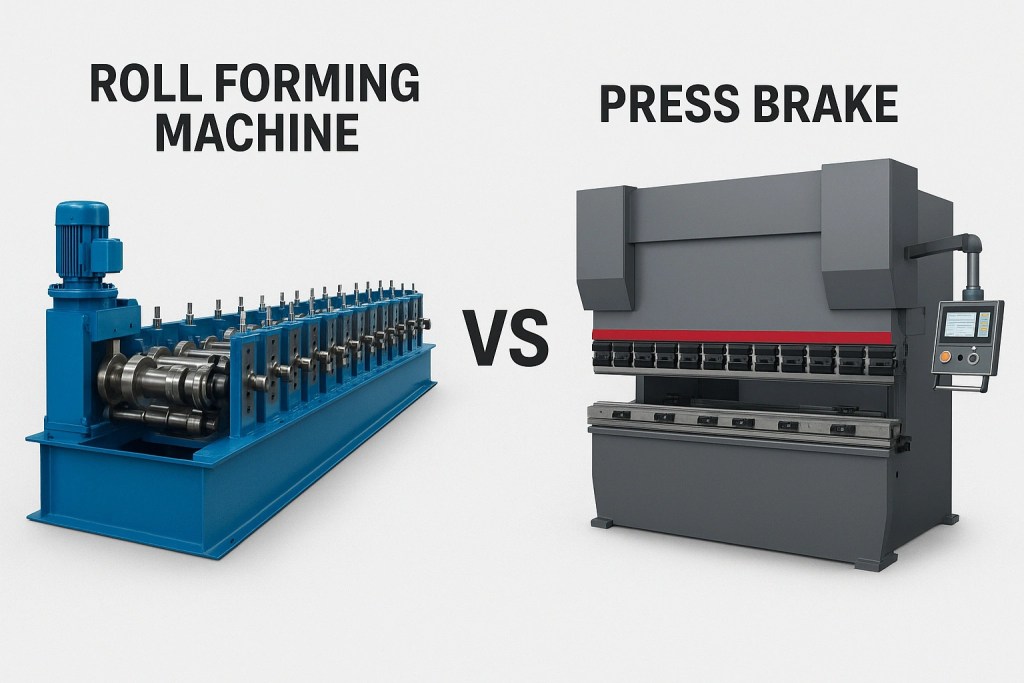
Roll Forming Machine VS Press Brake

​Where You See Roll Forming Technology at Work:​​

The applications are vast and essential:

  • Construction:​​ Roofing & siding panels, structural sections (C, Z, U purlins), floor decking, wall studs, framing systems, window/door components, solar panel rails.
  • Automotive:​​ Seat tracks, door beams, bumper reinforcements, sunroof guides, structural reinforcements, exhaust components, window channels.
  • Appliances:​​ Refrigerator cabinet frames, oven ranges, washer/dryer drums & housings, dishwasher racks.
  • HVAC & Ductwork:​​ Custom duct profiles, air handler components, vents.
  • Furniture:​​ Shelving standards, drawer slides, frame components, display fixtures.
  • Transportation & Trailers:​​ Trailer frames, side panels, flooring components, rail car parts.
  • Agriculture:​​ Equipment frames, guards, grain handling systems.
  • Solar Energy:​​ Module mounting rails & frames, solar tracking components.

​Is Roll Forming Right For Your Project?​​

Consider roll forming technology if your project involves:

  • Medium to High Volumes:​​ Tooling investment needs production scale to justify.
  • Long or Continuous Lengths:​​ Parts longer than a few feet.
  • Complex, Consistent Cross-Sections:​​ Needs high dimensional accuracy and repeatability.
  • Need for Integrated Processing:​​ Punching, notching, welding required in-line.

​The Future of Roll Forming Technology​

The technology is constantly evolving. Trends include:

  • Increased Flexibility:​​ Quick-change tooling systems to allow for more profile variations on a single machine.
  • Advanced Controls & Monitoring:​​ Real-time data collection for quality control, predictive maintenance, and optimized setup.
  • 3D Laser Profiling Integration:​​ For highly complex or varying shapes combined with the efficiency of roll forming.
  • New Materials:​​ Handling higher-strength steels and lightweight alloys.
  • Inline Painting/Coating:​​ Further streamlining the production process.

View More>>https://belirollforming.com/roll-forming-machine-trends-2025/

​Unlock the Potential of Precision​

Roll forming technology​ is far more than just bending metal. It’s a sophisticated, high-precision manufacturing solution that delivers speed, consistency, cost-effectiveness, and the ability to create incredibly complex profiles vital for modern industry. From the skyscraper above you to the vehicle you drive, roll forming shapes the world in ways we often overlook.

If you’re involved in manufacturing long metal components or exploring alternatives to less efficient processes, investigating ​roll forming technology​ could be the key to unlocking significant competitive advantages in quality, speed, and cost. Partnering with an experienced roll forming manufacturer is the crucial first step to realizing its full potential for your products. Explore how this powerful technology can shape your future success. Learn more about roll forming machine

Discover more from Business

Subscribe now to keep reading and get access to the full archive.

Continue reading