Address
No 1, Yd Road, Huishan District, Wuxi City, Jiangsu. 214183
Work Hours
Monday to Friday: 9AM - 5PM
Saturday: 9AM - 4PM
Address
No 1, Yd Road, Huishan District, Wuxi City, Jiangsu. 214183
Work Hours
Monday to Friday: 9AM - 5PM
Saturday: 9AM - 4PM
A steel door roll forming machine builds one part of a door system, not the whole door. Frames, garage panels, shutter slats and guide tracks each need their own roll set, punch pattern and cutoff, and a door plant usually runs two or three of them side by side.
Building lines since 2005. 500+ projects in 50+ countries. ISO 9001 certified, CE compliant.
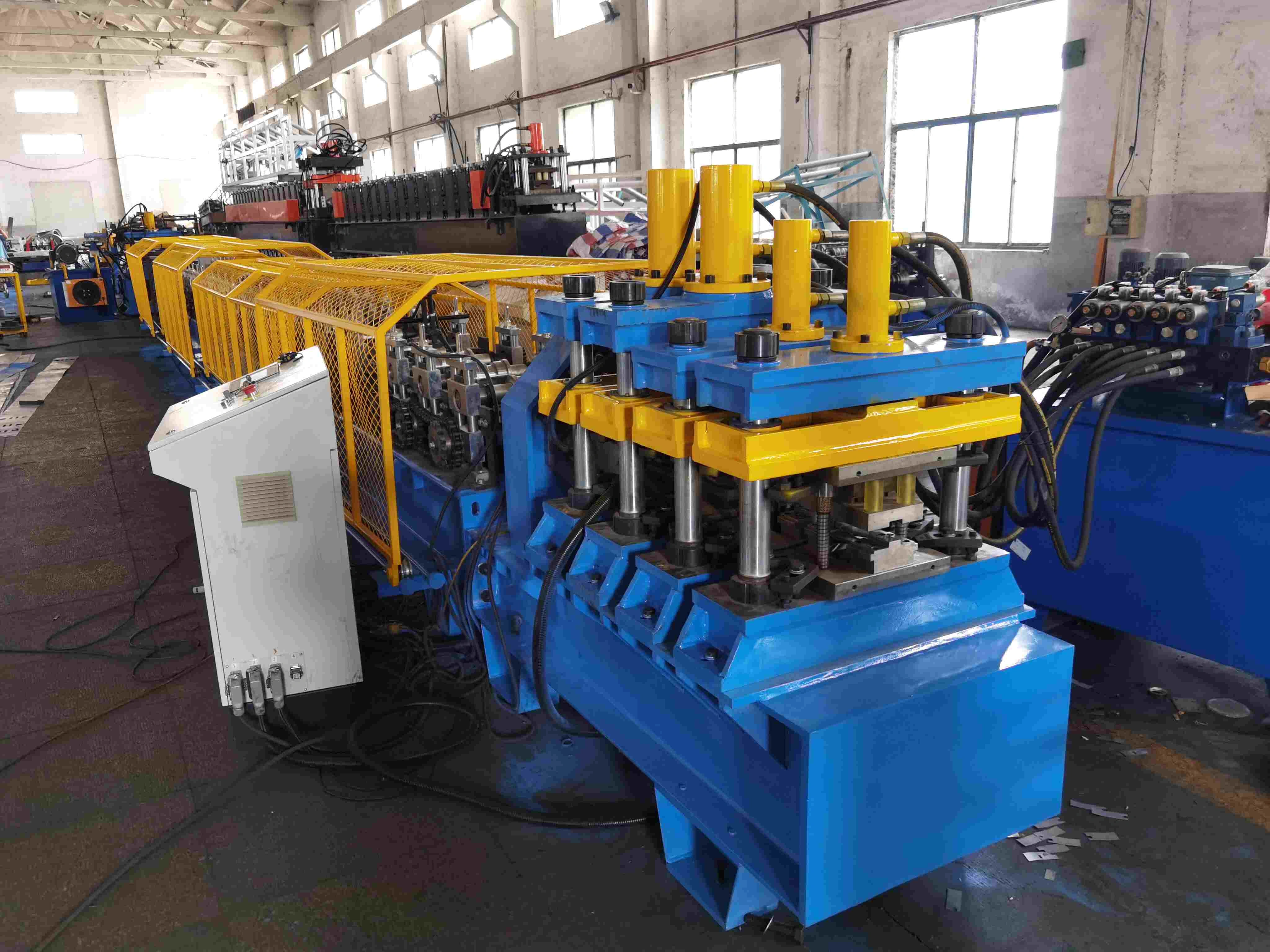
A steel door roll forming machine runs the same five steps as any light gauge line. The difference sits at the press: hinge holes, lock cutouts, strike plates and corner notches are punched before the profile is closed.
A 3 to 5 t mandrel carries galvanized coil. A coil car loads it without crane time.
The leveler takes coil set out, then a servo feeder measures each frame or panel length.
Hinge holes, lock cutouts and notches are punched inline through a die set, one pattern per door size.
14 to 24 driven stations fold the profile. A frame needs more passes than a shutter slat of the same width.
A post cutter or flying shear cuts to length. Frames leave on a runout table, slats on a stacker.
Every quote for a steel door roll forming machine starts from the section drawing. The four below cover most of the door work we build for.
Single rabbet, double rabbet or return lip, folded from 0.8 to 2.0 mm galvanized. The frame is the heaviest section on the list.
Panels 0.4 to 0.8 mm thick with an embossed face, a hinged joint along each edge and punched handle and hinge points.
Interlocking slats, hollow or PU foamed, that roll up over the lintel. Slat pitch and curl radius decide the coil.
Curved or straight track that guides the door, plus the bottom bar that closes the last slat.
Each page carries the section drawing, station count and output for one door component. All five share the same frame, drive and control platform.
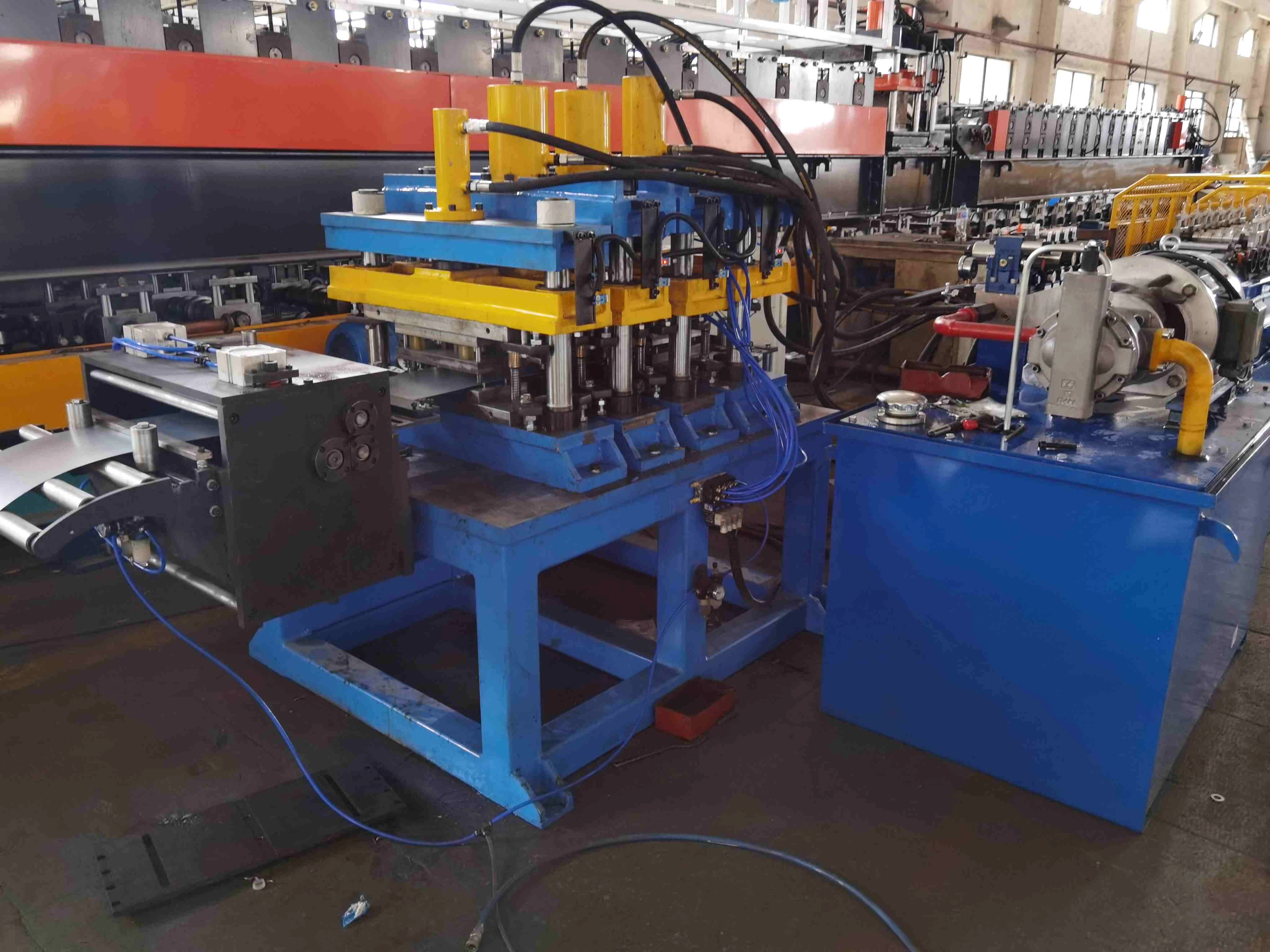
Frames in custom sizes from 0.8 to 2.0 mm galvanized, with hinge holes, lock cutouts and notches punched in one pass.
View door frame line →
Embossed garage panels with a hinged joint on each edge, punched for hinges and handles in the same pass.
View garage door line →
Interlocking steel slats for roller up doors, from a hollow slat to a reinforced security slat.
View shutter slat line →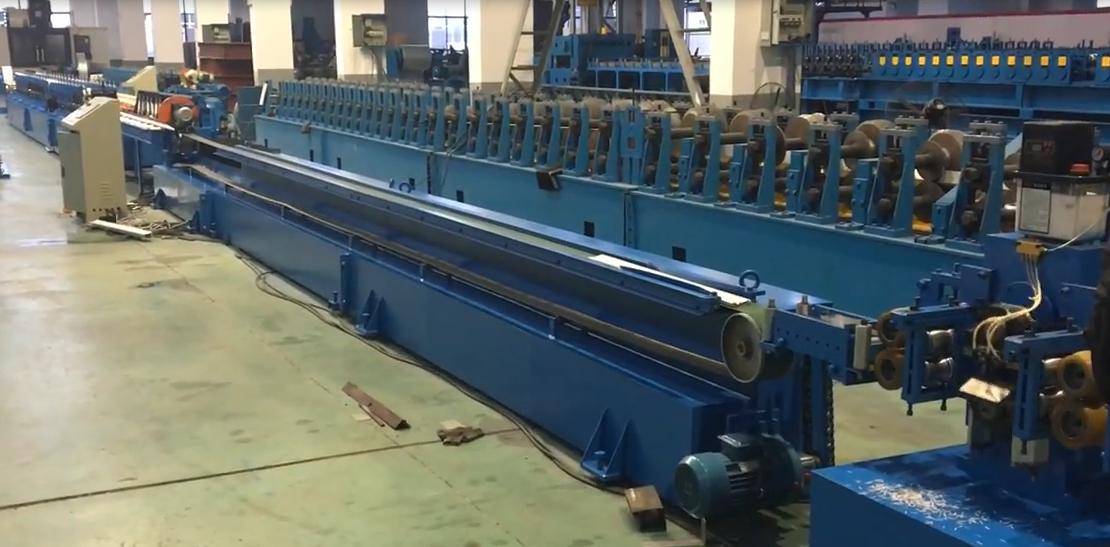
Slats filled with polyurethane foam for insulation, the European window shutter standard.
View PU shutter line →
Straight and curved guide tracks, plus the bottom bar, that hold a shutter door in line as it lifts.
View door track line →A door plant that also rolls its own sheet can feed these lines from a metal sheet roll forming machine. Slat and track machines are usually bought as a pair, since a shutter is only as straight as its guide.
Planning ranges for a steel door roll forming machine. The section drawing and the punch pattern are quoted first, then the coil width and the output target.
| Coil width | 300 to 1,250 mm, set by the developed width of the section |
|---|---|
| Material thickness | 0.4 to 2.0 mm galvanized, 2.0 mm only on frame lines |
| Door size range | Frame 700 to 1,200 mm wide, 2,000 to 2,400 mm high |
| Forming stations | 12 to 24, driven through gearbox and chain |
| Line speed | 8 to 15 m/min on frames, 12 to 20 m/min on slats and tracks |
| Punching | Hydraulic press with one die set per door size, or servo punching for hinge and lock patterns |
| Cutoff | Post cutter or flying shear, tolerance plus or minus 0.5 mm |
| Control | PLC with HMI, inverter drive, length encoder and batch counter |
| Electrical supply | 380 V 50 Hz three phase, or 415 V, 440 V and 480 V for the destination |
Two quotes for the same frame can differ by a factor of two. These are the four choices that explain the gap, and the ones to settle before a steel door roll forming machine is ordered.
A hydraulic press with a fixed die is the cheapest way to punch on a steel door roll forming machine. Servo punching with changeable hinge and lock patterns adds cost and removes setup time.
A 2.0 mm frame needs 75 mm shafts, a bigger frame and a heavier decoiler. Thickness drives steel weight through the whole machine.
A shutter slat forms in 14 stations, a return lip frame needs 22 or more. Every stand is a pair of rolls, a shaft and a motor.
A servo feeder, an automatic stacker and a packing table add 15 to 30 percent and take one or two operators off the line, which on a steel door roll forming machine is usually the whole payback case.
Door type follows the opening, not the machine. These four jobs cover most of the door orders we quote, and each one sets its own slat, panel or frame section before a steel door roll forming machine is specified.

Wide shutters that open to a full bay height. Slat thickness and spring balance matter more than insulation here.
Roller shutter slat lines →
Narrow shutters above a glazed front, often PU foamed for noise and heat. The slat has to coil into a small box.
PU foamed shutter lines →
Frames are rolled to the wall thickness of the project, with hinge and lock positions set per door schedule.
Door and window systems →
Sectional panels with an embossed face, sold in a kit with tracks, hinges and springs.
Garage door panel video →Frames and slats are rolled to EN 10346 or ASTM A653 galvanized coil, and lines for the EU arrive with CE documentation under the EU CE marking rules. For the UK the same line is documented to UKCA through the GOV.UK UKCA guidance.
A steel door roll forming machine is judged on its punch pattern as much as its profile. Each line is assembled, wired and run in our works with the customer's coil, then measured against the door schedule before packing.
Coil for a steel door roll forming machine is galvanized to EN 10346 or ASTM A653, in 0.4 to 2.0 mm. On a frame, the zinc weight decides whether the section rusts at the weld-free corners.
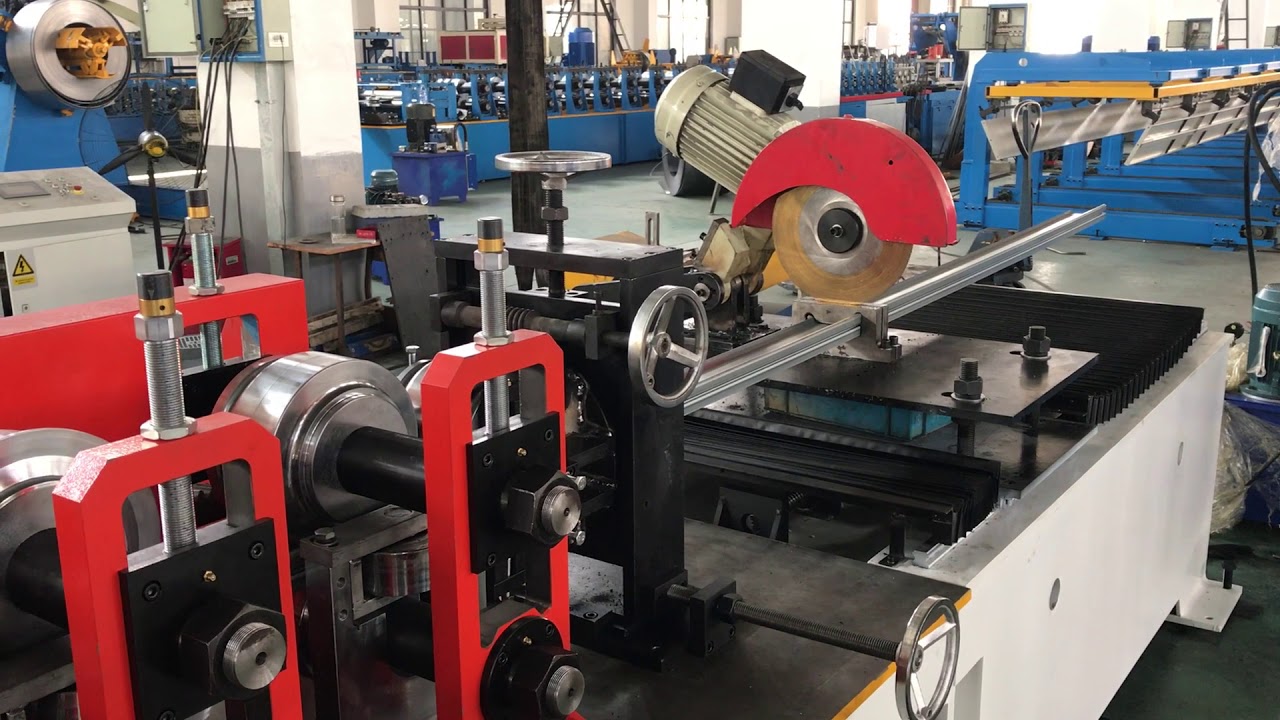
What buyers ask before a door line is quoted, answered in plain terms.
A steel door roll forming machine is a line that folds galvanized coil into one door component, such as a frame, a garage panel, a shutter slat or a guide track. It punches hinge holes, lock cutouts and notches inline, then cuts each piece to length. A complete door system needs two or three of these lines, not one.
Frames run 0.8 to 2.0 mm, garage panels 0.4 to 0.8 mm, shutter slats 0.4 to 0.8 mm and tracks 0.8 to 1.5 mm. A steel door roll forming machine built for 2.0 mm frames uses 75 mm shafts, while a slat line of the same width uses 55 mm.
They are punched before the profile is closed, through a die set on a hydraulic press, or by a servo punch unit that moves between positions. One die set covers one door size, so a plant that sells six sizes keeps six sets, or pays for a servo punch that changes pattern from the screen.
No. The sections are different widths, thicknesses and pass counts, so a steel door roll forming machine is built for one section family. A combined plant buys a frame line and a slat line, and shares the decoiler and the control platform between them.
Frames run 8 to 15 m/min because of the punching cycle, slats and tracks 12 to 20 m/min. On a frame line the press, not the rolls, sets the pace, so a servo punch is what buys speed.
A shutter slat or track line starts near USD 30,000. A garage door panel line with embossing lands at USD 45,000 to 70,000. A frame line with servo feeding and servo punching runs USD 60,000 to 110,000, and a full PU foamed slat line with a foaming unit goes above that.
Build time is 30 to 55 days after the drawing and the deposit. A slat or track line loads into one 40 ft container, a frame line with a long runout table needs a 40 ft high cube. Sea freight adds 20 to 40 days depending on the port.
Share the section drawing, thickness, door size and output target. Engineering replies with a station plan, a punch pattern proposal and a steel door roll forming machine configuration that fits your door schedule.
Page updated October 2026.
 English English
 Español
 Português
 Русский
 العربية
 Bahasa Melayu
 Türkçe
 ไทย
 Bahasa Indonesia



