Address
No 1, Yd Road, Huishan District, Wuxi City, Jiangsu. 214183
Work Hours
Monday to Friday: 9AM - 5PM
Saturday: 9AM - 4PM

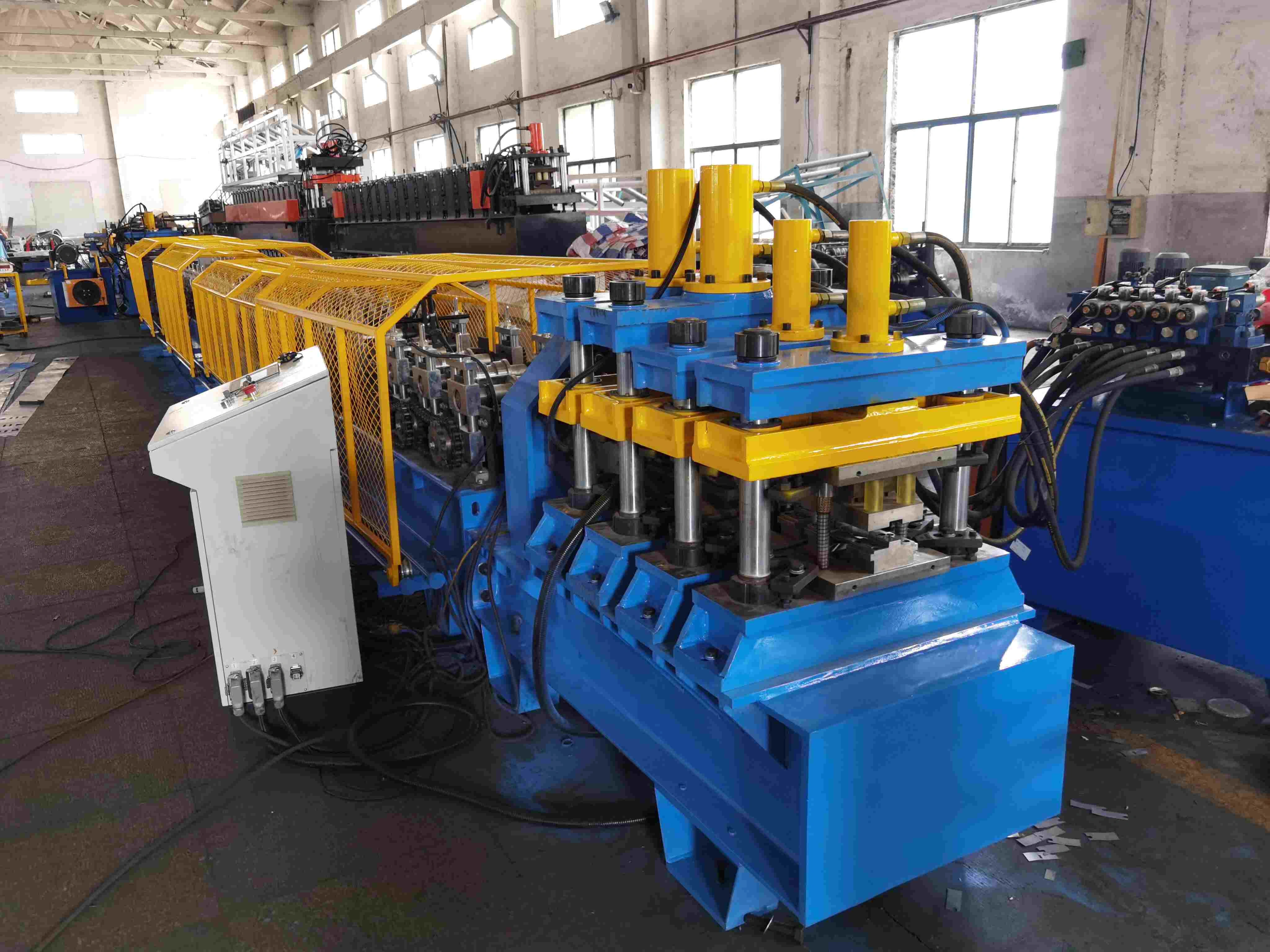
A door frame roll forming machine produces steel door frames in custom sizes. It punches notches, hinge holes, and lock cutouts in one continuous line. The finished profile folds into a complete door frame.
This door frame roll former handles galvanized steel from 0.8 mm to 2.0 mm thick. With 22 forming stations and servo-controlled punching, it delivers consistent output at 15 to 20 meters per minute.
A door frame roll forming machine takes flat steel coil and turns it into finished door frame profiles. The line uncoils, levels, punches, forms, and cuts — all in one pass.
This isn’t just a bending machine. The punch unit cuts the miter notches that let you fold the frame at 90-degree corners. It also punches mounting holes, hinge slots, and lock prep. Everything the installer needs is already in the profile when it comes off the line.
Compared to traditional press-brake fabrication, a door frame roll former cuts labor by 60% or more. One operator runs the whole line from a touch screen.
Two main door frame profiles dominate the market:
Steel door frames beat timber on cost, speed, and durability. They install during framing or as retrofits. Galvanized coating means no rust, no warping, no callbacks. That’s why specifiers across Australia, the Middle East, and Africa keep choosing steel over wood — see the HMMA hollow metal standards for performance benchmarks.
How the frame corners connect matters. Different markets need different joints. The self-joint (mitered fold) is the most advanced — no welding, no fasteners.
The self-joint design requires precise notch geometry. A door frame roll forming machine with servo punch control hits tolerances within ±0.3 mm, which manual fabrication can’t match.
| Spec | Value |
|---|---|
| Structure | Steel plate & beam welded frame |
| Type | Double-head decoiler |
| Mandrel expansion | Manual adjust, 450-540 mm |
| Motor | 3 kW |
| Capacity | 2,000 kg per side |
| Coil ID | 508 mm; Max coil OD |
| Spec | Value |
|---|---|
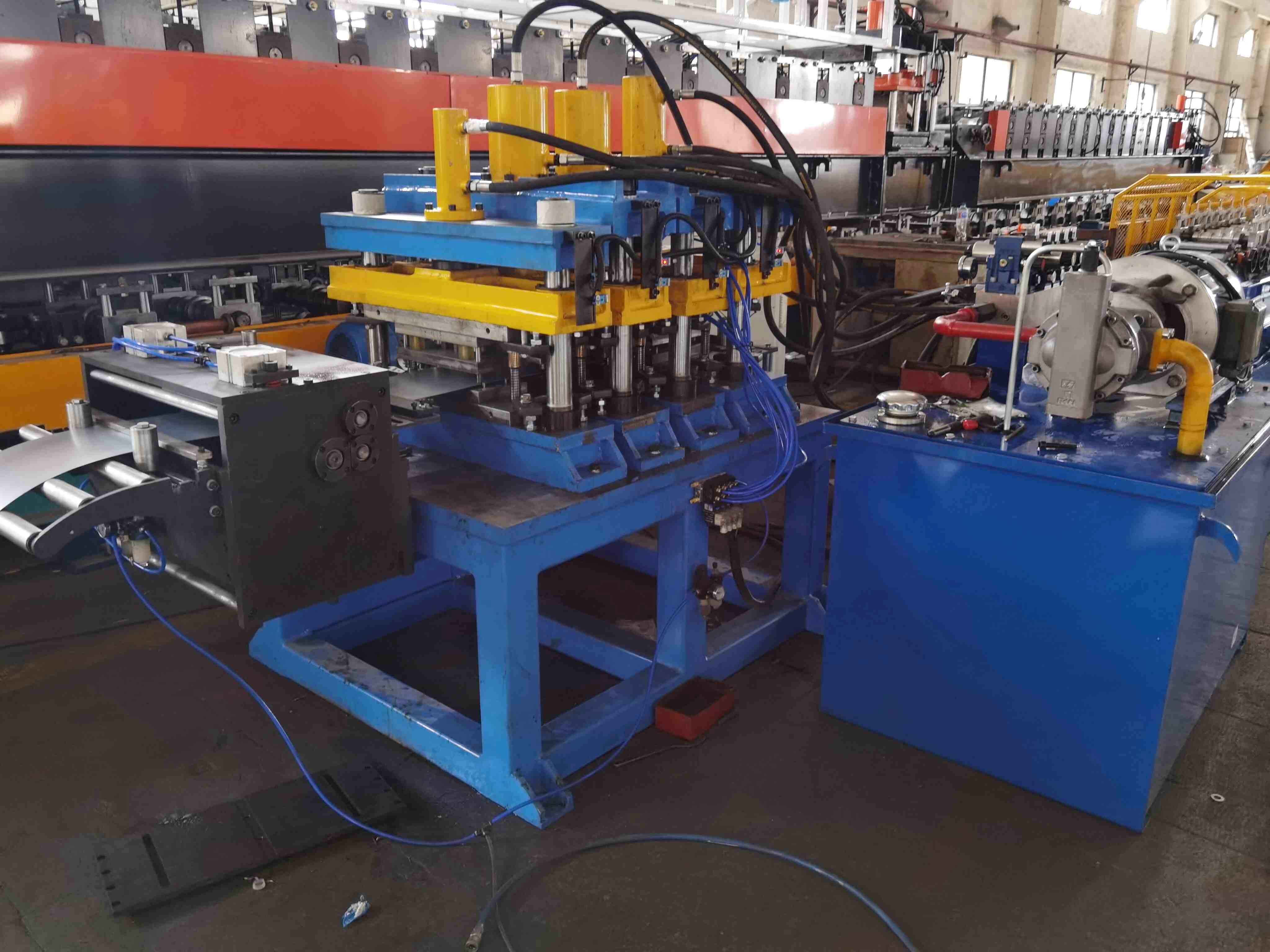
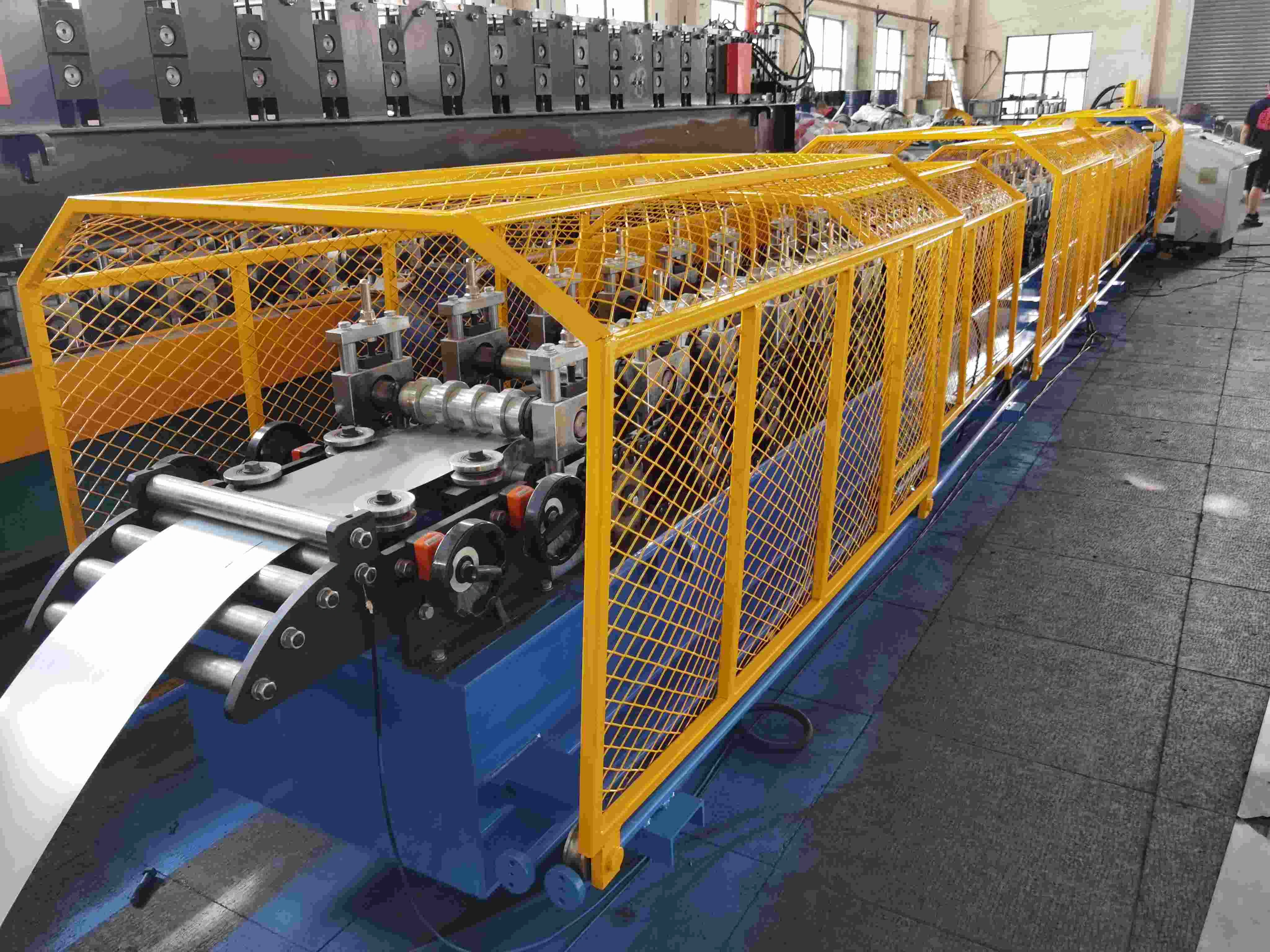
| Type | 2-roll pinch feed + 9-roll leveling |
| Roller diameter | 80 mm, 40Cr with high-frequency quench |
| Motor | 3 kW gear motor |
| Transmission | Gear drive with limit switch sync |
Pneumatic gap adjustment between leveling rollers. The limit switch keeps the leveler in sync with the uncoiler speed.
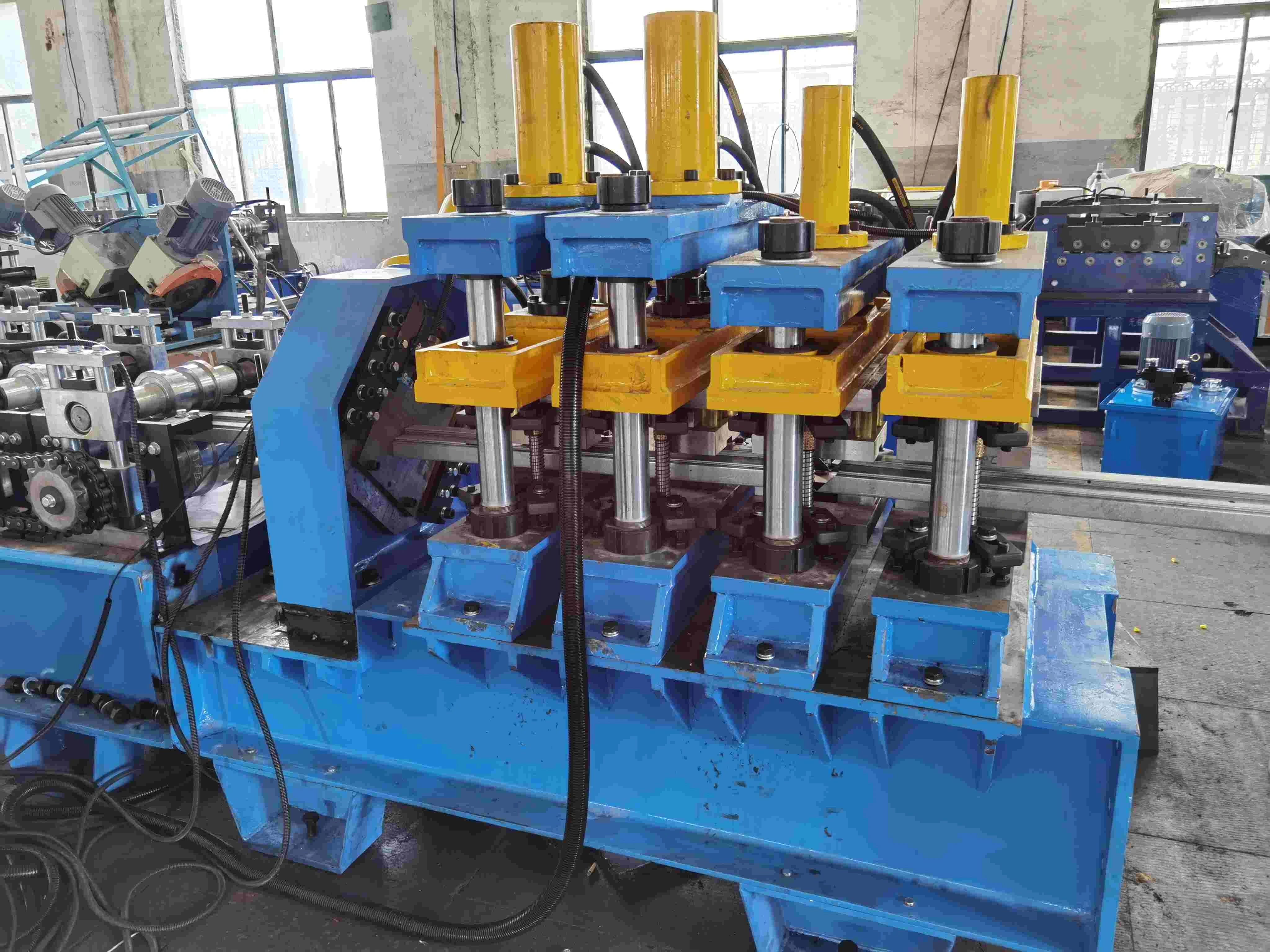
This is what separates a basic roll former from a production-ready door frame roll forming machine. The punch unit handles three operations:
| Spec | Value |
|---|---|
| Structure | 4-guide pillar type |
| Servo motor | 1.9 kW, Yaskawa |
| Hydraulic power | 11 kW, 20 MPa |
| Punch mould | 1 set, SDK11 tool steel, HRC 58-62 |
| Valve | Beijing HUADE electromagnetic |
| Spec | Value |
|---|---|
| Machine base | H-beam steel welded frame |
| Stations | 22 forming steps |
| Material thickness | 0.8-2.0 mm |
| Shaft | 40Cr, HB 220-260, diameter 75 mm |
| Rollers | 45# steel, chrome plated ≥ 0.05 mm |
| Main motor | 11 kW |
| Speed | 15-20 m/min |
| Drive | Chain and gear |
| Speed control | Frequency inverter |
The door frame roll former runs on a Panasonic PLC with an MCGS touch screen. The operator enters length and quantity — the screen shows live machine status.
| Spec | Value |
|---|---|
| PLC | Panasonic |
| Touch screen | MCGS |
| Encoder | Omron |
| Inverter | Yaskawa |
| Control box | 700 × 300 × 1,000 mm |
| Hydraulic pressure | ≥ 12 MPa |
| Voltage/Frequency | Per client standard |
| Wiring | Aviation plug, quick connect |
A standalone press brake needs 5-6 separate operations per frame: shear, notch, punch hinges, punch lock, bend, weld. A door frame roll forming machine does all this in one line.
| Factor | Door Frame Roll Forming Machine | Manual Press Brake |
|---|---|---|
| Operations | 1 continuous line | 5-6 separate stations |
| Output speed | 15-20 m/min (6-8 frames/min) | 1-2 frames/min |
| Labor | 1 operator | 3-4 workers |
| Tolerance | ±0.3 mm (servo punch) | ±1.5 mm (manual setup) |
| Material yield | 98%+ (coil-fed, near-zero drop-off) | 88-92% (sheet offcuts) |
| Self-joint ready | In-line notching, fold on site | Requires separate notching step |
| Changeover | 30 min (die swap + stand adjust) | 60-90 min (multiple tool changes) |
| Annual breakeven | ~15,000 frames/year | N/A (labor scales linearly) |
| Per-frame cost at scale | $0.80-1.20 | $3.50-5.00 |
Above 15,000-20,000 frames per year, the door frame roll former pays for itself. Per-unit cost drops 40-55% at scale compared to manual fabrication, according to Steel Door Institute benchmarks.
Believe Industry builds a full range of steel door production equipment:
Beyond door components, our roll forming machines cover C purlin, cable tray, stud and track, and pallet racking production lines.
0.8 mm to 2.0 mm galvanized steel. The 22-station forming section and 75 mm shafts handle the full gauge range without deflection. For material above 2.0 mm, contact us for a custom configuration.
Yes. The roller tooling adjusts for both profiles. Changeover takes about 30 minutes — swap the punch die set and adjust the forming stands. Many customers run both profiles on the same door frame roll former.
Hydraulic punch uses a central power unit (11 kW, 20 MPa in our spec). Servo punch drives each axis independently with a Yaskawa motor. Servo is faster on position changes and uses less energy. Our door frame roll forming machine uses servo for the notching and hydraulic for the heavier hole punching — best of both.
15 to 20 meters per minute of finished profile. Actual output depends on frame size. A standard 2.1-meter door frame takes roughly 8-10 seconds per piece.
Configured to client standard — 380V/50Hz, 440V/60Hz, or other. The PLC and inverter handle voltage conversion internally.
Yes. We send an engineer for on-site setup and operator training. The door frame machine ships with English manuals, wiring diagrams, and a spare parts list. Remote support is available after commissioning.
Local sheet metal shops use press brakes and turret punches. Per-frame labor is 3-5x higher. A door frame roll forming machine pays for itself at roughly 15,000-20,000 frames per year. Above that volume, the margin difference is decisive. Steel Door Institute data shows automated roll forming cutting per-unit costs by 40-55% at scale.
Tell us your frame profile, typical order volumes, and target market. We’ll configure a door frame roll forming machine to match — including punch tooling for your specific hinge and lock patterns.
A pallet upright frame roll forming machine turns flat steel coils into...
Read MoreStanding seam roll former machines produce standing seam roofing panels with...
Read MoreWhat Is a Solar Strut Channel Roll Forming Machine? A solar...
Read MoreA cable tray roll former machine shapes metal strips into cable trays....
Read More