Выбор неправильного стального рулона — самая дорогостоящая ошибка на профилировочном заводе. Стальной рулон обычно составляет от 60 до 701 тонны от стоимости готового профиля. Выбор неправильного сорта приведет к разрушению профиля под нагрузкой. Выбор неправильного покрытия — к появлению ржавчины в течение года. Выбор неправильной толщины — к необходимости изменения настроек станка.
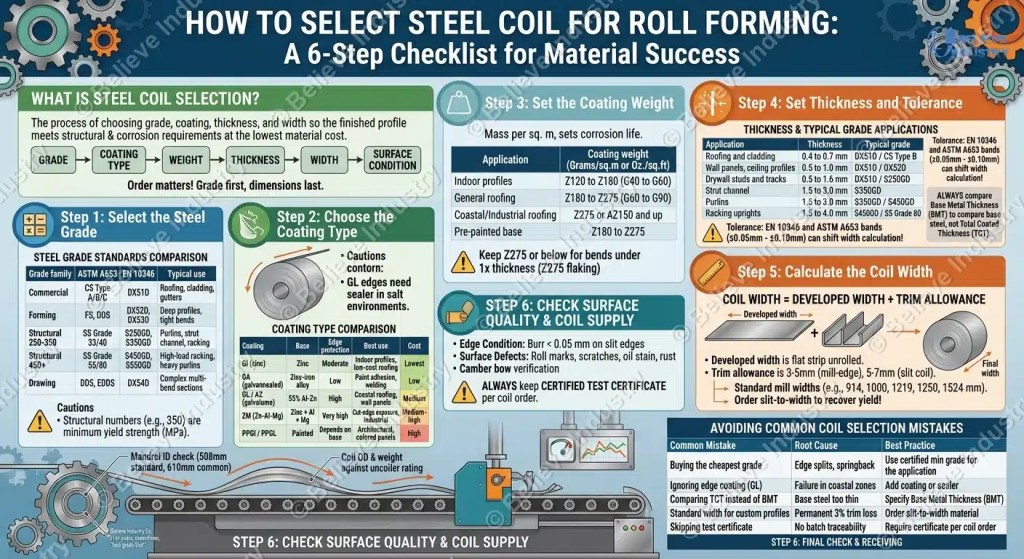
Выбор стальной рулонной стали для профилирования сводится к шести ключевым моментам: марка стали, тип покрытия, плотность покрытия, толщина, ширина рулона и состояние поверхности. Каждый из этих параметров соответствует определенному стандарту, номеру и настройкам станка. В этом руководстве рассматриваются все шесть параметров с учетом спецификаций, используемых в Северной Америке, Европе, Австралии и на Ближнем Востоке.
Компания Believe Industry более 15 лет занимается производством линий профилирования и поставляет оборудование в более чем 20 стран. Мы видели, как покупатели теряли десятки тысяч долларов из-за ошибок в технических характеристиках рулонов. Это контрольный список, который мы передаем нашим собственным инженерам.
Что такое выбор стальной рулонной стали?
Выбор стальной рулонной стали — это процесс выбора марки стали, типа покрытия, плотности покрытия, толщины и ширины рулона таким образом, чтобы готовый профиль соответствовал требованиям к прочности и коррозионной стойкости при минимальных затратах на материал.
Порядок имеет значение. Сначала марка, поскольку она определяет прочность и формуемость. Затем покрытие, поскольку оно определяет срок службы. Толщина и ширина — в последнюю очередь, поскольку они определяют конфигурацию оборудования и выход материала. линии профилирующего станка Оборудование, изготовленное по одной спецификации для рулонов, не может просто работать по другой. Спецификация для стальных рулонов — это договор между поставщиком материала, производителем оборудования и покупателем профиля.
Шаг 1: Выберите марку стали
Марки стали, используемые для прокатки, обеспечивают прочность, формуемость и свариваемость. Прокатка подходит для высокопрочной стали, поскольку в этом процессе происходит изгиб, а не растяжение, поэтому прочность на миллиметр выше, чем при штамповке. Большая часть стальных рулонов, продаваемых для прокатки, имеет покрытие, и марка стали и покрытие обычно соответствуют одному и тому же стандарту.
Стандарт ASTM A653 описывает листовой металл, оцинкованный горячим способом и подвергнутый гальванизации, используемый в Северной Америке. Марки обозначаются как CS Type A/B/C для коммерческой стали, FS для формовочной стали, DDS для волочильной стали и SS Grade 40/50/80 для конструкционной стали. SS Grade 40 означает минимальный предел текучести 275 МПа, SS Grade 50 — 345 МПа, SS Grade 80 — 550 МПа. ASTM International содержит полные таблицы.
Стандарт EN 10346 регулирует использование стали с непрерывным горячим цинкованием в Европе и большей части Азии. К формовочным маркам относятся DX51D – DX54D. К конструкционным маркам относятся S250GD, S350GD, S450GD, S550GD, где число обозначает минимальный предел текучести в МПа. ЦЕН публикует стандарт EN 10346.
| Семейство классов | ASTM A653 | EN 10346 | Типовое применение |
|---|
| Коммерческий | Типы CS A/B/C | DX51D | Кровля, облицовка, водосточные желоба |
| Формирование | ФС, ДДС | DX52D, DX53D | Глубокие профили, крутые изгибы |
| Структурный 250-350 | SS Grade 33/40 | S250GD, S350GD | Прогоны, профиль для стоек, стеллажи |
| Конструктивные 450+ | SS Grade 55/80 | S450GD, S550GD | Стеллажи для тяжелых грузов, массивные прогоны |
| Рисунок | DDS, EDDS | DX54D | Сложные многоизгибные секции |
На других рынках используются собственные стандарты. В Японии и Корее применяется JIS G3302 (SGCC, SGC440). В Австралии используется AS 1397 (G250, G300, G550). высокопрочная сталь, прокатная гибка В руководстве рассматриваются изменения, происходящие при переходе от катушки с давлением 250 МПа к катушке с давлением 550 МПа.
Общее правило: DX51D или CS Type B для кровли и легкой облицовки. S350GD или SS Grade 50 для прогонов и профилей. S450GD или SS Grade 80 для стоек. Если ножка изгибается сильнее, чем на 1 толщину материала, перейдите на одну ступень выше в семействе марок опалубочного материала.
Шаг 2: Выберите тип покрытия
Покрытие определяет срок службы профиля на открытом воздухе. Четыре семейства стали, используемой для профилирования рулонов, являются доминирующими.
GI — это горячее цинкование, чистый цинк. Дешевый, проверенный, стандартный материал для внутренних профилей и кровельных работ. GA — это гальванизированное цинковое покрытие, которое лучше поддается покраске и сварке, но хуже защищает кромки.
Гальвалюм (GL), также называемый AZ или гальвалюмом, состоит примерно из 551 TP3T алюминия, 43,41 TP3T цинка и 1,61 TP3T кремния. Он обеспечивает в два-четыре раза больший срок службы при коррозии, чем оцинкованная сталь (GI), при той же плотности покрытия и является основой для COLORBOND и ZINCALUME в Австралии. ZM — это цинк-алюминий-магний. Он лучше защищает кромки срезов, чем оцинкованная сталь, при меньшей плотности покрытия, что делает его популярным для кровельных работ на побережье и в промышленных районах.
Предварительно окрашенная рулонная сталь предполагает использование системы окраски на заводе: PPGI на основе оцинкованной стали и PPGL на основе глинозема. Это исключает этап окраски с вашего предприятия, но требует тщательной обработки. конструкция профилегибочной машины чтобы ролики не царапали пленку.
| Покрытие | База | Защита кромки | Лучшее применение | Расходы |
|---|
| ГИ (цинк) | Цинк | Умеренный | Внутренние профили, недорогая кровля | Самый низкий |
| ГА (гальванизированный) | Цинково-железный сплав | Низкий | Адгезия краски, сварка | Низкий |
| ГЛ / АЗ (гальвалюм) | 55% Al-Zn | Высокая | Кровельные материалы для прибрежных районов, стеновые панели | Средняя |
| ZM (Zn-Al-Mg) | Цинк + Алюминий + Магний | Очень высокий | Передовые технологии, промышленность | Средне-высокий |
| PPGI / PPGL | Нарисованный | Зависит от базы | Архитектурные цветные панели | Высокая |
Покрытия в первую очередь разрушаются на срезах. GI и ZM обеспечивают гальваническую защиту на срезе. GL такой защиты не обеспечивает, поэтому в солевых средах открытая стальная кромка нуждается в защитной пленке или герметике. Американская ассоциация гальванизаторов Публикует данные о коррозии цинковых и цинковых сплавов на покрытиях.
Шаг 3: Установите плотность покрытия.
Вес покрытия — это масса покрытия на квадратный метр стальной рулона, измеренная с обеих сторон. Он в большей степени определяет срок службы при коррозии, чем тип покрытия. Два покупателя могут заказать одинаковую рулонную сталь из оцинкованной стали, и тот, у кого вес покрытия вдвое больше, получит профиль, который прослужит на несколько лет дольше на открытом воздухе.
В стандарте EN 10346 используются граммы на квадратный метр: Z120, Z180, Z275, AZ150, ZM120. В стандарте ASTM A653 используются унции на квадратный фут: от G30 до G235. Пересечение: G90 примерно соответствует Z275, G60 примерно соответствует Z180, G40 примерно соответствует Z120.
Практический диапазон размеров стальных рулонов, используемых для профилирования:
- Профили для использования внутри помещений: Z120–Z180 (G40–G60)
- Кровельные материалы общего назначения: Z180–Z275 (G60–G90)
- Кровельные материалы для прибрежных и промышленных зон: Z275 или AZ150 и выше.
- Предварительно окрашенные: базовый слой Z180–Z275 в зависимости от условий экспозиции.
Вес покрытия также влияет на процесс формования. Толстые покрытия отслаиваются при малых радиусах изгиба. Для изгиба толщиной менее 1x следует поддерживать толщину покрытия на уровне Z275 или ниже. Влияние материала на конструкцию профилировочного станка На этой странице рассматривается влияние твердости покрытия на износ роликов. Центр GalvInfo публикует таблицы веса покрытий, лежащие в основе этих правил проектирования.
Шаг 4: Установка толщины и допуска
Толщина определяет прочность, вес и стоимость. Она также влияет на работу станка. Зазор между роликами, мощность привода, усилие отрезки и припуск на изгиб — все эти параметры предполагают одну номинальную толщину.
| Применение | Толщина | Типовая марка |
|---|
| Кровельные и облицовочные работы | 0.4 to 0.7 mm | DX51D / CS Тип B |
| Стеновые панели, потолочные профили | от 0,5 до 1,0 мм | DX51D / DX52D |
| Стойки и направляющие для гипсокартона | от 0,5 до 1,6 мм | DX51D / S250GD |
| швеллеры | 1.5 to 3.0 mm | S350GD |
| Purlin | 1.5 to 3.0 mm | S350GD / S450GD |
| Вертикальные стойки для стеллажей | от 1,5 до 4,0 мм | S450GD / нержавеющая сталь марки 80 |
Допуск по толщине имеет большее значение, чем думают покупатели стальной рулонной стали. Стандарт EN 10346 допускает отклонение примерно на ±0,05 мм для рулона толщиной 0,5 мм и примерно на ±0,10 мм для рулона толщиной 2,0 мм. Стандарт ASTM A653 имеет аналогичные диапазоны. Отклонение на 0,05 мм изменяет допуск на изгиб и расчет ширины катушки, что изменяет окончательные размеры профиля.
В каждом предложении встречаются два термина. BMT — это толщина основного металла, то есть самой стали. TCT — это общая толщина покрытия. Всегда сравнивайте BMT при покупке стальной рулонной стали. Покрытие добавляет от 0,02 до 0,05 мм с каждой стороны и искажает сравнение TCT. Для получения более подробной информации см. Расчет ширины и толщины рулона для профилирования.
Шаг 5: Рассчитайте ширину катушки
Ширина рулона — это ширина плоской полосы стального рулона, поступающего в станок. Это не ширина покрытия профиля. Готовый профиль — это согнутая полоса, поэтому рулон должен покрывать каждую полку, перемычку и изгиб.
Формула: ширина рулона равна развернутой ширине плюс припуск на обрезку по обоим краям. Развернутая ширина — это поперечное сечение развернутого профиля, включая припуски на изгиб в каждом углу. Для простого U-образного профиля это основание плюс две полки плюс припуски на изгиб. Для сложной кровельной панели используйте программное обеспечение для профилирования или тестовый рулон.
Припуск на обрезку составляет от 3 до 5 мм с каждой стороны для рулонов с фрезерованной кромкой, от 5 до 7 мм для рулонов с прорезанной кромкой и больше для предварительно окрашенного материала, где прорезанная кромка может вызвать растрескивание краски.
Стандартная ширина прокатных станов составляет 914, 1000, 1219, 1250 и 1524 мм. Лишь немногие профили используют эти значения точно. Заказ стальной рулонной заготовки, нарезанной по ширине, в сервисном центре обычно позволяет получить на 3–81 тонну больше продукции, чем при обрезке стандартной ширины. Калькулятор металлического рулона Рассматриваются математические расчеты доходности.
Планирование веса рулона зависит от его ширины. Для рулона толщиной 0,5 мм и диаметром 1000 мм весом 10 тонн требуется около 2550 метров рулона. Для рулона той же толщины толщиной 1,0 мм и диаметром 1250 мм требуется около 1020 метров рулона. Это число определяет частоту ваших перевозок. Размотчик рулона останавливается для замены катушки зажигания.
Шаг 6: Проверка качества поверхности и поставки рулонов.
Состояние поверхности – вот где покупатели стальных рулонов допускают ошибки. Рулоны с обработанными кромками поставляются со скругленными углами и жестким допуском по ширине. Рулоны с прорезанными кромками имеют срезанные края, на которых могут образовываться заусенцы. Заусенцы царапают ролики, пропускают узор и проявляются в виде волнистости кромки в готовом профиле.
При приеме товара обратите внимание на три вещи:
- Состояние кромки. Высота заусенцев менее 0,05 мм для краев щелей, отсутствие рваных разрывов.
- Дефекты поверхности. Следы от прокатки, царапины, масляные пятна, пятна ржавчины на концах катушек.
- Камбер. Изгиб поперек полосы, усугубляющий смещение при прохождении через роликовые опоры.
Если у вас нет возможности провести проверку при приемке, приобретайте сталь у производителя или сервисного центра, имеющего сертифицированный сертификат испытаний на каждый заказ. В сертификате должны быть указаны марка стали, тип покрытия, толщина покрытия, класс допуска по толщине и номер рулона. Храните один сертификат на каждый рулон стали.
Наконец, подберите катушку к станку. Сравните внутренний диаметр катушки с диаметром. разматывающая машина Диаметр оправки составляет 508 мм (стандартный) и 610 мм (распространенный). Сравните внешний диаметр катушки с ходом оправки и вес катушки с номинальной мощностью разматывателя. линия продольной резки или линия поперечной резки Это правильное решение, если вы покупаете мастер-катушки и обрабатываете их самостоятельно.
Распространенные ошибки при выборе стальных рулонов
- Покупаю самый дешевый сорт, который едва проходит проверку. Некачественная стальная рулонная сталь обходится дешевле за тонну, но дороже в год. Экономия сводится на нет из-за растрескивания кромок, колебаний упругости и брака.
- Не обращая внимания на покрытие на срезах. Профили GL в прибрежных зонах разрушаются по краю среза, а не по поверхности.
- Сравниваем TCT вместо BMT. Поставщик, указывающий общую толщину покрытия, может скрыть более тонкое стальное основание под толстым слоем покрытия.
- Заказ рулона стандартной ширины для изготовления изделия нестандартного профиля. Срезание 40 мм с рулона длиной 1250 мм каждый метр представляет собой постоянный налог 3% на материал.
- Пропуск сертификационного сертификата. Без сертификата невозможно отследить происхождение некачественной стальной рулона до бракованной партии. Каждый профилегибочная машина на заказ По этой причине при отправке мы прилагаем спецификацию рекомендуемой катушки зажигания.
Как компания Believe Industry помогает
Первый вопрос, который задает нам каждый покупатель, — как выбрать стальную рулонную сталь. Каждый производственный цикл начинается с составления спецификации рулонной стали. Наши инженеры берут чертеж профиля, стандарты целевого рынка и условия коррозии, а затем определяют марку, покрытие, плотность покрытия, толщину и ширину перед началом резки первого ролика.
Мы разработали линии для производства кровельных материалов DX51D в Европе, стропильных балок S350GD на Ближнем Востоке, профилей из нержавеющей стали марки 50 в Северной Америке и рулонов Z275 в Австралии. Отправьте нам свой профиль и местоположение проекта. Мы предоставим вам рекомендуемые характеристики рулонов стали, конфигурацию оборудования и коммерческое предложение, соответствующее вашим требованиям.





 English
  Español
 Português
 Русский
 العربية
 Bahasa Melayu
 Türkçe
 ไทย
ไทย
 Bahasa Indonesia