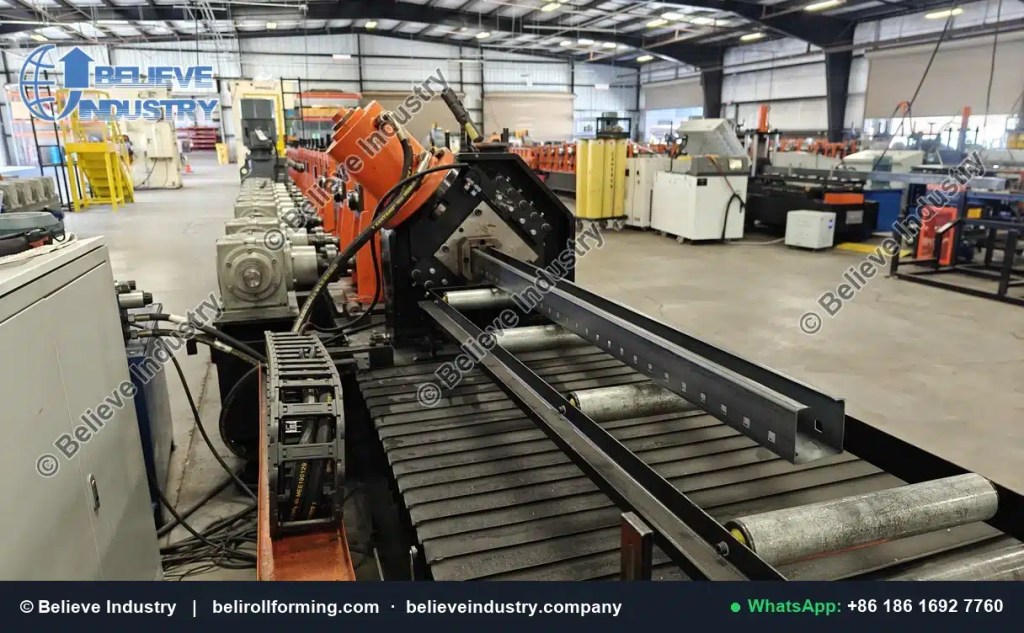
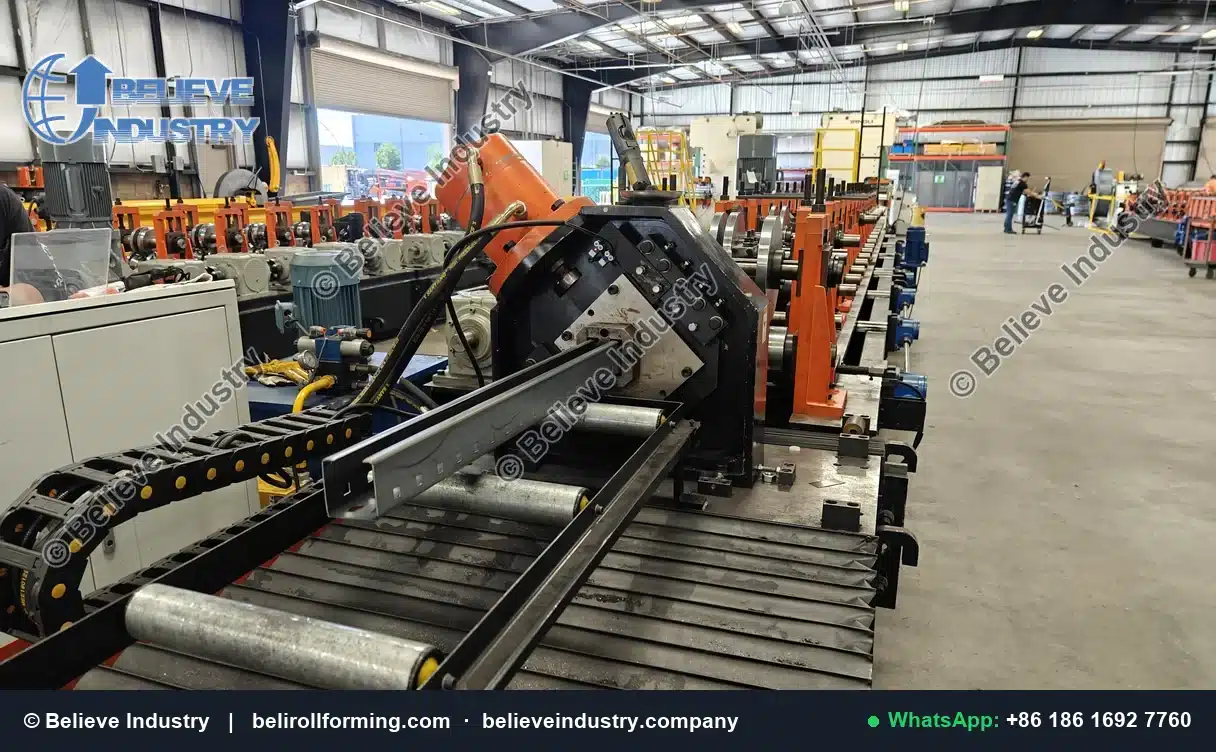
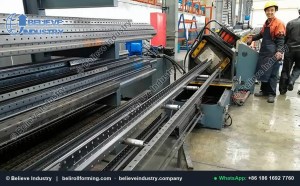
upright line retrofit pallet rack column forming machine in a workshop

Upright Line Retrofit: 3 Upgrades That Lift an Old Line

Need a Roll Forming Machine for Your Project?
Get a free quote from Believe Industry — 15+ years of custom roll forming manufacturing.
Request a Quote Download Catalogue

Old Upright Line Retrofit: Servo Punching and Double-Side Dies

Short answer

An upright line retrofit replaces the punch unit, the feeder and the stacker on an existing rack column line while keeping the forming stands. A well scoped upright line retrofit costs 35 to 50 percent of a new machine, takes 3 to 5 weeks to build and 5 to 8 days of downtime to install, and lifts output by 40 to 70 percent.

The three upgrades that pay are servo punching, double-side dies and automatic stacking. Servo punching removes the mechanical press limits and cuts hole tolerance spread. Double-side dies punch two uprights per hit and nearly double punch output. Auto stacking takes one operator off the exit end and feeds bundles straight to packing.

Not every old line deserves one. This guide gives the three upgrades, a decision table for retrofit versus new, and the downtime plan. If you run tray lines as well, the same logic applies, and our guide to cable tray machine upgrades covers that version.

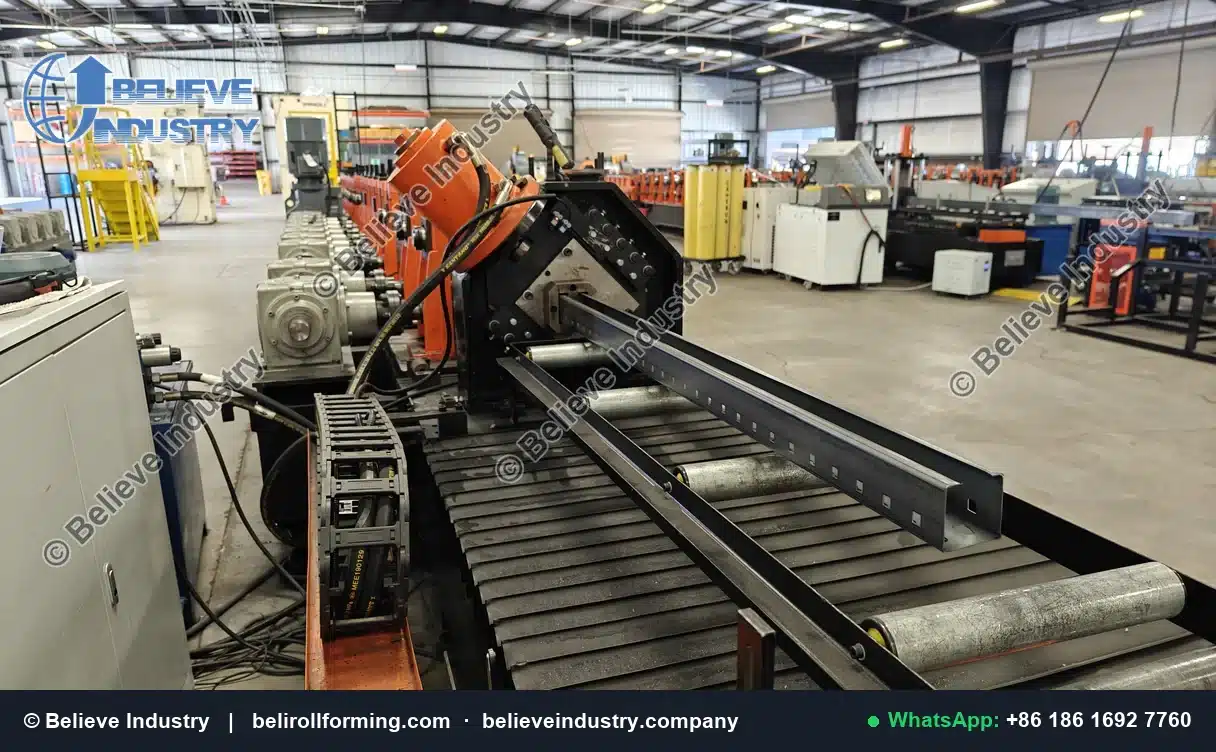
upright line retrofit pallet rack column forming machine in a workshop

What an upright line retrofit covers

An upright line has four sections: decoiler, forming stands, punch press and exit stacker. On most lines older than ten years, the forming stands are still sound. The rolls ran a mild steel diet, the gear boxes hold tolerance, and the frame has years left. The weak points sit at the ends of the line.

At the entry, a mechanical press and an air feeder limit both speed and hole quality. At the exit, manual stacking caps the line no matter how fast the middle runs. That is the starting fact behind every upright line retrofit: the spend focuses on the punch unit, the servo feeder and the stacker, and the forming stands stay untouched.

This matters for budget. Forming stands are the most expensive section to rebuild. Skipping them is what keeps an upright line retrofit at 35 to 50 percent of a new machine price instead of closer to parity.

SectionRetrofit scopeUsual condition on a 10 year old line
Decoiler and coil carKeep, add hold down arm if strip wandersSound
Forming standsKeep, re-set last 2 stands during installSound, minor roll wear
Punch press and feederReplace with servo press and servo feederWorn, slow, tolerance drift
Cut off and stackerReplace with servo cut off and auto stackerManual, caps line speed

Retrofit or new line: the decision line

The retrofit versus new call has four inputs: machine age, tooling condition, order growth and budget. Score each honestly before you price either path. A line that fails the first two should not be retrofitted no matter how tight the budget is.

Use this table as the decision line for any upright line retrofit. Two or more keep answers point to a retrofit. Two or more replace answers point to a new line.

QuestionKeep and retrofitReplace with new
Line ageUnder 15 yearsOver 15 years
Forming rollsWear under 0.15 mm on critical passesWear over 0.15 mm, profile drift on check gauge
Order growthSame profiles, more volumeNew profiles, new hole patterns
Budget cycleCapex under half a new machineFull capex approved

Age matters because spare parts and control spares dry up. Rolls matter because a retrofit cannot fix a worn pass. If the profile itself has drifted, new forming tooling costs more than the punch upgrade saves, and a new line is the honest answer. Our guide to roll tooling pass design for 2.5 to 4.0 mm steel shows what a healthy pass should hold.

Upgrade 1: servo punching

The first upgrade in an upright line retrofit swaps the mechanical press and air feeder for a servo press and servo feeder. This is the change buyers feel first, because it touches every column that leaves the line.

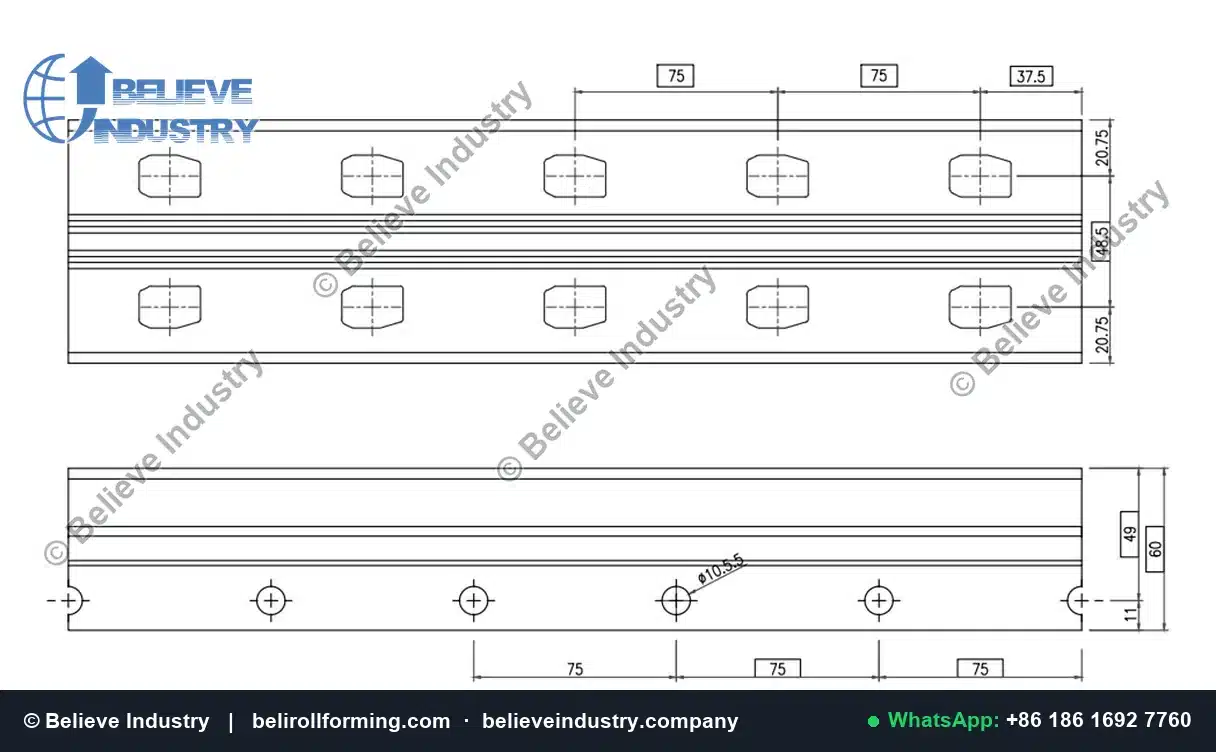
A servo press brings three gains to an upright line retrofit. Hole pitch moves from a fixed mechanical stroke to any value the control allows, so teardrop, keyhole and slotted patterns run without changing stroke hardware. Punch speed follows the line speed instead of setting it. And the tolerance spread tightens, because the servo holds position at any rate.

On delivered retrofits we measure pitch tolerance moving from plus or minus 0.8 mm on a tired mechanical press to plus or minus 0.3 mm on servo. That is the difference between a column that takes a beam connector without rework and one that needs a filing bench. The three US hole pattern tooling guide shows which patterns stress tolerance most.

The servo feeder matters as much as the press. An air feeder slips on galvanized coil and long feed strokes. A servo feeder holds grip at any stroke length and re-clamps in milliseconds. Feed accuracy is what keeps the hole in the right place along the column, and that is the dimension plant inspectors check first. The clearance and setup numbers behind this live in our upright machine setup and punching faults guide.

upright line retrofit teardrop punch details on an upright column line

Upgrade 2: double-side dies

The second upgrade in an upright line retrofit doubles what each punch hit produces.

upright line retrofit forming stands running paired upright columns

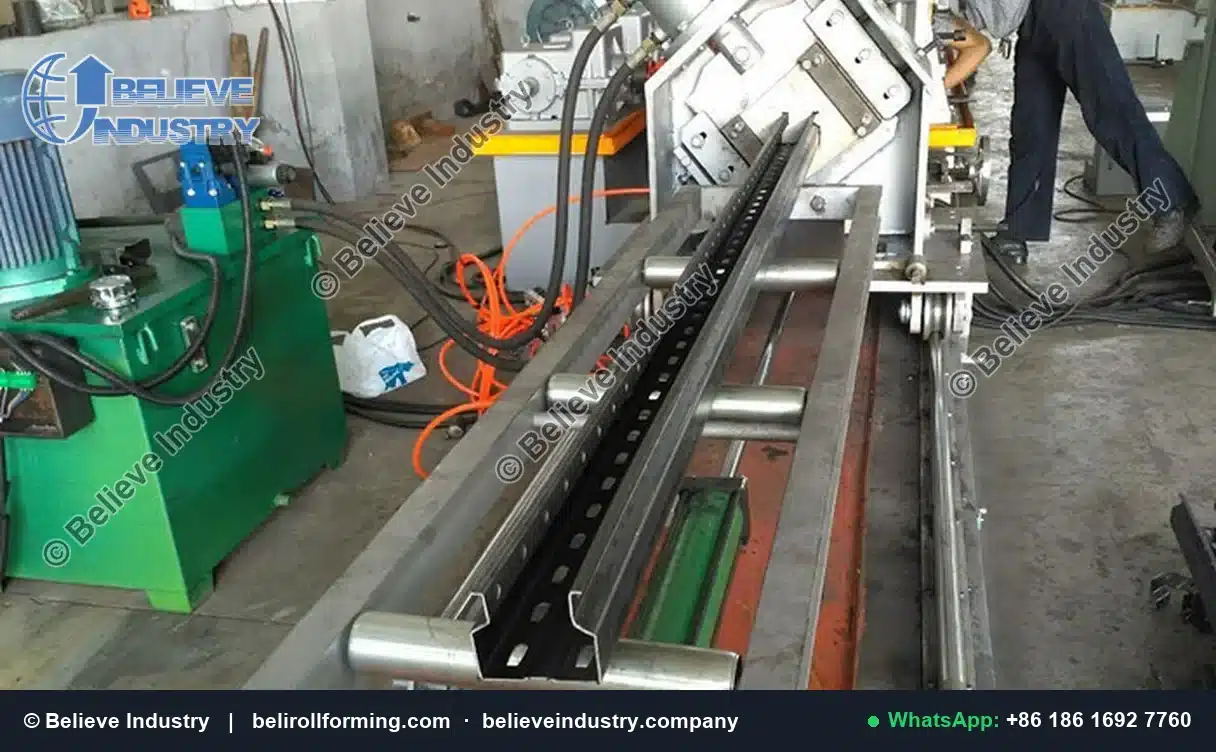
A double-side die carries two die sets on one press bed and punches two uprights at once, fed side by side.

Output scales close to linear. A single-die servo press punching 10 to 15 columns per minute moves to 18 to 28 column equivalents per minute with double-side dies, because the press cycle per pair stays nearly the same as the cycle per single. The limit moves from the press to the forming stands, which is exactly where you want it after an upright line retrofit.

Double-side dies demand more from the strip. Both lanes must present flat, equal thickness stock or the two columns leave with different hole depth. Feed the widest practical coil, and check that the entry straightener can flatten a doubled width. General steel property data helps when you set springback allowance for the wider strip.

One caution. Double-side tooling locks an upright line retrofit into paired production. If the order book is heavy on short runs of mixed styles, the die set changes twice as often. Batch by style first. Our upright profile names guide explains which styles pair cleanly.

Upgrade 3: auto stacking

The third upgrade in an upright line retrofit replaces the exit table where an operator pulls columns one by one. An auto stacker receives cut columns, counts them into bundles, squares the bundle and discharges it to a pallet or a stillage.

The labor math is direct. A manual exit needs 2 to 3 people: one to pull, one to square, one to band. An auto stacker runs with 1 operator supervising and loading stillages, so the exit crew drops from 3 people to 2, and on double-side production the drop is larger because column count per minute doubles.

The speed math matters as much in an upright line retrofit. A manual pull caps the line at roughly what two people can handle, about 15 columns per minute in practice. An auto stacker keeps pace with the double-side punch output, so the exit stops capping the line. Bundle counts of 20 to 40 columns per bundle also standardize packing and cut transit damage.

Auto stacking also feeds the OEE numbers. Stacker faults get logged instead of absorbed as invisible delay. If you already run an OEE sheet, the stacker joins it as one more named loss instead of hidden waiting. Our upright rack line OEE guide shows where stacking time sits in the shift budget.

What a retrofit costs and how long it takes

Budget by section, not by a single number. The shares below describe a typical upright line retrofit on a sound 10 to 12 year old line, priced against a comparable new machine.

ItemBuild timeShare of new machine price
Servo press and servo feeder3 to 4 weeks20 to 28 percent
Double-side die set2 to 3 weeks6 to 10 percent
Auto stacker and discharge2 to 3 weeks8 to 12 percent
Controls integration and commissioning1 weekIncluded in sections above
Full retrofit package3 to 5 weeks35 to 50 percent

Two cost drivers move these shares. First, hole pattern count: each extra pattern adds die cost, so a line serving teardrop, keyhole and slotted pays more than a single pattern line. Second, gauge range: a retrofit that must handle 1.8 to 4.0 mm needs a heavier press frame than a 2.0 to 3.0 mm line.

Against that, compare the new machine price honestly with our roll forming machine price guide, and include the hidden third option: do nothing and lose the orders your current speed cannot serve.

The downtime plan: 5 to 8 days

Installation downtime is where an upright line retrofit earns or loses its reputation. Plan 5 to 8 days for an upright line retrofit and treat the window as a project, not as maintenance.

upright line retrofit cutter and exit end before the stacker
DayWork
1 to 2Strip old press, feeder and exit table; verify foundation anchor points
3 to 4Set servo press and feeder, align to forming stands, tie in power and control
5 to 6Set stacker, thread strip, first articles through every station
7 to 8Run tolerance checks on all hole patterns, train operators, sign off

Two preparations keep the window short. Pre-pour new foundation points before the old equipment comes out, so day 1 is demolition rather than concrete work. And ship first-article coil of every running profile to the factory before commissioning, so sign off uses your real stock rather than our test coil.

If the line cannot stop for 8 days, split the scope. Install servo punching first during a planned maintenance week, then return 6 to 8 weeks later for the stacker. Each stop shrinks to 3 or 4 days. The total calendar stretches, but sales never sees a full stop.

When not to retrofit

Some lines should not be retrofitted, and saying so saves both sides money. Skip an upright line retrofit when the frame shows fatigue cracks, when forming rolls have worn past 0.15 mm on critical passes, or when the order book is moving to profiles the current pass design cannot reach even after re-rolling.

Also skip an upright line retrofit when the line already runs servo punching but the bottleneck is purely forming speed. In that case the money belongs in new forming stands, which is closer to a new line than to a retrofit.

For context on what a modern line should achieve end to end, our upright roll forming machine speed and output guide sets the benchmarks a retrofit is aiming at.

How tray lines differ

Cable tray lines retrofit the same way, so an upright line retrofit plan transfers with one change: the tray upgrade list is led by servo punching for the slot and perforation patterns, and the stacker must handle nesting widths rather than paired columns. We cover the tray version, including the five retrofit steps and the 40 percent output gain, in the cable tray machine upgrade guide.

The racking standard most US buyers cite sets the tolerance the retrofitted line must hold, and the Fabricator overview of servo press technology explains why servo drives have replaced mechanical presses across sheet feeding in general.

Frequently Asked Questions

Q: How much does an upright line retrofit cost compared to a new machine?

A full retrofit package covering servo punching, double-side dies and auto stacking costs 35 to 50 percent of a comparable new line. Servo punching alone runs 20 to 28 percent, and the auto stacker 8 to 12 percent.

Q: How long does an upright line retrofit take?

Build time is 3 to 5 weeks. Installation on site takes 5 to 8 days of downtime. If the line cannot stop a full week, split the scope into two 3 to 4 day windows six to eight weeks apart.

Q: Will a retrofit work on a line older than 15 years?

Usually not. Above 15 years the forming rolls and frame are the limit, and an upright line retrofit cannot fix worn passes. Run the decision table: worn rolls over 0.15 mm and new profile plans both point to a new line.

Q: How much output does double-side punching add?

A single-die servo press runs 10 to 15 columns per minute. Double-side dies take the same line to 18 to 28 column equivalents per minute. The gain is close to linear because the press cycle per pair stays nearly equal to the cycle per single.

Q: Can the retrofit handle teardrop, keyhole and slotted patterns?

Yes. The servo press sets pitch in the control, so pattern changes become die set changes only. Plan 15 to 20 minutes per pattern change with quick change die rails, and batch orders by pattern to keep the change cost low.

Q: Does auto stacking really save labor on an upright line?

A manual exit needs 2 to 3 people to pull, square and band. An auto stacker runs with 1 supervisor, so the exit crew drops from 3 people to 2 while bundle counts of 20 to 40 columns standardize packing and cut transit damage.

Where to go next

To price the retrofit against a new build, open the roll forming machine price guide and the upright speed and output benchmarks. To plan the punch side in detail, read the three hole pattern tooling guide and the setup and faults guide. For a retrofit quote, send four things: the current line layout with the press stroke and feeder type, the hole patterns with pitch, the gauge range you run, and the profiles on the order book. Those four inputs let us price an upright line retrofit to the section and quote the downtime window before you commit.

Last updated: 2026-11-24

Article Changelog

2026-11-24: Initial publication. Retrofit versus new decision table, three upgrades with measured gains, cost shares by section, 8 day downtime plan and 6 FAQ.

Next Review Triggers

A shipped retrofit adds measured before and after output; a retrofit customer changes hole pattern mix; servo press lead times move more than 15 percent; quarterly SERP check for the focus term.

Table of Contents

New Updates