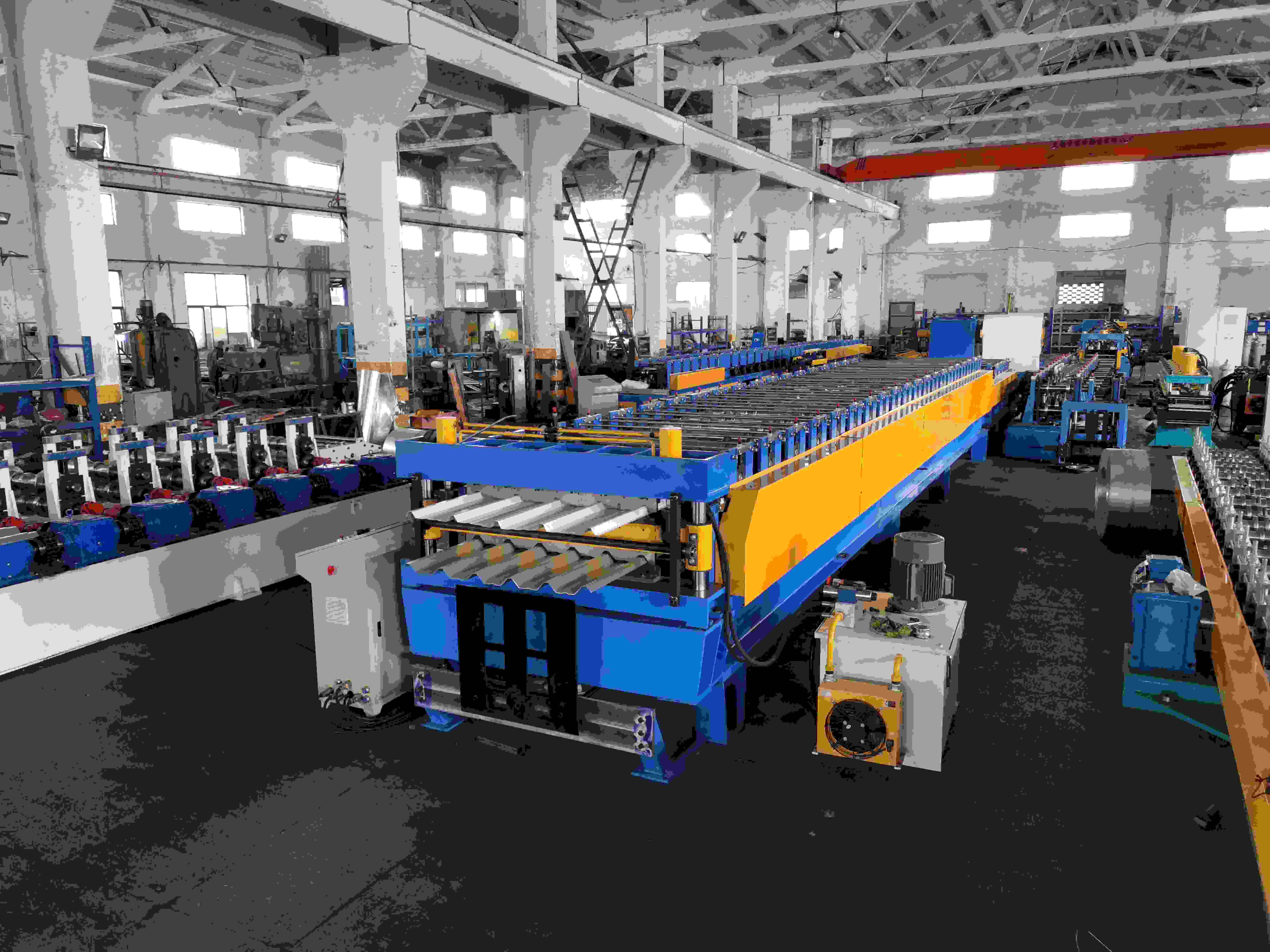
Double Layer Roll Forming Machine

Home » Roll Forming Machine » Metal Sheet Roll Forming Machine » Double Layer Roll Forming Machine

Double Layer Roll Forming Machine technology is an innovative engineering solution designed to produce two different metal profiles within a limited plant area through quick product changeover. As a leading manufacturer in China, Beli RollForming provides these specialized systems to help factories optimize their footprint without compromising on profiling versatility.

What is a Double Layer Roll Forming Machine?

A Double Layer Roll Forming Machine features a unique design with alternating bottom and upper stands. In this configuration, the rollers for one specific profile (such as IBR sheeting) are installed on the bottom stands, while the rollers for a second profile (such as corrugated sheeting) are mounted on the upper stands.

The entire production line operates using a singular, shared infrastructure: one uncoiler, one cutoff unit, and one control box. However, it is important to note that a Double Layer Roll Forming Machine cannot produce both profiles simultaneously. This is because the integrated cutting die must move up to cut the top sheet and down to cut the bottom sheet, meaning only one “layer” can be active at a time.

Key Advantages and Disadvantages

When considering a Double Layer Roll Forming Machine, it is vital to weigh the operational benefits against the production limitations.

Advantages:

  • Significant Space Savings: Ideal for workshops with limited floor area, as it occupies the footprint of just one machine.

  • Budget Optimization: Reduces initial investment by sharing the hydraulic station, PLC system, and uncoiler.

  • Quick Changeover: Operators can switch between profiles by simply changing the feeding path and selecting the program on the PLC.

Disadvantages:

  • Reduced Production Capacity: Since both layers cannot run at once, the total output is roughly 50% of what two separate machines would produce.

  • Maintenance Complexity: The “crowded” nature of the double-stacked stands can make manual adjustments and cleaning more difficult than on a standard mill.

Double Layer Roll Forming Machine Components

To ensure high-precision output, Beli RollForming equips every Double Layer Roll Forming Machine with premium components:

  1. Uncoiler: Available in 5-Ton or 10-Ton capacities (Manual or Automatic).

  2. Dual Roll Forming Mills: Two sets of stands, each with its own independent guiding device.

  3. Unified Cutting Device: Features two sets of blades assembled into one hydraulic unit to suit both profiles.

  4. Control Box: Equipped with dual encoders (one for each mill) for precise length measurement.

  5. Hydraulic Station: A powerful 4KW unit to drive the cutting and punching operations.

  6. Adjustable Collection Table: The height is easily modified to match the different exit heights of the upper and lower layers.

Brief Technical Specifications

  1. Material Width: 500-1500mm, subjected to the profile design
  2. Material Thickness: 0.18-0.8, subjected to profile design
  3. Line Speed: 12-15m/min( High speed is a option)
  4. Motor Power: 5.5KW As usual
  5. Machine structure: Siding Plate, Chromed Stands, Iron Cast cassette
  6. Material of Blade: CR12
  7. Hydraulic Power; 4KW as usual
  8. PLC: Siemens or Panasonic
  9. Encoder: Omron
  10. Inverter: Yaskawa
  11. Touch Screen: MCGS or Siemens
  12. Controlled box adopt Aviation plug  for easy connection the wires
  13. Voltage: 380V, 50HZ or customized

Why Choose Beli RollForming?

At Beli RollForming, we don’t just sell machines; we offer tailored steel industry solutions. While we specialize in the Double Layer Roll Forming Machine, we also manufacture:

For more technical insights, read our blog post on Standard Mills vs. Double High Mills to understand which structure fits your business model best.

Frequently Asked Questions (FAQ)

Can a Double Layer Roll Forming Machine produce two profiles at the same time?

No, it cannot. Although the machine houses two sets of rollers, it shares a single drive system, motor, and PLC. Most importantly, the integrated cutting device must be positioned either up or down to match the specific profile being run. Attempting to run both simultaneously would cause material jamming and mechanical failure.


What are the best profile combinations for a double-layer setup?

The most successful combinations involve profiles with similar raw material widths and rib heights. Common pairings include Trapezoidal sheets and Corrugated sheets, or IBR profiles and Glazed Tiles. If the widths are vastly different, it results in wasted material or requires constant slitting, which reduces efficiency.


How long does it take to switch production between the two layers?

One of the main benefits of a Double Layer Roll Forming Machine is the rapid changeover. Since both sets of rollers are permanently installed, the “switch” only takes about 5–10 minutes. The operator simply guides the new coil into the alternate entry level and selects the corresponding profile program on the Siemens/Panasonic PLC touch screen.


Is the maintenance more difficult than a single-layer machine?

Generally, yes. Because the stands are stacked (alternating upper and lower), the internal components are more “crowded.” This makes it slightly more challenging to adjust the rollers or clean the machine bed. At Beli RollForming, we use a robust siding plate and chromed stands to minimize the need for frequent manual adjustments.


How much space can I actually save with this machine?

A Double Layer Roll Forming Machine typically saves about 40% to 50% of the floor space required for two independent lines. Since both profiles share the same uncoiler, hydraulic station, and run-out tables, it is the perfect solution for factories with limited plant depth or width.

Does the double-layer design affect the accuracy of the sheets?

Not at all. Each layer is equipped with its own independent Omron encoder and guiding device. This ensures that the length measurement and profile geometry remain highly precise. The shared hydraulic cutting system is engineered to provide clean, burr-free cuts for both the top and bottom profiles.

What is the typical ROI (Return on Investment) for this equipment?

The ROI is high for start-ups or regional distributors who need variety but have low-to-medium volume requirements. While you save approximately $5,000 USD on shared components (like the control box and uncoiler), the real ROI comes from reduced factory rent and lower initial capital expenditure compared to buying two full lines.

Can I upgrade a single-layer machine to a double-layer later?

We do not recommend this. The machine base (bed), the height of the side plates, and the configuration of the cutting frame are specifically engineered from the start to support two sets of rollers. It is much more cost-effective and structurally sound to purchase a purpose-built Double Layer Roll Forming Machine from the outset.

Request For Quotation