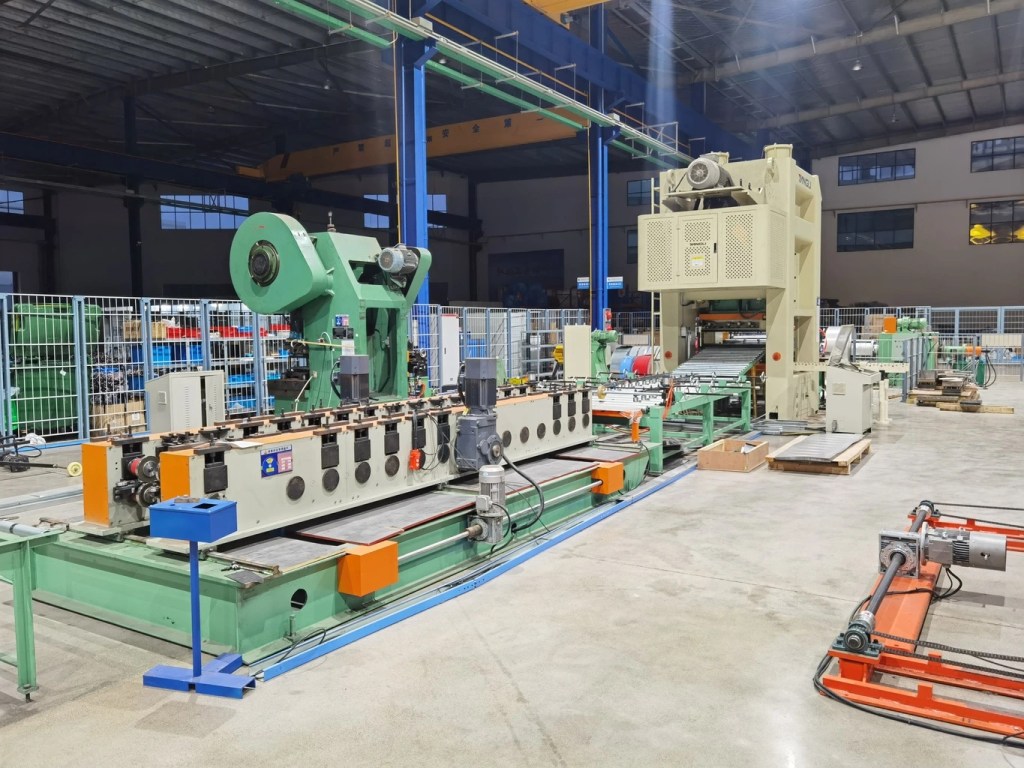
how a roll forming machine works

How Does a Roll Forming Machine Work: The 4 Stage Process

Need a Roll Forming Machine for Your Project?
Get a free quote from Believe Industry — 15+ years of custom roll forming manufacturing.
Request a Quote Download Catalogue

How Does a Roll Forming Machine Work: A Step-by-Step Guide

A roll forming machine turns a flat steel coil into a straight, uniform profile by bending it a little at a time across many roll stations. That simple idea is why it can run thousands of metres of shelf upright, purlin, or strut channel with the same shape on every metre. This guide walks through what happens from the uncoiler to the cutoff, and the specs that decide whether your output is clean or scrap.
Short answer: A roll forming machine feeds steel coil through a series of paired rolls that bend it a little at each station until the final profile forms. The line runs uncoiling, pre-punch, progressive bending, and cutoff in one continuous pass. Output stays constant in shape and dimension because every station moves the metal the same small amount.

What a roll forming machine actually does

A roll forming machine is a continuous bending line, not a single press. The coil feeds in flat, and each roll station adds a small bend. No station makes the full shape. The total bend is shared across the whole line, so the steel never takes a sudden hit that would twist or crack it.
This is the core difference from a press brake. A press brake bends one piece at one spot. A roll forming machine line bends the same section forever, metre after metre, at line speed. For long runs of one profile, that continuity is what keeps cost and scrap down.
Roll forming also scales better across profiles. One line with changeable tooling can make purlin in the morning and strut by afternoon, which a press brake line struggles to match without new dies for each bend.

The 4 stages every line runs

Every roll forming machine follows the same four stages. The table shows what each stage does and why it matters to the final part.
StageWhat happensWhy it matters
Uncoiling and levellingThe coil unwinds and a flattener removes coil memoryA straight, tensioned strip feeds the rolls cleanly
Pre-punch or pre-cutHoles, slots, or notches are stamped before bendingHoles stay true because the flat strip is easy to punch
Progressive bendingPaired rolls bend the strip a little at each stationThe section forms without springback or wrinkle
CutoffThe formed profile is sheared to lengthFlying shear keeps the line moving during the cut
The punch step usually comes before bending. Once the section is formed, a punched hole would sit off angle. Doing it flat keeps hole position tight, which matters for upright rack columns where connectors must line up.

Roll stations and progressive bending

The heart of a roll forming machine is the row of stations. Each station holds a top and bottom roll set shaped to the profile at that step. Station one might bend the edges up 10 degrees. Station five has them at 45. The last station locks the final angle.
A Z purlin roll forming machine might use 12 to 18 stations for a deep section. A simple strut channel roll forming machine can finish in 8 to 10. More stations means a gentler bend per step, which protects thin or high strength steel from fracture.
The stations share one line shaft on a gear driven line, or run independently on a servo line. Servo stations let you tweak the bend per profile from the controller, which shortens changeover when you swap products in the same shift.
Progressive bending is the reason roll formed parts hold tight tolerance. Because each station moves the metal a small, fixed amount, the profile is the same on metre one and metre ten thousand. That repeatability is the point of the whole process.

Material and thickness limits

A roll forming machine handles most cold formable steels. Plain carbon steel, galvanised steel, and zinc magnesium coil all run well. The limit is bend radius versus thickness. Thin coil bends sharply; thick coil needs a wider radius or it cracks at the lip.
Coated coil needs care at the bend. Galvanised and zinc magnesium layers can flake if the bend is too tight, so open the radius a little on coated stock. Pre-lubricated steel feeds smoother and protects the rolls on long runs.
Specify the coil before you spec the machine. The guide to selecting steel coil shows how grade and coating change the roll design. Cold formed steel structures follow design rules such as AS/NZS 4600, and steel grades trace back to specifications from ASTM International. European practice aligns with guidance from FEM, the European steel construction body.

Roll forming versus a press brake

Buyers often ask when to choose a roll forming machine over a press brake. The answer is about volume and consistency. The table sets the two side by side.
FactorRoll forming machinePress brake
Best run lengthLong, repeat profilesShort, varied batches
Shape consistencySame every metreDepends on operator
Tooling changeSwap roll setsReposition dies
ThroughputContinuous, highOne stroke at a time
Setup costHigherLower
A flying shear cutoff lets the roll forming machine keep moving while it cuts, which a press brake cannot match for speed. For warehouses and solar farms that need kilometres of one section, roll forming wins on cost per metre.

Speed, tolerance, and good output

Line speed on a roll forming machine usually runs 10 to 60 metres per minute depending on thickness and profile depth. Thin purlin runs fast; thick rack uprights run slower because the rolls load harder. Speed is set by your hardest, thickest section, not the easy one.
Good output looks the same at both ends of the coil. Check for twist, bow, and edge wave. These come from uneven roll pressure or worn stations. The speed and output guide for upright lines applies the same planning rule to racking production.
Tolerance is a function of station count and roll quality. More stations and ground rolls hold tighter profiles. Springback is the small return of the steel after the last roll releases. Good roll design predicts it and overbends by that amount.
Skilled builders tune the final station so the cooled section holds its angle without a separate straightening pass. For a cold roll forming machine, lap fit at a purlin joint is the test: if the purlin mates cleanly, the line is set right.

How to choose and where to go next

Pick a roll forming machine by the profile, the coil thickness, and the daily metre target. Confirm the station count suits your deepest section, and confirm the punch layout matches your hole pattern. Visit the roll forming machine line overview for the full layout and the questions to ask a builder.
Believe Industry has built custom roll forming lines since 2005, with 80 plus engineers and 500 plus projects shipped to 50 plus countries under ISO 9001 and CE. A cold roll forming machine is the broader category this process belongs to, and that page explains the materials and terms in plainer language.

Frequently Asked Questions

Q: What is the basic working principle of a roll forming machine?

A roll forming machine bends a flat steel strip progressively through a series of roll stations. Each station adds a small bend until the final profile forms. The metal moves continuously, so the shape stays identical along the whole length.

Q: How many roll stations does a roll forming machine need?

Most lines use 8 to 18 stations. Simple channels need 8 to 10, while deep Z or C sections need 12 to 18. More stations mean a gentler bend per step, which protects thin or high strength steel from cracking.

Q: Why is pre-punch done before bending?

Punching flat coil is faster and more accurate than punching a formed section. Holes stay square and on position because the strip has no curvature yet. This matters for rack uprights where connectors must align.

Q: What line speed should I expect?

Expect 10 to 60 metres per minute. Thin purlins run at the fast end, thick rack uprights at the slow end. Size the line for your thickest section, not the catalogue best case, so daily output stays honest.

Q: Roll forming machine or press brake, which is better?

Choose a roll forming machine for long, repeat runs of one profile where shape consistency and cost per metre matter. Choose a press brake for short, varied batches. The two solve different problems.

Q: What defects show a roll forming machine is mis-set?

Watch for twist, bow, and edge wave. These trace to uneven roll pressure or worn stations. Tight lap fit at a purlin joint is the quick field check that the line is forming to tolerance.
Originally published: March 12, 2026
Last updated: October 12, 2026
Article Changelog
  • October 12, 2026: Refreshed for GEO compliance. Added direct-answer block, 6 FAQ with bold Q, two specification tables, and spelled-month changelog. Expanded from 1,583 to 1,662 words, removed the “2026” year stamp and clickbait title, added three authority links (ASTM, FEM, AS/NZS 4600) and eight internal links including the pillar page.
Next Review Triggers
  • New roll forming speed or servo punching standard
  • Revised cold formed steel specification from ASTM or AS/NZS
  • Rising reader question volume on “how it works” queries

Table of Contents

New Updates

Discover more from Believe Industry Company| Roll Forming Machine Manufacturer, Supplier & Exporter

Subscribe now to keep reading and get access to the full archive.

Continue reading