Racking System Box Beam Roll Forming Machine

Racking System Box Beam Roll Forming Machine

A box beam roll forming machine produces closed rectangular beams for pallet racking systems. The box beam has four flat sides with no inset step, which gives it higher load capacity than open-profile beams. Believe Industry Company builds box beam machines that run 0.8–2.0mm steel coil at 10–15 m/min, with PLC-controlled automatic size adjustment and integrated seaming.

This page covers how the machine works, technical specs, beam comparisons, and what to look for when buying.

What Is a Box Beam?

A box beam is a closed rectangular tube used as a horizontal load-bearing member in pallet racking systems. Unlike step beams (also called P beams), box beams have no inset step on the top flange. All four sides are flat.

The typical box beam is made from two identical C-channels nested together and seam-locked into a closed box section. This closed profile resists twisting and distributes weight evenly across the beam span.

Box beams mount to upright frames using integral rivets, hooks, or bolt-on clips. They are widely used in warehouses across Australia, the US, the Middle East, and Europe because they handle heavier loads per shelf level than open-section alternatives.

According to the RMI (Rack Manufacturers Institute) specification ANSI/MH16.1, closed-section beams like box beams provide superior torsional rigidity compared to open sections of the same weight.

What’s Box Beam?

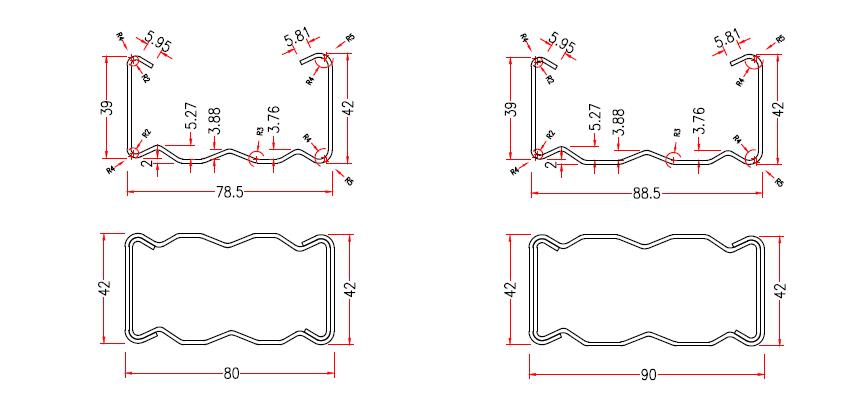
Small box beam
large box beams

Box Beam vs Step Beam (P Beam)

When setting up a pallet racking production line, buyers often choose between box beams and step beams. Both serve as horizontal members in storage rack systems, but the profiles differ.

FeatureBox BeamStep Beam (P Beam)
Profile shapeClosed rectangular boxClosed section with inset step on top flange
How it’s madeTwo C-channels nested and seam-lockedRoll forming and welding in line( or self-lock)
Torsional rigidityHigh (closed section)Medium
Load capacityHigher per unit weightLower per unit weight
Shelf deck supportNeeds separate cross-bars or wire meshStep accepts particle board or steel decks directly
Typical span2400–3600 mm1800–3000 mm
Common marketsAustralia, Middle East, Southeast AsiaNorth America, Europe
Material thickness0.8–2.0 mm1.2–2.5 mm
Production complexityRequires seaming stepMore forming stands
Machine costHigher (two lines or seamer required)Super higher

step beam roll forming machine forms the profile in a single pass. The step beam’s inset top flange lets shelving decks sit flush without clips. But box beams carry more weight, which is why Australian and Middle Eastern warehouses tend to favor them.

For operations that need both profiles, Believe Industry Company offers a complete pallet racking production line covering upright racks, box beams, P beams, and C bracing sections.

How the Production Line Works

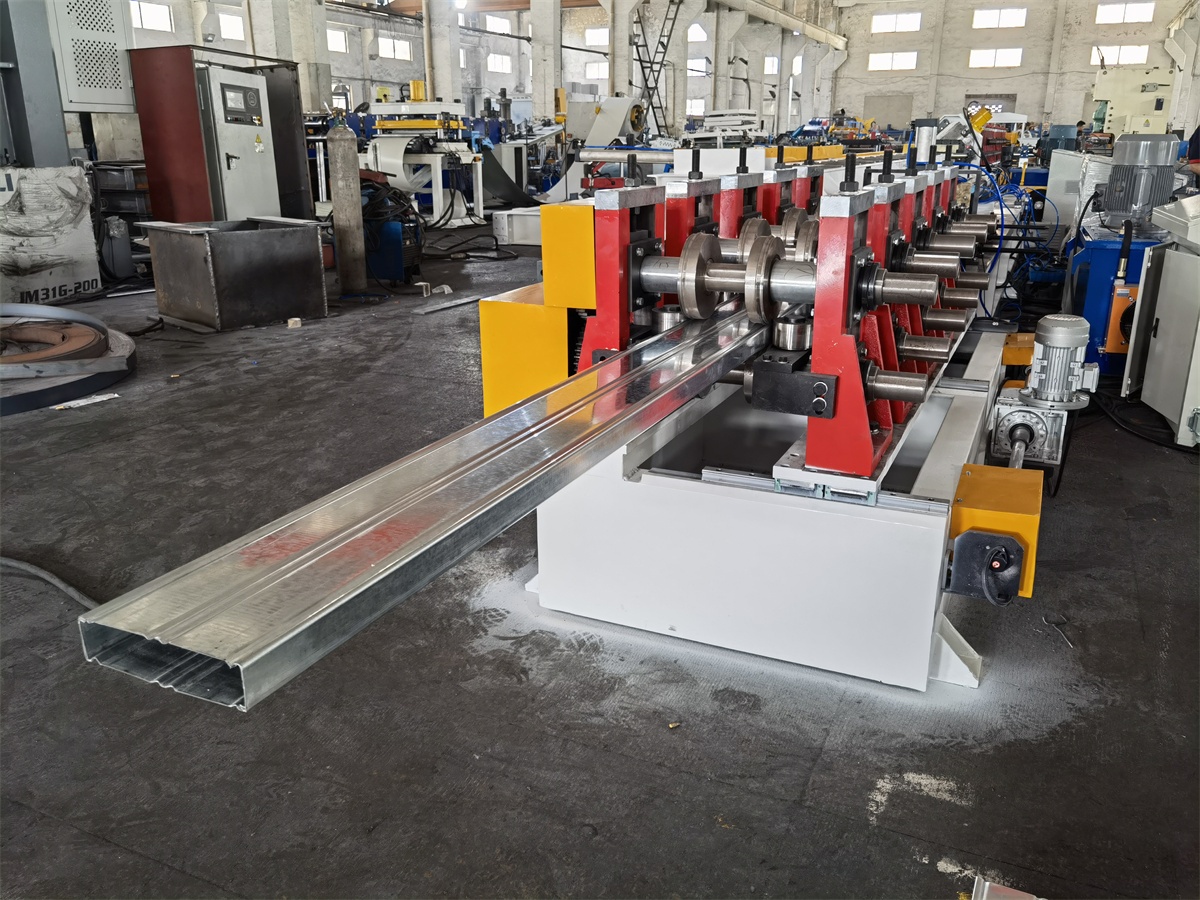
The box beam roll forming machine takes flat steel coil and turns it into finished box beams in a continuous process. Here is the step-by-step flow:

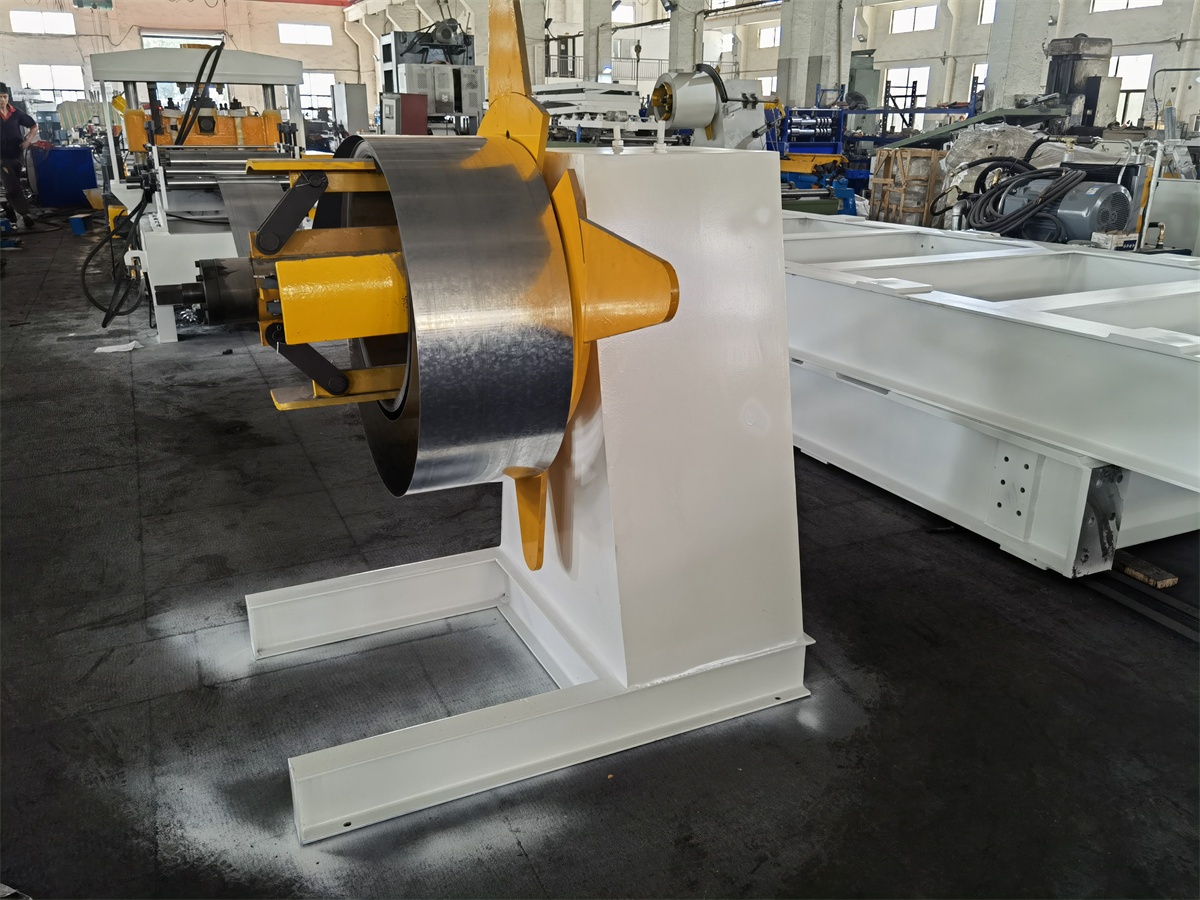
1. Decoiling. A 5-ton hydraulic uncoiler holds and feeds the steel coil into the line. Maximum coil weight is 3000 kg with an outer diameter up to 1200 mm.

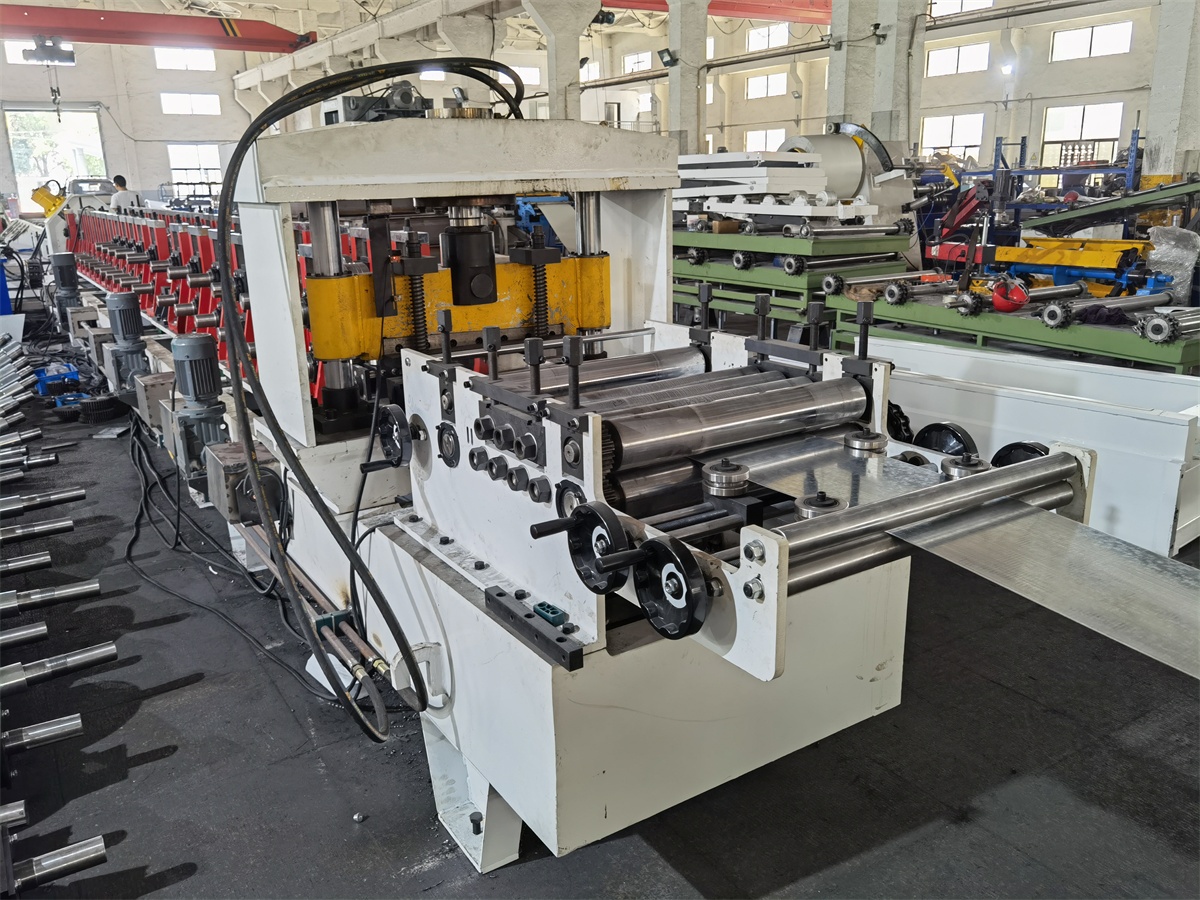
2. Leveling and pre-cutting. A 7-roller leveling unit flattens the strip before it enters the forming mill. A pre-cutter trims the leading edge for clean entry and allows fast changeovers between different beam sizes.

3. Roll forming. The strip passes through 16 forming stations. Each station bends the steel progressively toward the C-channel profile. Side rolls between stations form the edge radii. All rollers are made from GCR 15 steel, hardened to HRC 58–62 with chrome plating.

4. Cutting. A hydraulic flying cutter with servo tracking (Yaskawa motor) cuts the C-channel to length at line speed. CR 12 MOV cutting blades with HRC 58–62 hardness handle the cuts cleanly.

5. Transfer and overturn. A 4-meter pneumatic transfer rack moves the cut C-channel from the roll former to the seaming machine, rotating it 180 degrees and aligning it for the next step.

6. Seaming. The automatic seamer nests two C-channels together and locks the seam closed. Five PLC-controlled stands (Siemens) complete the box beam profile.

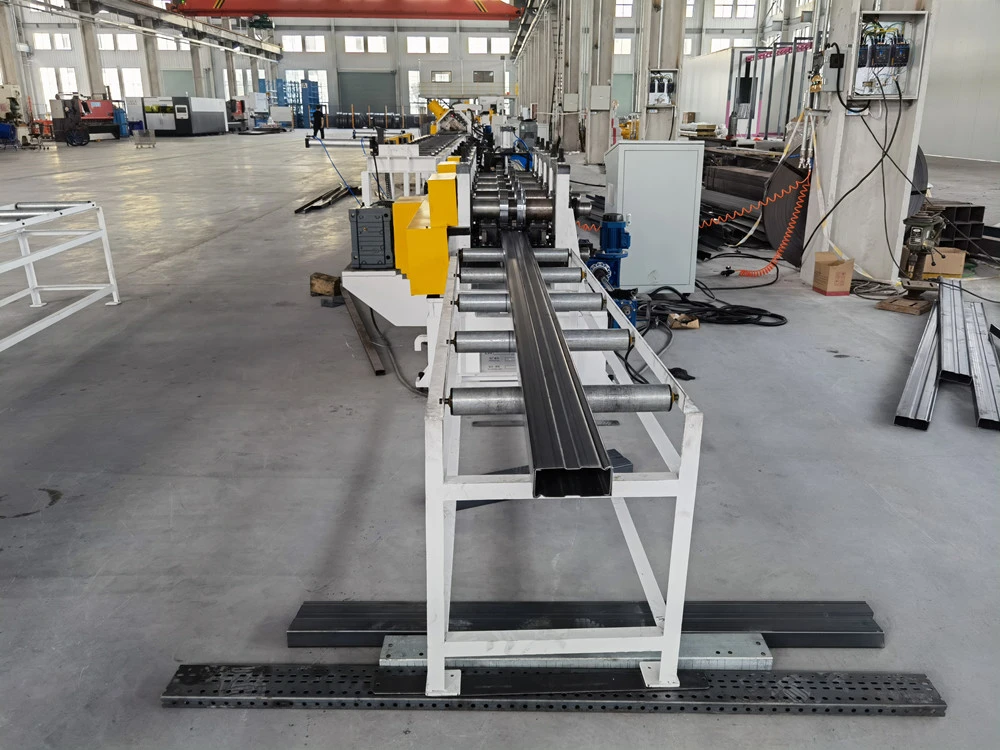
7. Transfer to welding station. A convey rack moves the finished box beams from the seaming machine to the robot automatic welder. The conveyor is fitted with roller chains or belt, depending on beam length, and includes accumulation zones so the robot always has beams ready to pick.

8. Robot pick-up and down automatic welding. A 6-axis robot (typically ABB or FANUC) picks up the box beam, positions it against the end connectors (clips), and performs automatic welding — both ends in one cycle. The robot then places the finished beam onto the outgoing conveyor. Welding fixtures are custom-built for each beam size and clip type.

The entire box beam roll former machine runs at 10–15 m/min, depending on material thickness and beam dimensions. Size changes are automatic and PLC-controlled, with no manual roller swapping required.

For an integrated alternative that forms the box beam in one pass (no separate seamer needed), see the new design box beam machine which saves material and reduces labor, though capacity drops about 10%.

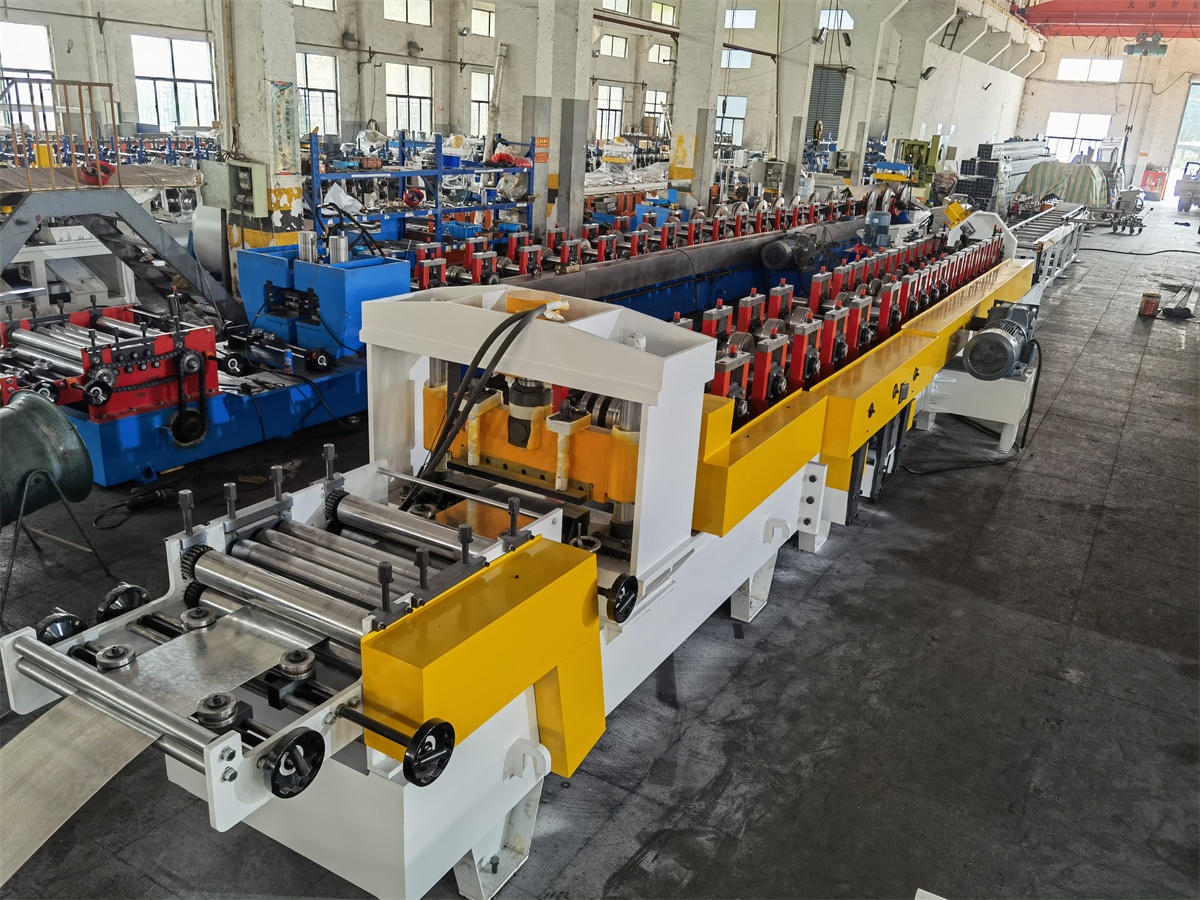
box beam roll forming machine layout

Box Beam Roll Forming Machine Specifications

Uncoiler

ParameterSpecification
Capacity5 Ton (manual hydraulic)
Max coil width600 mm
Coil thickness1.0–2.5 mm
Max coil weight5000 kg
Inner diameter450–530 mm
Outer diameterMax 1200 mm

Roll Forming Mill

ParameterSpecification
Forming stations16 steps
Leveling rollers7 (upper 3, bottom 4)
Leveling roller material40 CR, diameter 90 mm
Shaft material42 CR, diameter 80 mm
Roller materialGCR 15, HRC 58–62, chrome plated
Forming thicknessUp to 2.0 mm (16 gauge)
Line speed10–15 m/min
Main motor power15 kW
Size adjust motors1.5 kW × 4
Drive methodChain and sprocket (some stands with gears)
BearingsNSK ball bearings
Side rollsAssembled between forming stands
Mill baseH-beam welded frame
PLC controlYes, automatic size adjustment

Cutting Unit

ParameterSpecification
Cutting methodHydraulic flying cut
Cutting motor5.5 kW
Tracking motor3 kW (Yaskawa servo)
Blade materialCR 12 MOV, HRC 58–62
Blade sets4 pairs
Straightening deviceYes, post-cut

Transfer Rack

ParameterSpecification
Length4 meters
Transfer motor1.5 kW
Conveyor rollers55 mm diameter, chromed
Overturn methodPneumatic

Seaming Machine

ParameterSpecification
Stands5
Motor power7.5 kW
Roller materialGCR 15, HRC 58–62
ControlSiemens PLC, automatic adjustment
FrameIron case stands
DriveChain and sprocket

Convey Rack (to Welding Station)

ParameterSpecification
FunctionTransfers finished box beams from seamer to robot welder
Drive typeRoller chain / belt (beam length dependent)
Accumulation zones2–3 zones, pneumatic stoppers
Beam length range1800–4000 mm
Conveyor speed0.2–0.8 m/s, VFD controlled
Load capacityUp to 100 kg/m
FrameWelded steel, H-beam base

Robot Automatic Welder (Pick-up and Down)

ParameterSpecification
Robot brandABB / FANUC / KUKA (6-axis)/China Brand
Welding methodMIG/MAG or spot welding
Welding power source350–500 A, inverter type
Pick-upVacuum gripper or magnetic fixture, auto-centering
Down/placementPneumatic clamp, positions beam against end connectors
Cycle time15-25 seconds per beam (both ends)
End connector typesRivet clips, bolt-on clips, custom
Fixture changeManual or automatic, beam-size dependent
SafetyFence enclosure, light curtain, E-stop
ControlIntegrated PLC (Siemens), HMI touch screen

Interactive Tool: Box Beam Loading Capacity Calculator

Note: This tool uses standard structural mechanics for a simply supported beam.

Box Beam Load Estimator

Calculate theoretical yield capacity based on 2026 Beli Rollforming standards.

Photo Gallery

Regional Standards and Market Requirements

Believe Industry Company supplies box beam roll forming machines to Australia, the United States, the Middle East, and Europe. Each region has distinct standards and operating conditions that affect beam design and machine configuration.

Australia (AS 4084)

The Australian standard AS 4084:2023 governs steel storage racking design and testing. Key requirements:

  • Load capacity labels must be permanently fixed to each beam level.
  • Seismic compliance: Cyclone-prone regions (Category C and above) require racking to handle larger lateral forces. Box beams’ closed profile resists twisting better than open sections.
  • Span ranges: Australian distribution centers commonly use 2700–3600 mm spans for forklift access.
  • Dust environment: Mining supply chain warehouses prefer closed profiles because they collect less dust than open step beams.

Buyers in Australia should confirm that beam deflection does not exceed L/180 under rated load, per AS 4084.

United States (RMI / ANSI MH16.1)

The US market follows RMI specifications (ANSI/MH16.1). Key points:

  • Capacity plates are mandatory and must show rated load per level and the total rack load.
  • Seismic zones: US Geological Survey seismic maps determine lateral force requirements. Box beams perform better in high-seismic zones due to higher torsional rigidity.
  • ROS (Rack Official Stamp): Some US states require third-party review of racking systems.
  • Step beams are more common in the US than box beams, but box beams are gaining share in heavy-duty applications (automotive, aerospace, cold storage).

Middle East (High Temperature and Corrosion)

Warehouses in the UAE, Saudi Arabia, and Qatar operate in environments that affect racking design:

  • High ambient temperature (up to 50°C) reduces steel yield strength. Machines producing coils for this market should accommodate thicker material (up to 2.5 mm) or higher-grade steel (Q345 or S355).
  • Desiccation and salt exposure (coastal facilities) require hot-dip galvanizing on finished beams. The box beam profile’s closed section holds up better than open sections in corrosive environments.
  • Large-span racking is common in logistics hubs (Jebel Ali, King Abdullah Economic City). Box beams at 3600 mm spans are standard.

Europe (FEM / EN 15512)

The European market follows FEM 9.831 and EN 15512 standards:

  • CE marking is mandatory for racking components sold in the EU.
  • Load capacity labels must be in the local language of the installation country.
  • Step beams are dominant in Europe, but box beams are used in heavy-duty and high-bay applications.
  • Smaller typical spans: European warehouses often use 1800–2400 mm spans due to different pallet sizes (EUR-pallet: 1200×800 mm vs. US pallet: 1200×1000 mm).

The European racking standard EN 15512 requires documented load testing for each beam profile. Believe Industry Company provides test certificates and deflection curves for all beam sizes produced by its machines.

Box Beam Machine Supplier Comparison

When sourcing a box beam machine, buyers compare Chinese manufacturers against European and American suppliers. The table below covers the main differences based on typical market offerings in 2026.

FactorBelieve Industry Company (China)Typical China SupplierEU/US Supplier
Machine price$40,000–80,000$25,000–60,000$120,000–300,000
Lead time45–60 days30–90 days120–180 days
PLC brandSiemensVaries (Delta, Fatek)Siemens, Allen-Bradley
BearingsNSK (Japan)Local Chinese brandsSKF, NSK, FAG
Roller hardnessHRC 58–62, chrome platedHRC 55–60HRC 60–64, chrome plated
After-sales supportRemote + onsite installationRemote onlyAgent network
Custom profilesYes, full customizationLimitedYes, at extra cost
Warranty 24 months6–12 months12–24 months
ShippingWorldwide (factory direct)FOB onlyDealer network
Seaming integrationIncluded (automatic)Often separateOften separate
TrainingFree onsite trainingVideo onlyPaid training
Spare partsEx-stock, fast shippingVariable lead timeLong lead time

Believe Industry Company ships box beam machines worldwide. The roll forming machine line overview covers the engineering standards behind every unit built at the Wuxi factory.

Video of Whole Automatic Box Beam Roll Forming Machine and Inline Clips Welded in Action

Production Line Integration

A complete pallet racking system needs more than box beams. Believe Industry Company supplies the full production line:

Integrating these machines into one line reduces material handling, cuts floor space by 30–40%, and improves throughput. The upright rack beam automatic welding machine handles P beams and box beams from 50–220 mm width and 40–70 mm height.

Frequently Asked Questions

What is a box beam roll forming machine?

A box beam roll forming machine is an industrial production line that takes flat steel coil (0.8–2.0 mm thick) and forms it into closed rectangular beams used in pallet racking systems. The line typically includes an uncoiler, leveling unit, 16-station roll former, flying cutter, transfer rack, and automatic seamer, conveyer rack and auto welded for clips Output speed is 10–15 m/min with PLC-controlled automatic size changes.

What's the difference between a box beam machine and a step beam machine?

A box beam machine forms two C-channels and seams them into a closed rectangular profile. A step beam machine forms a Closed-Section with an inset step on the top flange. Box beams carry heavier loads but require the extra seaming step. Step beams are simpler to produce and accept shelf decks directly without clips.

How long does installation take?

Installation takes 7–10 days at the buyer’s factory for a full line. Believe Industry Company sends engineers for onsite installation, commissioning, and operator training. Size changeover between different beam dimensions is automatic and takes under 5 minutes via PLC adjustment.

What steel grades can the machine process?

The standard box beam machine handles Q235 and Q345 carbon steel (yield strength 235–345 MPa). For higher-grade material or Middle East high-temperature applications, roller hardness and motor power can be upgraded at the time of order. Galvanized coil is also supported.

Can one machine produce different box beam sizes?

Yes. The PLC-controlled automatic adjustment system changes beam height, width, and forming parameters without manual roller changes. Typical size ranges are 80–140 mm( or to 250 mm) height and 50–80 mm width. Custom ranges are available on request.

How does the box beam capacity compare to step beam?

For the same weight of steel, a box beam carries roughly 15–25% more load than a step beam at the same span. This is because the closed rectangular section has higher torsional rigidity and section modulus than an open C-profile.

What after-sales support is included?

Believe Industry Company provides 12 months warranty, remote technical support via WhatsApp and video call, and onsite installation with operator training. Spare parts ship within 3 business days. Contact us for details.

Last updated: May 2026

Request a free quote: Contact Believe Industry Company for pricing, technical drawings, and video of the production line in operation.

Request For Quotation

Table of Contents

BELIEVE INDUSTRY | CUSTOM SOLUTIONS

REQUEST YOUR
ENGINEERING PROPOSAL