Address
No 1, Yd Road, Huishan District, Wuxi City, Jiangsu. 214183
Work Hours
Monday to Friday: 9AM - 5PM
Saturday: 9AM - 4PM
Address
No 1, Yd Road, Huishan District, Wuxi City, Jiangsu. 214183
Work Hours
Monday to Friday: 9AM - 5PM
Saturday: 9AM - 4PM
A roll forming machine turns steel or aluminium coil into a finished profile in one continuous pass. Beli RollForming designs and builds these lines from your drawing, your material and your output target, not from a fixed catalogue.
Building lines since 2005. 500+ projects in 50+ countries. ISO 9001 certified, CE compliant.
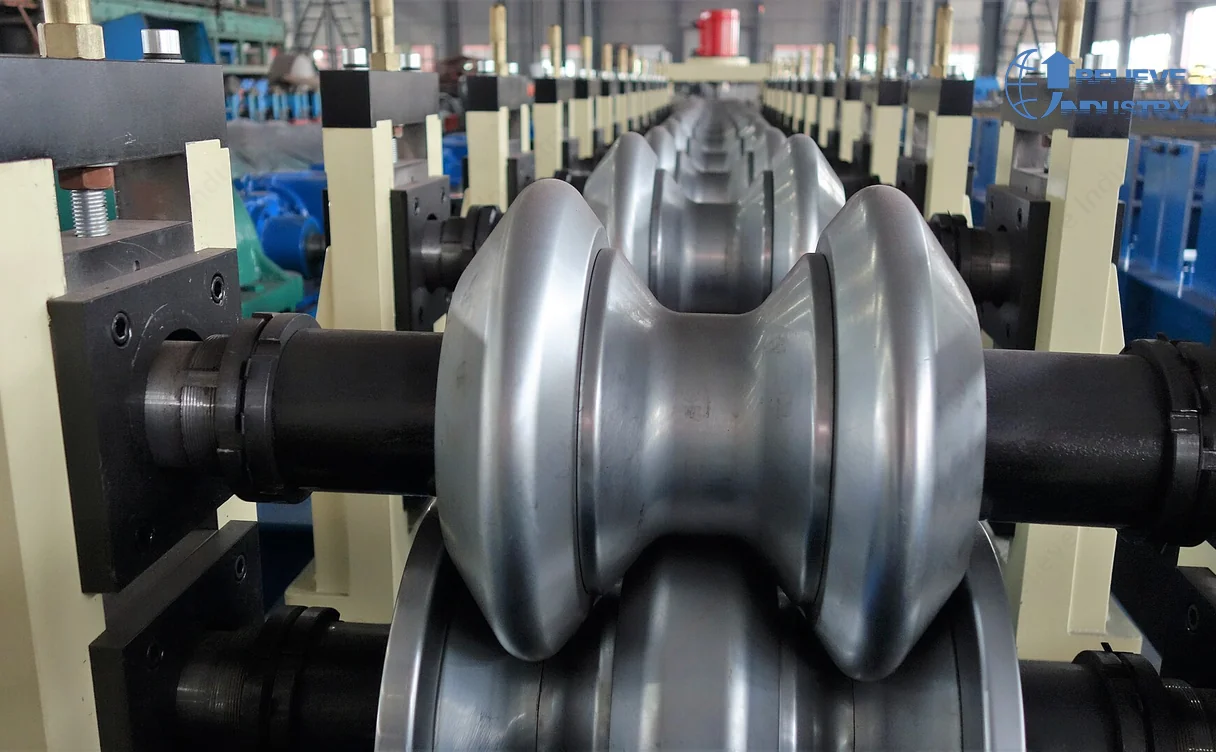
Every line follows the same five steps. What changes between projects is how each step is configured, sized and automated.
Coil is loaded on a manual or hydraulic mandrel. A coil car handles 5 to 20 t coils without crane time.
The leveler removes coil set. A servo feeder sets feed length and pitch before the press.
A hydraulic or mechanical press punches holes, slots and notches inline, with scrap dropping clear of the strip.
12 to 28 driven stations form the section in steps. Station count and shaft size follow section depth and thickness.
A flying saw or shear cuts to length on the move. Parts leave on a runout table or an automatic stacker.
Each family is a starting point, not a fixed model. Tooling and line layout are confirmed from the profile drawing.
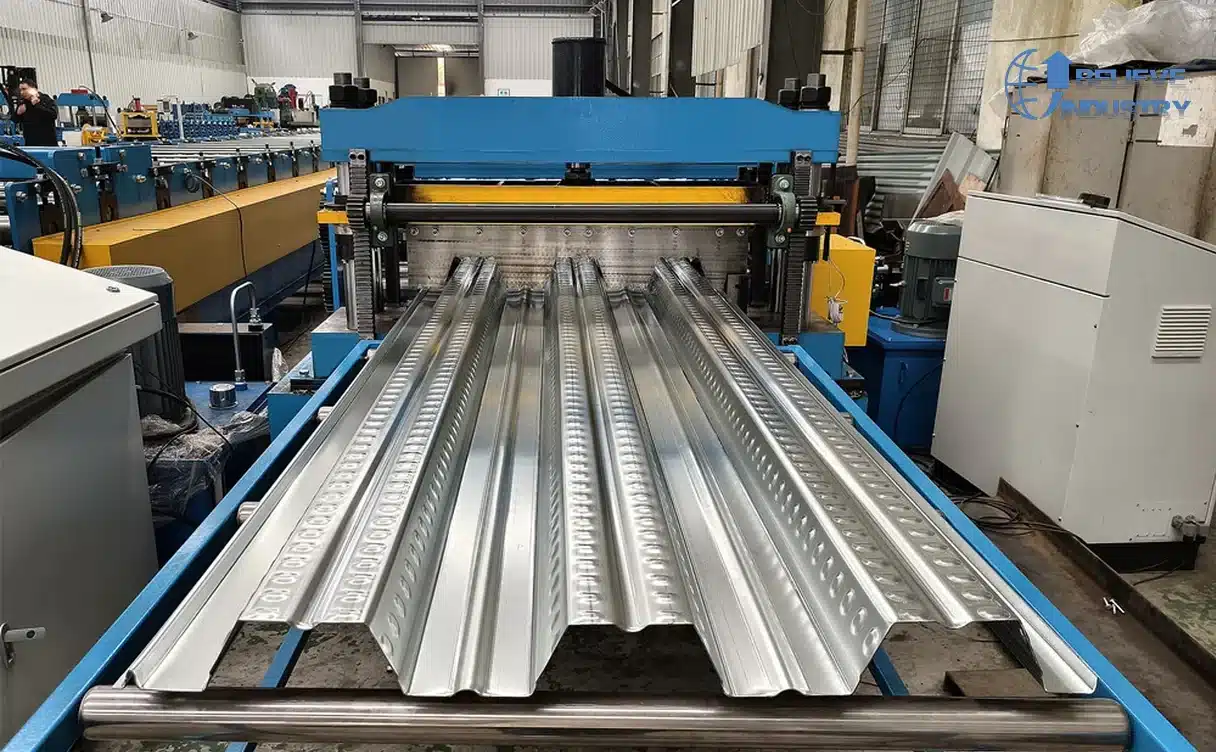
Corrugated, IBR, tile, standing seam and floor deck profiles, with optional curving, embossing and automatic stacking.
View machine family →
C and Z purlins with interchangeable, duplex or switchable tooling, punched and cut to length in one pass.
View machine family →
Upright columns, box beams, step beams and bracing sections for warehouse rack production.
View machine family →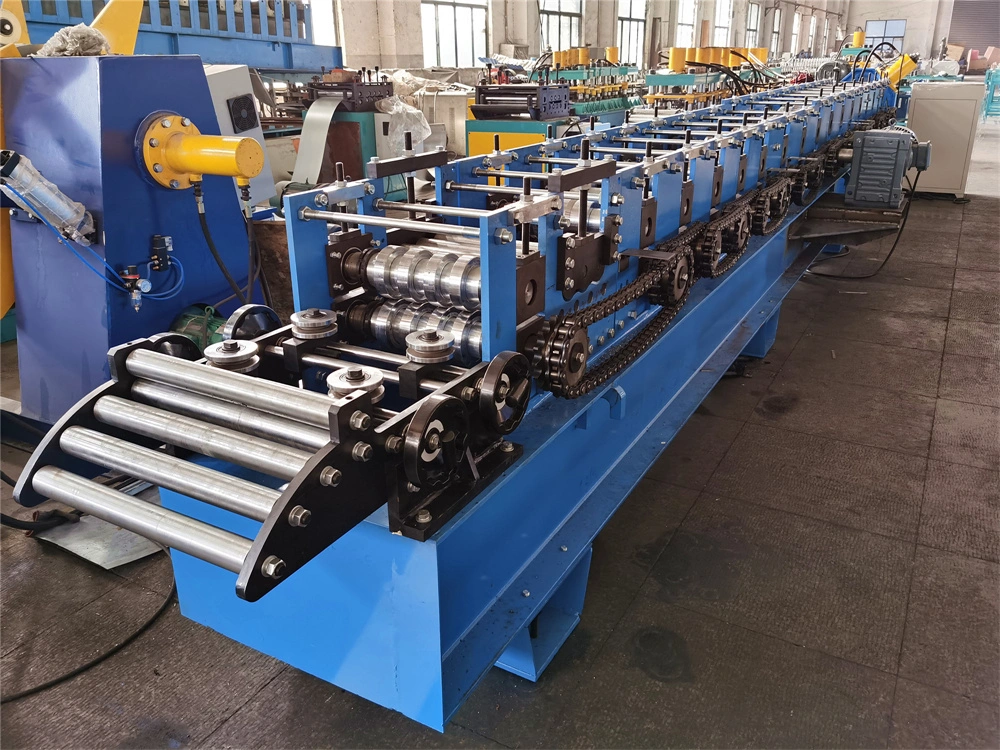
Door frames, garage door panels, roller shutter slats and guides, produced with inline punching and notching.
View machine family →
Round and rectangular downspout, half round and square gutter, fascia board and portable on site machines.
View machine family →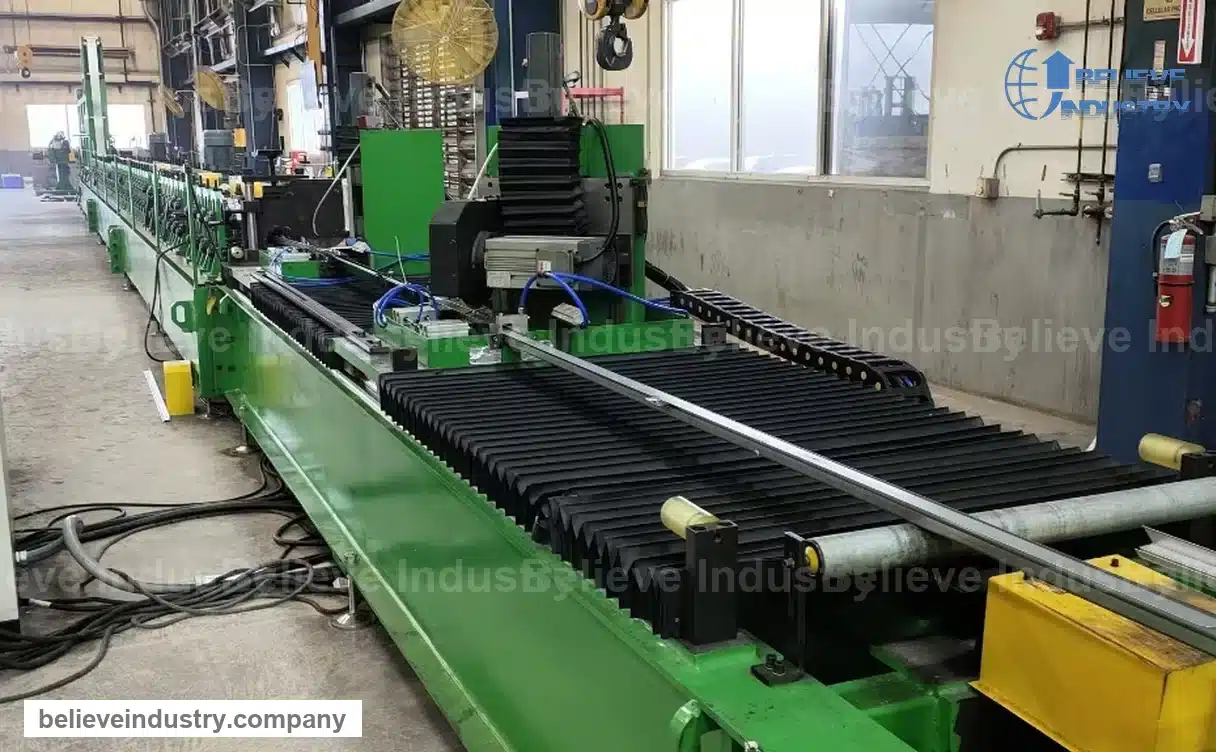
Solar mounting frames, cable tray, strut channel and busway profiles, including perforated and slotted sections.
View application page →
Silo panels, greenhouse profiles, scaffold planks, stiffeners and stud and track, built to a drawing with no standard section.
View machine family →Our application pages group finished projects by the product being made, not by the machine type. Each one lists the profiles, the line that runs them and the sections already in production.
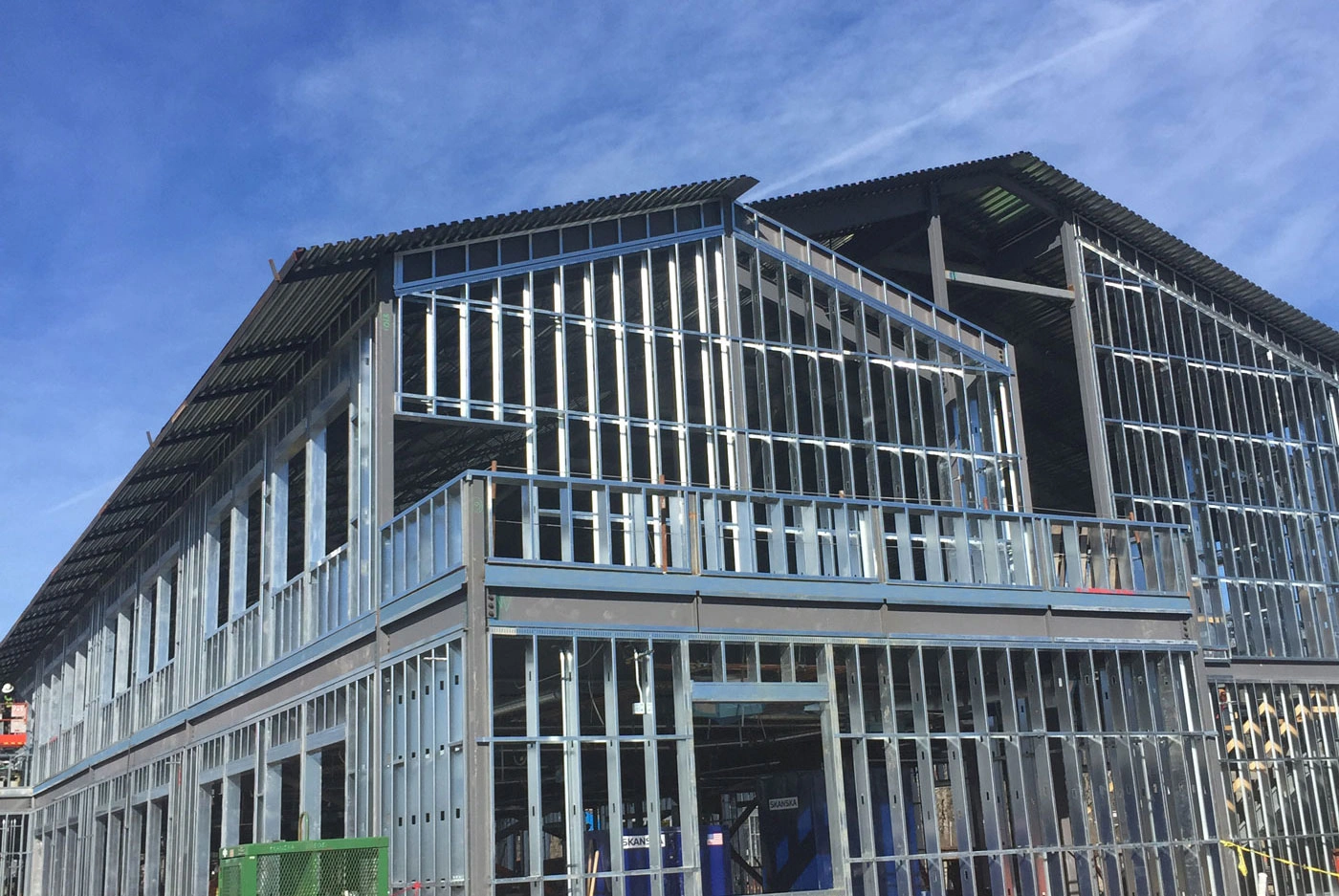
Floor deck, purlins, stud and track and light gauge framing. Sheet from 0.8 to 3.0 mm runs through 14 to 22 stations, with screw holes and service openings punched inline.
Roll forming machines for steel structure →
Uprights, box beams, step beams and bracing for pallet racking. Teardrop slots, stiffeners and end clips are punched and cut inline, so frames assemble without a second drilling pass.
Roll forming lines for storage racking →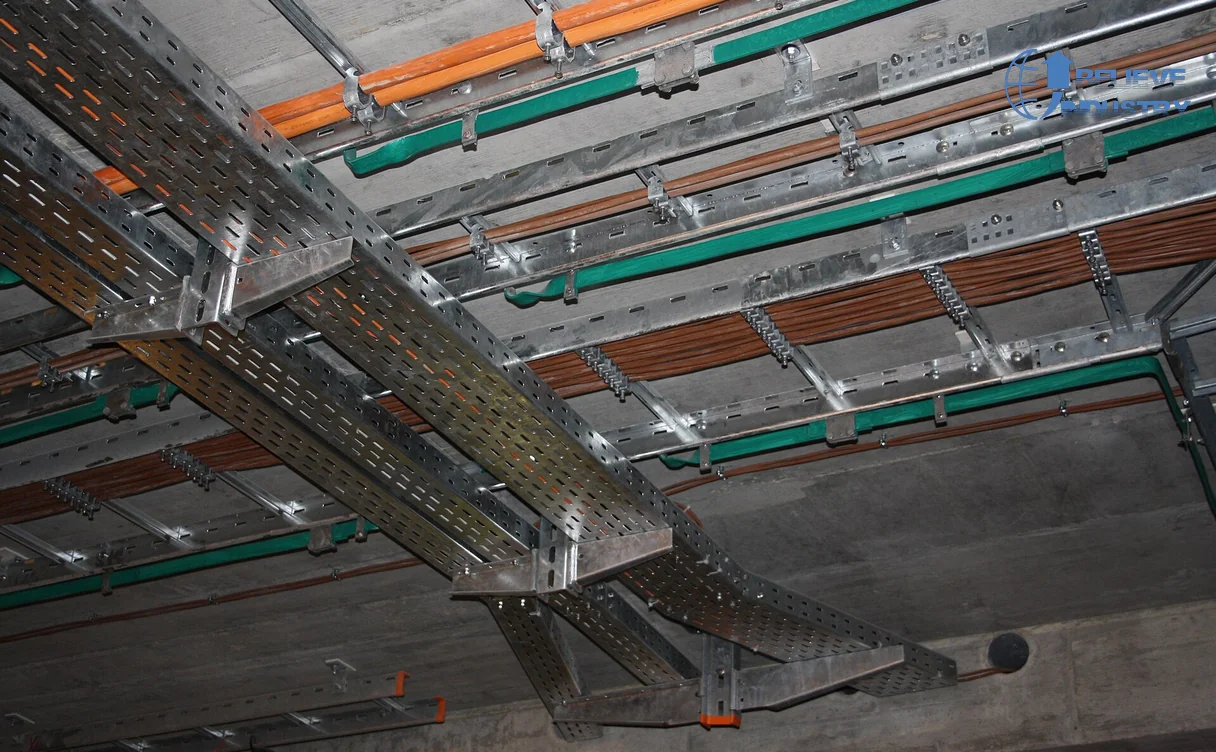
Cable tray, strut channel, solar mounting frames and busway. Perforated and slotted sections need inline punching plus a flying saw that keeps the hole pattern square to the cut.
Roll forming lines for cable tray and solar →
K style, box and half round gutter, round and rectangular downspout, fascia board. Portable lines form gutter on site, so a contractor ships coil instead of finished lengths.
Roll forming machines for gutter and downspout →
Steel door frames, garage door panels, roller shutter slats and guides, cold room doors. Notching and post cutting run inline, so frames reach the assembly line ready to weld or fold.
Roll forming machines for door and window →
Silo panels, greenhouse profiles, scaffold planks, stiffeners and stud and track. Where no standard section exists, a drawing becomes tooling first, then a running line.
Roll forming machines for custom profiles →These are planning ranges. Final values are confirmed after the drawing, material and output target are reviewed.
| Coil width | 300 to 1,500 mm standard, wider on request |
|---|---|
| Material thickness | 0.4 to 4.0 mm typical, heavier on structural sections |
| Line speed | 3 to 4 m/min on hydraulic press lines, 10 to 15 m/min with press and punch, 20 to 35 m/min on rotary and fly saw lines |
| Forming stations | 12 to 28, set by section depth and tolerance |
| Drive | Chain, gearbox or independent servo drive per station |
| Cutoff | Flying saw, flying shear or stop to cut |
| Control | PLC and HMI with recipe storage and fault display |
| Collection | Runout table, manual stacking or automatic stacker |
Four stages from first drawing to a line running in your plant.
Send a DXF, PDF or a sample part. Engineering returns a feasibility note and station plan, usually within two working days.
You receive layout, station list, speed, tooling scope, utilities and price. Options are quoted separately so comparison stays clear.
Fabrication runs 45 to 90 days. The line is assembled, run with your material and filmed or witnessed before packing.
Machines ship with manuals, spare parts list and electrical drawings. Commissioning and operator training run on site or by video.
Most of our work comes from repeat orders and referrals, which puts pressure on all three.
Tooling is designed from your drawing and the flower pattern is confirmed before rolls are cut. Section tolerance is agreed in writing.
CE files follow the EU CE marking rules, and UK buyers get UKCA ready paperwork. Electrical drawings, packing lists and crating are prepared for 50+ destination countries.
Remote diagnosis, spare rolls and wear parts, and on site commissioning keep the line producing long after handover.
Short answers to the questions that come up before a quote.
A roll forming machine is a continuous production line that bends metal coil through a series of driven roll stations. Each station adds a small bend until the strip matches the finished section, then a cutoff cuts it to length.
Most lines include a decoiler, leveler, servo feeder, punch press, forming mill, cutoff and a runout table or stacker. Punching and automatic stacking are optional on simple profiles.
A single profile line with basic automation starts around USD 35,000 to 50,000. Lines with inline punching, servo feeding, flying cutoff and automatic stacking usually land between USD 90,000 and 180,000. Station count, tooling, cutoff type and automation level move the price most.
Speed depends on the process. Hydraulic press lines run 3 to 4 m/min, press and punch lines 10 to 15 m/min, and rotary or fly saw lines 20 to 35 m/min. Punching density and cut length usually set the real limit.
Yes. Interchangeable tooling, cassette systems and switchable C and Z mills let one line cover a family of sections. Changeover ranges from a few minutes on cassette designs to several hours on fixed stands.
Build time is typically 45 to 90 days after the drawing and deposit are confirmed. Sea freight adds 20 to 45 days depending on destination.
Share the profile drawing, material thickness, hole pattern and target output. Engineering will review the project and reply with a station plan and a machine configuration that fits.
Page updated October 2026.
 English English
 Español
 Português
 Русский
 العربية
 Bahasa Melayu
 Türkçe
 ไทย
 Bahasa Indonesia