Address
No 1, Yd Road, Huishan District, Wuxi City, Jiangsu. 214183
Work Hours
Monday to Friday: 9AM - 5PM
Saturday: 9AM - 4PM

In the competitive landscape of industrial manufacturing, selecting the right metal-shaping process is the difference between a high-margin success and a logistical bottleneck. While both processes create long, consistent profiles, the engineering advantages of roll forming vs extrusion often tilt the scales in favor of cold-bending for 2026 industrial requirements.
The primary difference between roll forming vs extrusion lies in the material state and production efficiency. Roll forming is a continuous cold-bending process that shapes metal coils at room temperature, offering superior speed (up to 150 m/min) and the ability to process high-strength steels that typically fail or require excessive heat during the extrusion process.
In the world of mass production, speed is the ultimate metric. According to the Roll Forming Handbook (edited by George T. Halmos), roll forming is recognized as one of the most productive metal forming technologies. While extrusion speeds are often limited by the flow of heated material through a die, roll forming lines traditionally operate at speeds ranging from 5 to 150 meters per minute.
Roll forming processes material directly from large coils, eliminating the downtime associated with loading individual billets. For those new to the tech, learning how to operate a roll forming machine is essential for maintaining these high speeds.
Approximately 35% to 45% of all flat steel in North America is processed via roll forming, highlighting its dominance in sectors led by top 10 roll forming machine manufacturers.
When comparing roll forming vs extrusion, material utilization is a critical cost driver. Roll forming uses the exact width of the metal strip required for the final profile, resulting in near-zero scrap.
Unlike extrusion, which can lead to wall thickness variations as material is forced through a die, standard roll forming bends material without changing its original thickness. This is particularly vital for rain gutter machine applications where consistent gauge is required.
For a deep dive into the underlying physics, the Precision Metalforming Association (PMA) provides extensive data on material utilization standards in cold-forming.
One of the most significant advantages of roll forming vs extrusion is the ability to handle High-Strength Steels (HSS) and Ultra-High-Strength Steels (UHSS) without compromising structural integrity.
Roll forming preserves the mechanical properties of the steel. In contrast, the heat required for extrusion can alter the material’s temper and strength.
Many metal roll forming machine advancements now allow for the processing of titanium and dual-phase steels.
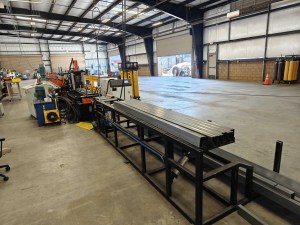
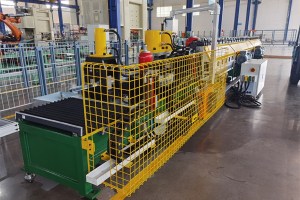
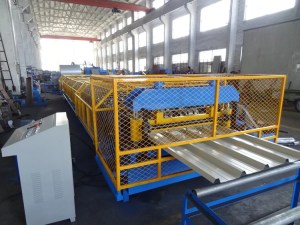
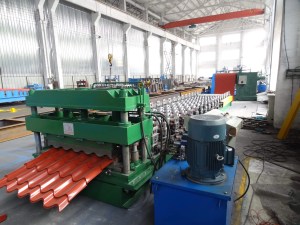
A modern comprehensive analysis of roll forming machine technology reveals that a roll former is a complete manufacturing cell.
Operations such as punching, slitting, and welding can be integrated. Proper roll forming alignment and calibration are necessary to ensure these in-line tools strike with precision.
Products are cut to length “on the fly,” a feature difficult to replicate when analyzing roll forming vs extrusion workflows.
While the initial investment in a series of mated rollers may be higher, the longevity is superior.
To maximize your investment, you must know how to adjust roll forming machine rollers to prevent premature wear.
Using technical simulations, such as those discussed by The Fabricator, designers can predict metal flow and reduce costs.
Modern roll forming utilizes advanced simulation to account for machine deflection and springback, ensuring that profiles remain within tight industrial tolerances for 2026 standards.
Springback is a major factor in cold forming. Modern designers use simulation software to over-bend the material, ensuring it “springs back” to the perfect required angle.
Roll forming allows for the creation of complex, asymmetrical profiles that would be difficult or impossible to extrude in certain high-strength materials.
Generally, no. Extrusion often has lower initial tooling costs. However, for high-volume comprehensive analysis of roll forming machine applications, roll forming is unbeatable.
Yes. While the process aims for constant thickness, advanced techniques allow for forming varied thicknesses.
Industrial lines traditionally operate between 5 and 150 m/min.
Springback is a major factor in cold forming. Modern designers use simulation to over-bend the material.
Absolutely. In-line prepunching is a standard feature.
Both are used, but roll forming is preferred for very long aluminum profiles like siding where continuous feeding is key.
When evaluating roll forming vs extrusion, the decision ultimately hinges on your production scale, material requirements, and long-term ROI. While extrusion remains a viable choice for short-run aluminum prototypes, roll forming is the undisputed champion for industrial-scale manufacturing in 2026.
By leveraging continuous cold-bending, manufacturers can achieve unmatched speeds (up to 150 m/min), integrate secondary processes like punching and welding in-line, and successfully shape high-strength steels that other methods simply cannot handle. As demonstrated in this comprehensive analysis of roll forming machine applications, the transition to roll forming typically results in a significant reduction in per-part cost and a drastic improvement in material yield.
At Believe Industry Company, we don’t just build machines; we engineer competitive advantages. Our 2026 systems are equipped with advanced simulation technology to eliminate springback issues and ensure dimensional consistency that exceeds global industrial standards.
Stop overpaying for material waste and slow production cycles.
Ready to transform your production line with the efficiency of modern roll forming?
Request a Custom Analysis: Let our engineers compare your current extrusion costs against a high-speed roll forming solution.
Consult Our Experts: Get a technical breakdown of tooling longevity and in-line integration for your specific profile.
👉 [Contact Believe Industry Company Today for a Specialized Roll Forming vs Extrusion Cost Analysis]
Subscribe now to keep reading and get access to the full archive.