Address
No 1, Yd Road, Huishan District, Wuxi City, Jiangsu. 214183
Work Hours
Monday to Friday: 9AM - 5PM
Saturday: 9AM - 4PM
Address
No 1, Yd Road, Huishan District, Wuxi City, Jiangsu. 214183
Work Hours
Monday to Friday: 9AM - 5PM
Saturday: 9AM - 4PM

Roll forming is a continuous metal fabrication process that shapes flat metal sheets or coils into precise cross-sectional profiles using a series of rollers. Unlike stamping or extrusion, roll forming is ideal for high-volume production of long, uniform parts with complex geometries. Industries ranging from construction to aerospace rely on this method for its efficiency and versatility.
But what makes roll forming stand out? Let’s explore the 7 major advantages of roll forming machine that make it a preferred choice for manufacturers worldwide.
Roll forming is one of the most cost-effective metal shaping methods, especially for large production runs. Here’s why:
For industries like automotive or construction, where thousands of identical parts are needed, these savings add up significantly.
Roll forming machines produce parts with tight tolerances (as low as ±0.005 inches), ensuring uniformity across every piece. This precision is critical for:
Roll forming accommodates a wide range of materials and designs:
This flexibility makes it suitable for everything from lightweight solar panel frames to heavy-duty truck chassis.
Modern roll forming lines can produce parts at speeds of 30–600 feet per minute, far outpacing traditional methods like stamping. For example:
This speed is invaluable for industries with tight deadlines, such as appliance manufacturing or infrastructure projects.
Roll-formed parts retain the structural integrity of the base material since the process doesn’t involve melting or extreme heat. Benefits include:
This makes roll-formed components ideal for load-bearing applications, such as aircraft frames or industrial shelving.
Roll forming integrates multiple steps into a single pass, reducing the need for secondary operations:
This “all-in-one” approach slashes production time and costs.
As industries prioritize green manufacturing, roll forming offers environmental benefits:
Companies aiming for LEED certification or carbon neutrality often choose roll forming for its eco-friendly profile.
Q: Can roll forming handle custom designs?
A: Yes! Custom tooling allows for unique profiles tailored to specific projects.
Q: How does roll forming compare to extrusion?
A: Roll forming is faster and more cost-effective for long parts, while extrusion suits complex 3D shapes.
Q: What’s the minimum order quantity for roll forming?
A: It’s ideal for high-volume runs, but some suppliers offer prototyping for smaller batches.
From unmatched precision to eco-friendly production, the advantages of roll forming make it a cornerstone of modern manufacturing. Whether you’re producing miles of roofing panels or intricate automotive parts, this method delivers speed, quality, and cost savings that few processes can match.
Call to Action: Ready to leverage the power of roll forming for your next project? Contact us today to explore custom solutions tailored to your needs! Believe Industry Company offers one-stop solution of roll forming machines and auxiliary equipments.


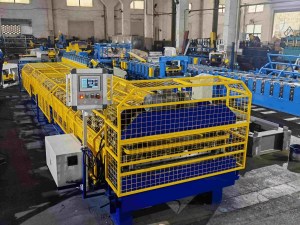
Wall Cladding Roll Former: Complete Buyer’s Guide 2026 A wall cladding...
Read More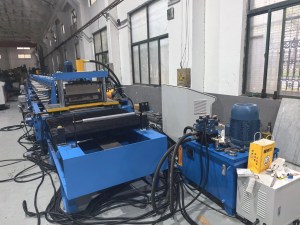
An interlocking wall panel roll former is a cold roll forming machine that...
Read More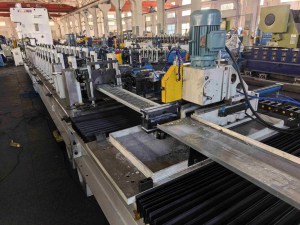
A scaffold workboard roll forming machine is an automated industrial...
Read More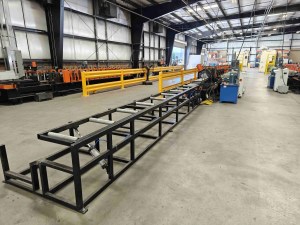
A storage rack roll forming machine is a smart factory...
Read More