Address
No 1, Yd Road, Huishan District, Wuxi City, Jiangsu. 214183
Work Hours
Monday to Friday: 9AM - 5PM
Saturday: 9AM - 4PM
Address
No 1, Yd Road, Huishan District, Wuxi City, Jiangsu. 214183
Work Hours
Monday to Friday: 9AM - 5PM
Saturday: 9AM - 4PM

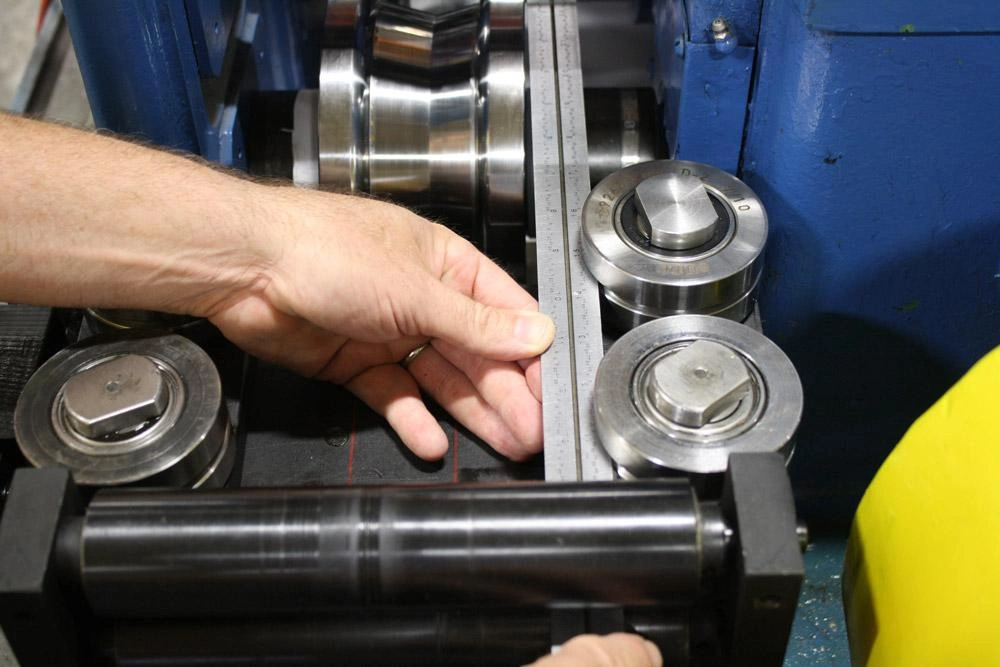
How to adjust roll forming machine rollers is the most critical question asked by operators aiming for world-class precision. At Beli RollForming, we understand that even the most expensive machine will fail to produce quality profiles if the roller gaps and pressures are incorrect. In the modern manufacturing landscape of 2026, achieving a tolerance of ±0.5mm is no longer a luxury—it is a requirement.
If you have already mastered roll forming alignment and calibration secrets, you know that the foundation of the machine must be level.

The first step in how to adjust roll forming machine rollers is setting the gap. Use a high-quality feeler gauge. The gap between the upper and lower rollers should be exactly 1.0 to 1.05 times the thickness of the material. Too tight, and you will thin the metal; too loose, and the profile will lose its shape.
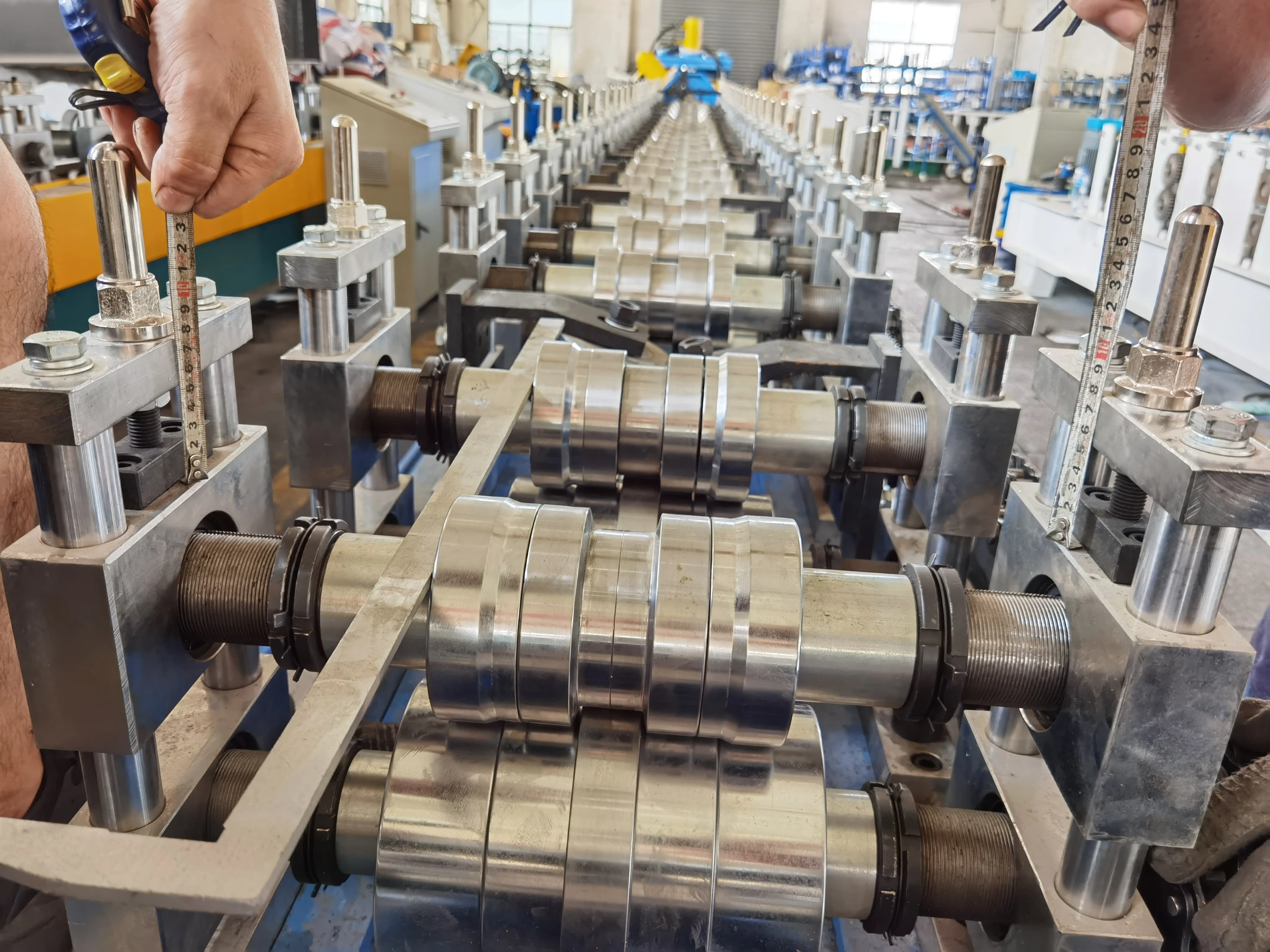
When learning how to adjust roll forming machine rollers, consistency is key. Always adjust the tension screws on both the inboard and outboard stands simultaneously. Use a torque wrench to ensure that the downward pressure is identical on both sides of the shaft to prevent material drift.

Precision bending is achieved through stages. For a 90-degree bend, do not attempt to reach the angle in two stations. Spread the load. Adjust your rollers to progress through 15°, 45°, 75°, and finally 91° to account for the metal’s natural memory.

A major secret in how to adjust roll forming machine rollers is the “1-degree rule.” Most high-tensile steels will spring back by 1 to 2 degrees. Set your final forming station slightly past the target angle so that the material relaxes into the perfect position.

If you switch from soft copper to high-strength galvanized steel, you must know how to adjust roll forming machine rollers for the yield difference. Harder materials require significantly more down-pressure and tighter side-roll engagement to hold the shape.

The side rolls are often neglected. Adjust these to exert lateral pressure, which “locks” the bend into place. This is vital when using your essential kit of roll forming tooling for complex C or Z channel profiles.
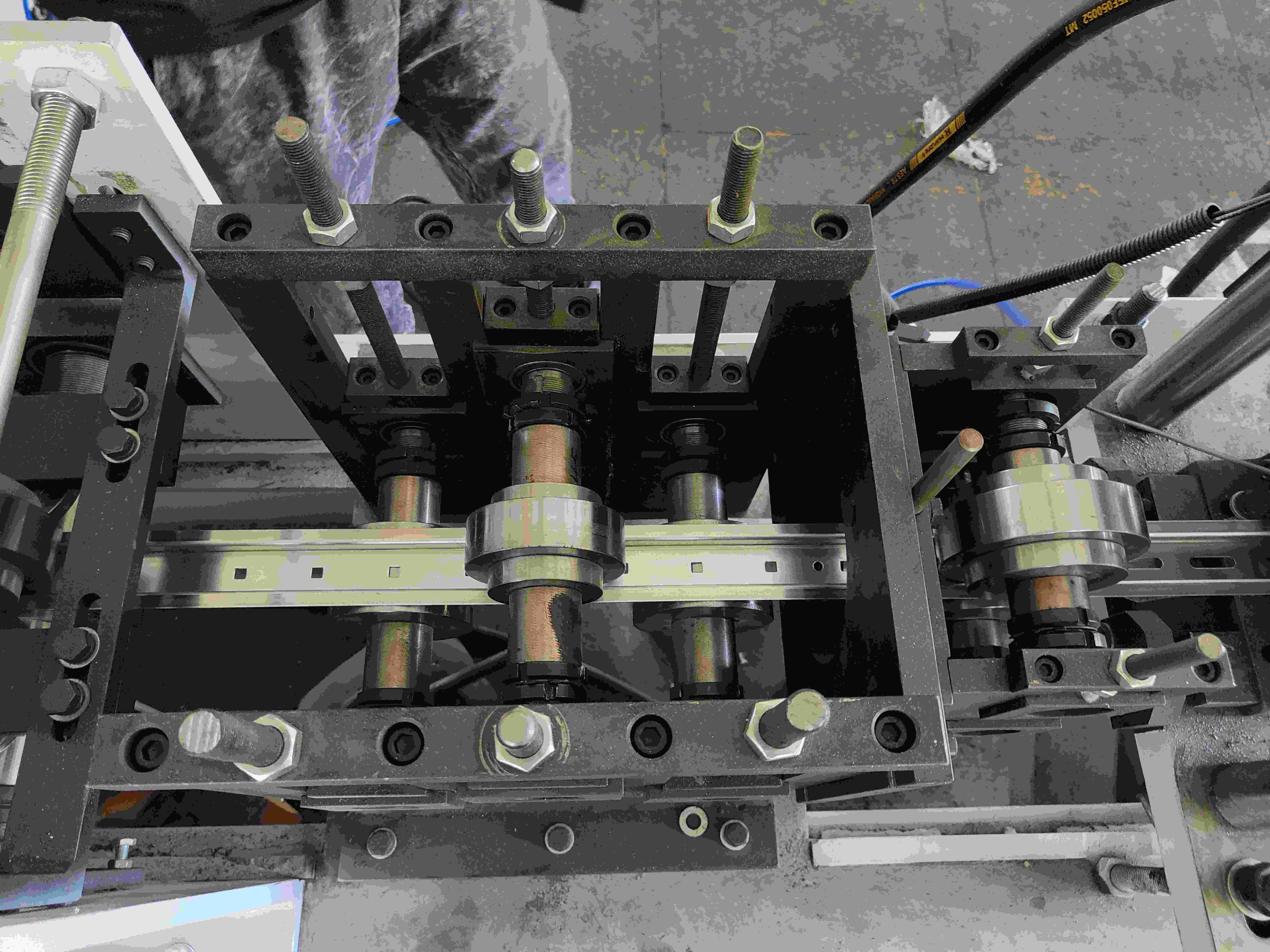
Sometimes the issue isn’t the bend, but the straightness. Adjust the bottom rollers in the last three stations to be 0.05mm higher than the previous ones. This “uphill” feeding prevents the profile from bowing downward as it exits the machine.

You cannot learn how to adjust roll forming machine rollers without looking at the entry guides. If the entry rollers are not perfectly centered with the first forming station, the entire strip will track improperly, causing edge wave. Ensure the decoiler machine is perfectly aligned with the entry guides.
During high-speed roll forming, rollers heat up and expand. After 30 minutes of running, pause to check your gaps. You may need to slightly loosen the vertical pressure to compensate for the thermal expansion of the steel rollers.
The thickness of your coolant film changes the “effective” gap. When how to adjust roll forming machine rollers, ensure your spray system is consistent. A dry spot will cause more friction, pulling the profile and causing a “twist” effect.

The final adjustment occurs at the exit. Use the straightener rollers to counteract any remaining camber or twist. This is the “polishing” phase of roll forming advancement.
Failing to understand how to adjust roll forming machine rollers leads to “oil canning”—the unsightly ripples in flat metal surfaces. By following these 11 secrets, you ensure your output meets the rigorous standards set by the Metal Construction Association (MCA), leading to better customer satisfaction and fewer rejects.
Mastering how to adjust roll forming machine rollers is an ongoing process of observation and refinement. At Beli RollForming, we build our machines with precision adjustment scales to make this process easier for our global partners. By implementing these techniques, you can maximize the lifespan of your tooling and the quality of your finished products.
Looking for high-precision machinery? Beli RollForming offers the most advanced solutions in the industry. Contact our engineering team for specialized training on your specific profile.


A step beam machine is an advanced industrial roll forming...
Read More
A Strut Channel Machine Mexico is a high-speed, automated production...
Read More
In the rapidly evolving landscape of industrial manufacturing, the Box...
Read More
What are the benefits of using top step tile roll...
Read More