Address
No 1, Yd Road, Huishan District, Wuxi City, Jiangsu. 214183
Work Hours
Monday to Friday: 9AM - 5PM
Saturday: 9AM - 4PM

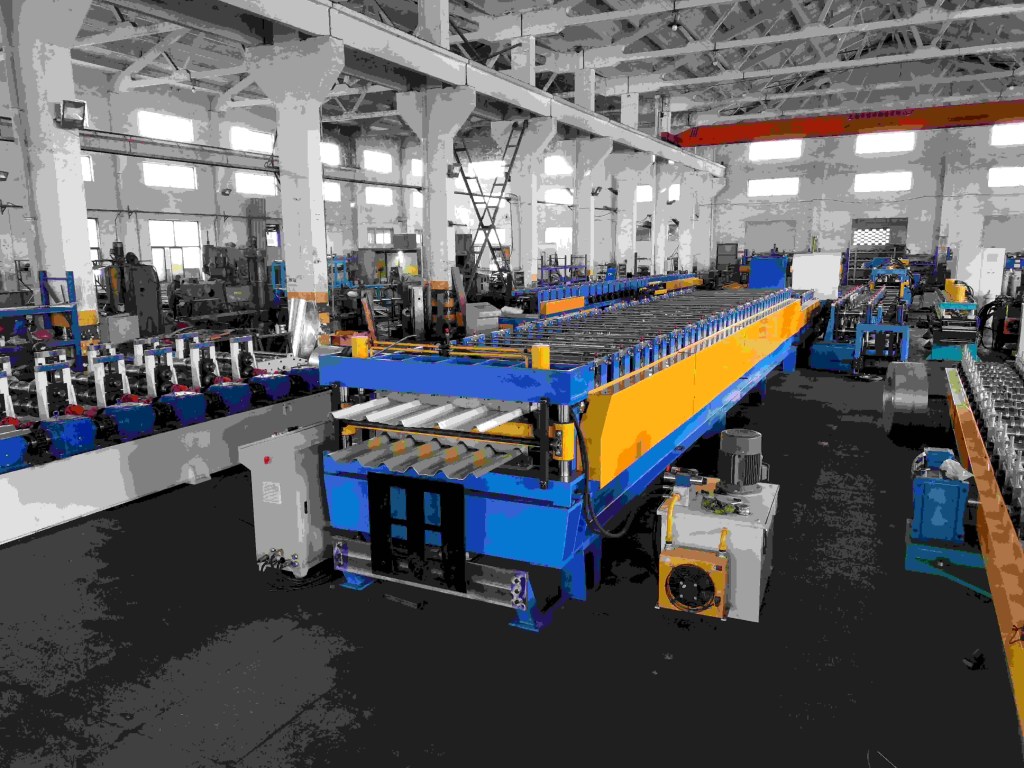
A double layer machine is a specialized industrial metalworking system that features two vertically stacked sets of forming rollers on a single base. Consequently, it allows manufacturers to produce two distinctly different metal profiles without requiring the floor space of two separate machines.
And this innovation is transforming the roofing and siding industries.
Modern factories frequently face overwhelming challenges. Primarily, floor space is incredibly expensive and highly limited.
You simply cannot fit endless rows of single-layer equipment inside a standard workshop. But, consumer demand requires a wide variety of roofing profiles.
So, factory managers often struggle to meet customer needs. They either rent more warehouse space, or they lose valuable orders.
A double layer machine completely solves this specific problem. It uses a vertical, stacked design.
Specifically, the top layer rolls one profile, like a corrugated sheet. And the bottom layer rolls a different profile, like a trapezoidal panel.
Yet, the equipment occupies the exact same square footage as a single-profile unit. Moreover, you only pay for one control system and one cutting shear.
Therefore, a double layer machine dramatically lowers your capital investment.
When you operate a double layer machine, you must understand basic engineering vocabulary.
Yield Strength: This defines the amount of physical stress metal can take before it permanently bends. It is critical for calibrating the rollers.
Springback: This is the natural tendency of steel to open slightly after it passes through the bending dies. Consequently, operators must over-bend the metal slightly.
Galvanization: This refers to coating raw steel with a protective layer of zinc. And this prevents severe rusting over time.
Plc Control: This stands for Programmable Logic Controller. Specifically, it is the digital computer that dictates the speed and cutting length of the double layer machine.
The production cycle on a double layer machine is quite fascinating.
First, a decoiler feeds flat steel coils into the entry guide. You choose whether to feed the top layer or the bottom layer.
But, you cannot run both levels at the exact same time. The single main motor powers the entire system.
So, the machine pulls the metal through a series of progressive roller stations. These hardened steel rollers gradually bend the metal into the desired shape.
Finally, a hydraulic cutter shears the finished panel to your specified length.
For a complete overview of similar industrial systems, please review our Comprehensive Analysis of Roll Forming Machine.
We want to help you visualize your exact financial benefits.
Therefore, we have created a dynamic interactive calculator below. You can easily estimate the capital you save by using a double layer machine.
Calculate your estimated savings by upgrading to a double layer machine.
Industrial engineering requires immense precision. And efficiency dictates profitability.
According to research from the Department of Energy, optimizing floor layouts significantly reduces energy consumption and material handling times.
Moreover, academic studies from top engineering universities (.edu) confirm that sharing a single drive motor across two tooling sets drastically reduces electrical draw.
So, investing in a double layer machine directly aligns with sustainable, lean manufacturing principles.
Furthermore, you can integrate this equipment with advanced material feeds. For example, learning about the BlueScope steel roll forming machine process helps you achieve zero-defect production.
Before you buy heavy machinery, you must compare the available options.
A double layer machine provides distinct advantages over traditional models.
But, you must also understand its limitations. For instance, you cannot run both levels simultaneously.
If you want to understand proper operational procedures, read our guide on how to operate a double layer roll forming machine without material damage.
Below is a highly detailed data comparison to guide your purchasing decision.
| Evaluation Metric | double layer machine | Standard Single Layer Machine |
| Factory Space Required | 1x Footprint (Stacked vertically) | 2x Footprint (Requires two machines) |
| Initial Capital Cost | Approximately 1.5x of a single unit | 2.0x (Purchasing two entirely separate units) |
| Setup & Changeover Time | Under 5 minutes (Just switch feeds) | 30+ minutes (Requires manual tooling swaps) |
| Max Material Thickness | 0.3mm to 0.8mm (Optimal for roofing) | Up to 3.0mm+ (Depending on specific model) |
| Production Speed | 15 to 20 meters per minute | 15 to 20 meters per minute |
As the data clearly shows, the double layer machine excels in rapid changeovers and compact design.
In conclusion, a double layer machine is a monumental upgrade for any metal fabrication facility.
It actively solves severe space limitations. Moreover, it drastically reduces the overall financial investment required to produce multiple roofing profiles.
By implementing this technology, you streamline your workflow and easily adapt to shifting customer demands.
Are you ready to transform your manufacturing capabilities? You should explore our dedicated double layer roll forming machine product page to view detailed specifications.
Contact Believe Industry Company today for a free consultation. Our expert engineers will help you select the perfect custom machinery for your unique production goals!
A double layer machine is an advanced manufacturing unit that stacks two completely different roll forming profiles on top of each other. Consequently, it allows factories to produce two distinct products while only taking up the space of one standard machine.
No, you cannot operate both layers simultaneously on a standard double layer machine. Because they share a single main drive motor and a single cutting system, you must run them one at a time.
A double layer machine saves money because you do not have to buy two separate machine bases, motors, and PLC systems. and also the uncoiler and auto stackers. Moreover, it drastically reduces the square footage you need to rent or buy for your production floor.
No, a double layer machine is surprisingly easy to maintain. Since it has fewer electronic components and only one hydraulic station, routine maintenance takes significantly less time than servicing two individual machines.
A double layer machine typically produces popular building materials like corrugated roofing, trapezoidal wall panels, and step tiles. Furthermore, our engineers can customize the upper and lower roller dies to match your exact regional market demands.
Yield strength tells operators exactly how much physical pressure the double layer machine must apply to shape the steel. So, understanding this specific metric helps you prevent ugly material cracking and unnecessary roller wear.
Switching profiles on a double layer machine takes less than five minutes. You simply stop the machine, cut the current metal strip, and feed a new coil into the alternate entry guide, which drastically improves your daily uptime.
Changelog: Updated: April 7, 2026 – Added 2026 ROI data, updated interactive space savings widget, and verified technical specifications.
Next Scheduled Review: October 7, 2026
An interlocking wall panel roll former is a cold roll forming machine that...
Read MoreA scaffold workboard roll forming machine is an automated industrial...
Read MoreA storage rack roll forming machine is a smart factory...
Read MoreA step beam machine is an advanced industrial roll forming...
Read MoreSubscribe now to keep reading and get access to the full archive.